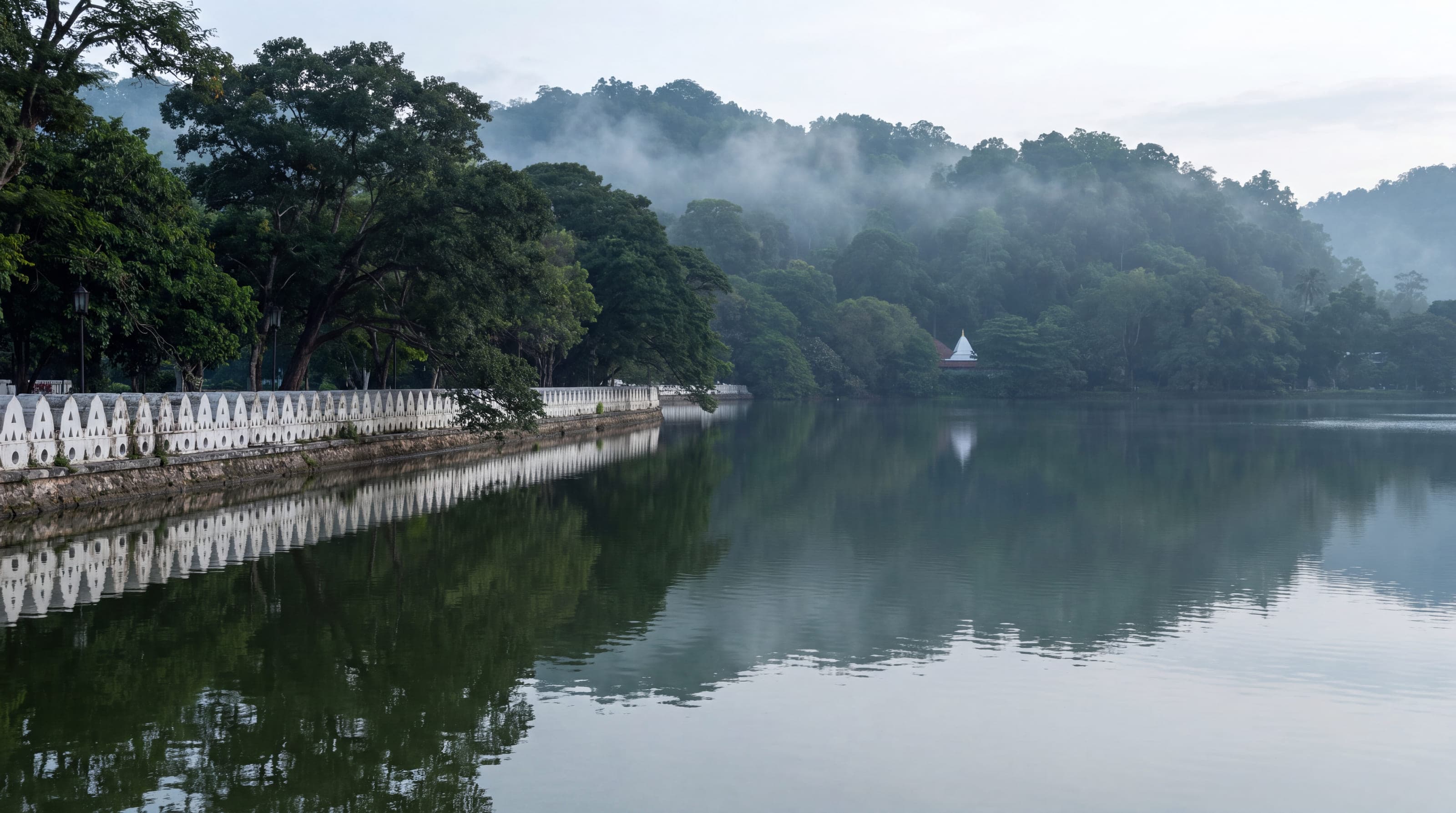
Kandy The last royal capital, the Temple of the Tooth, a World Heritage Site
Kandy is the hill capital of Central Province at about 500 m, the last royal capital of the Sinhalese kings, who ruled from here from 1469 to 1818. The Sacred City of Kandy is a UNESCO World Heritage Site, listed in 1988, and its centre is the Temple of the Sacred Tooth Relic beside the lake.
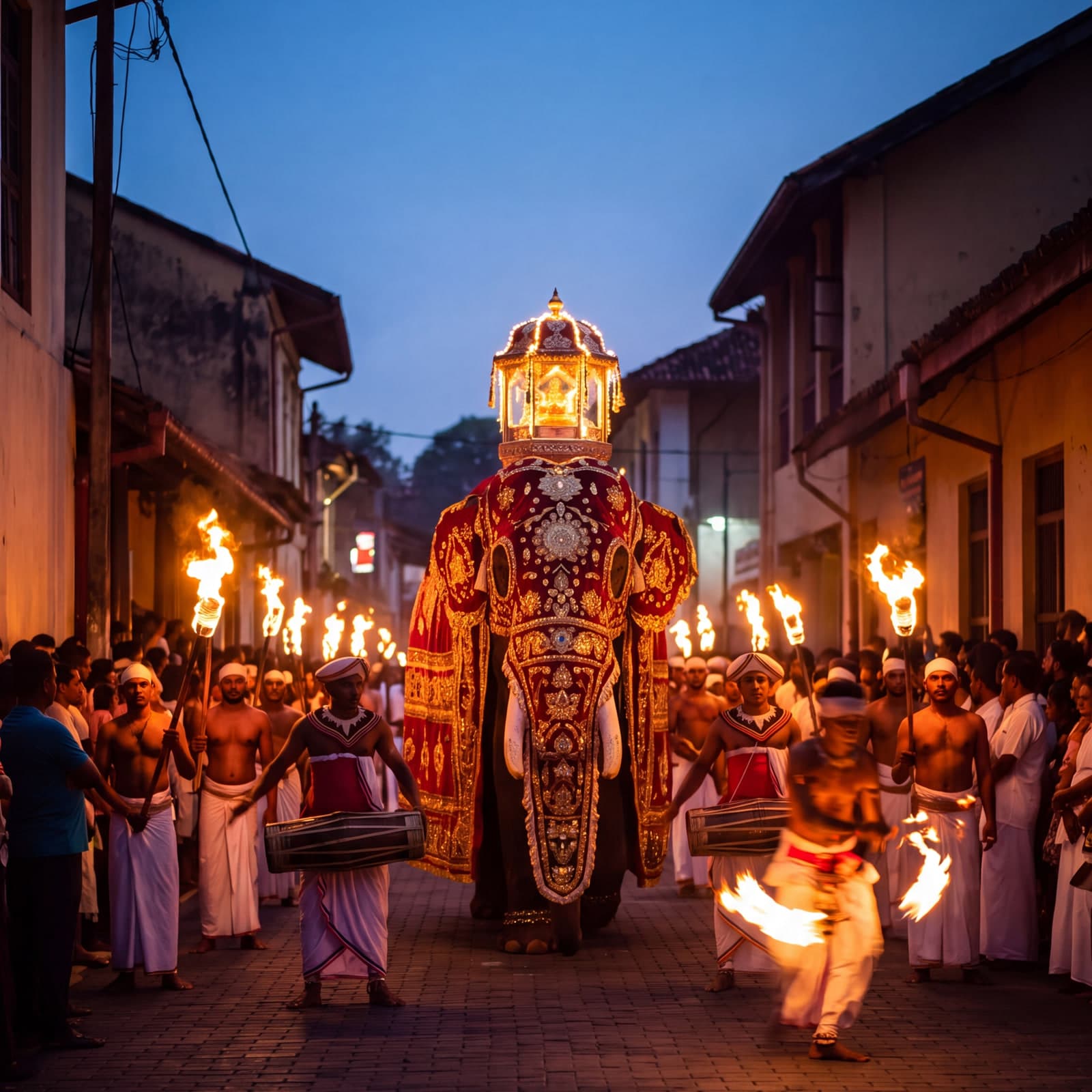
Each July or August the Esala Perahera carries the relic casket through the streets on a tusker, with drummers, dancers and fire. The Royal Botanic Gardens at Peradeniya, 147 acres 5 km west of the city, draw 2 million visitors a year. Udawattakele, the forest above the temple, has been protected since 1856, and the Bahirawakanda Buddha looks down on the whole of it.
What to see in Kandy
- Temple of the Sacred Tooth Relic
Sri Dalada Maligawa, beside the lake.
- Kandy Lake
The artificial lake at the city's centre.
- Royal Botanic Gardens, Peradeniya
147 acres, 5 km west, 2 million visitors a year.
- Esala Perahera
The July or August procession of the relic.
- Udawattakele Forest Sanctuary
Protected since 1856.
- Bahirawakanda Buddha
The statue above the city.
The best time to visit Kandy
Kandy sits in the central hills, which take rain from both monsoons, May to July and October to December. January to April is the drier period; the Perahera falls in July or August.
January to April
How to reach Kandy
- By road2 to 4 hoursFrom the airport, 120 km
- By train2.5 to 3 hoursFrom Colombo to Kandy station
- By airCinnamon Air flies scheduled seaplanes to the Victoria Reservoir, outside the city.
- By helicopter40 minutesFrom the airport, 85 km, estimated
Hotels in Kandy
 ResortSantani Wellness KandyThe former Aratenna tea estate at Werapitiya, about 32 km and an hour's drive east of Kandy, facing the Knuckles range
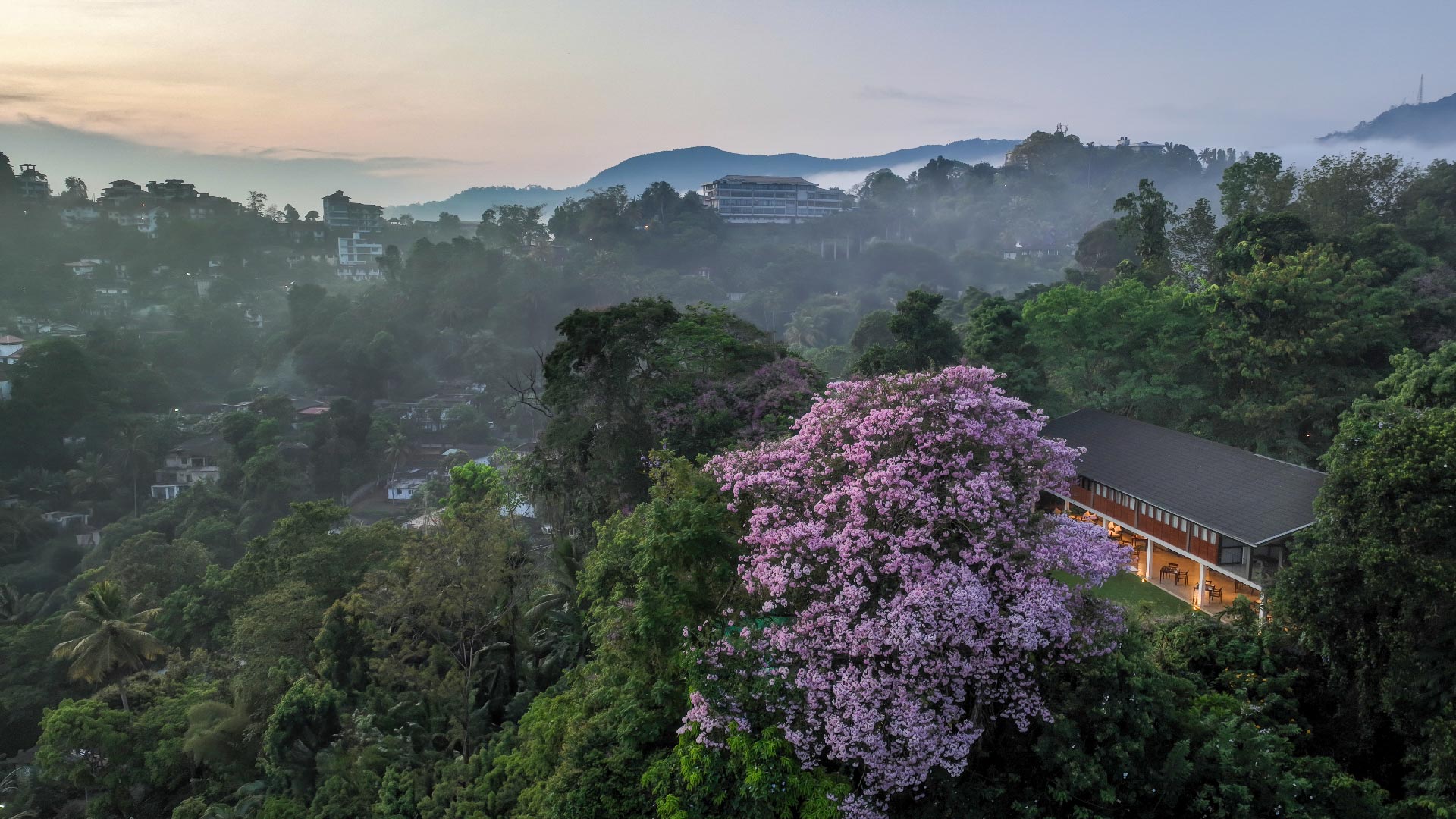 Boutique hotelKings Pavilion KandyGalkanda Road in Aniwatta, on a wooded hill 1.5 km from Kandy town centre, looking to the Hunnasgiriya range
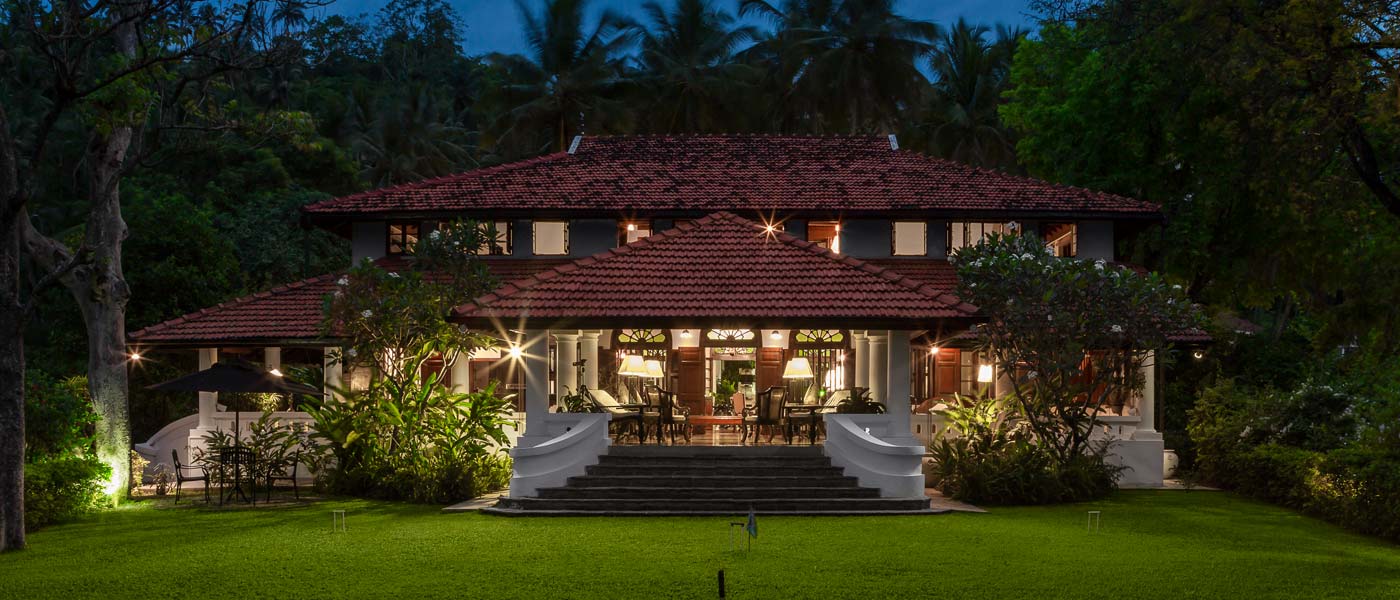 Boutique hotelClingendaelCoconut Hill, inside the Victoria Golf and Country Resort estate near Digana, about 30 minutes east of Kandy
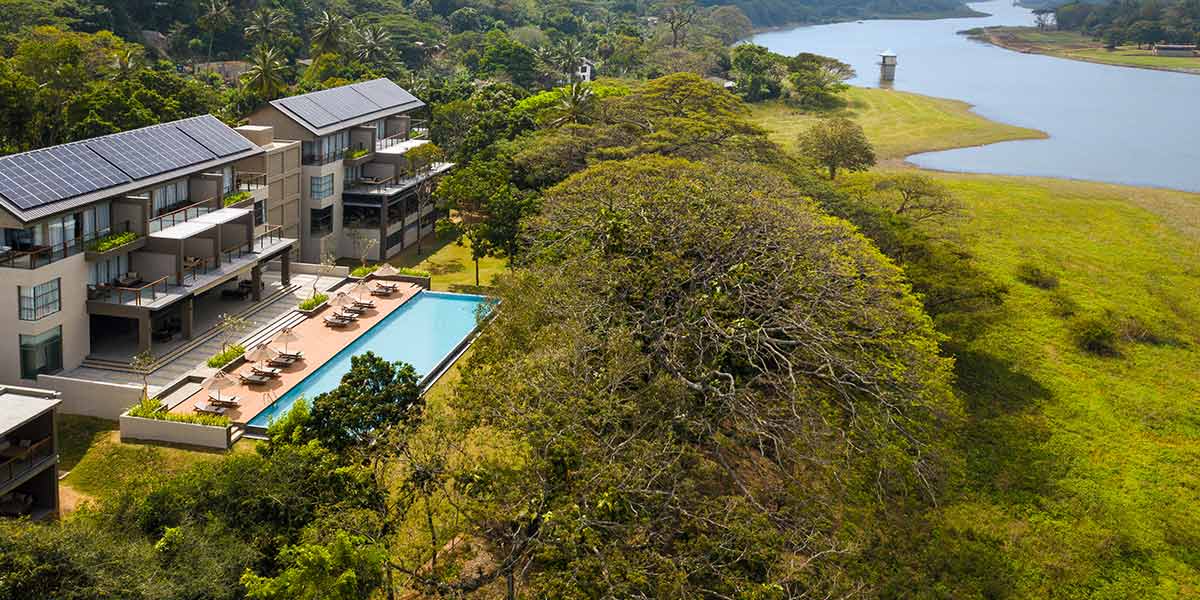 Boutique hotelJetwing Kandy GalleryGurudeniya, above a bend of the Mahaweli River east of Kandy, among village fields and forest
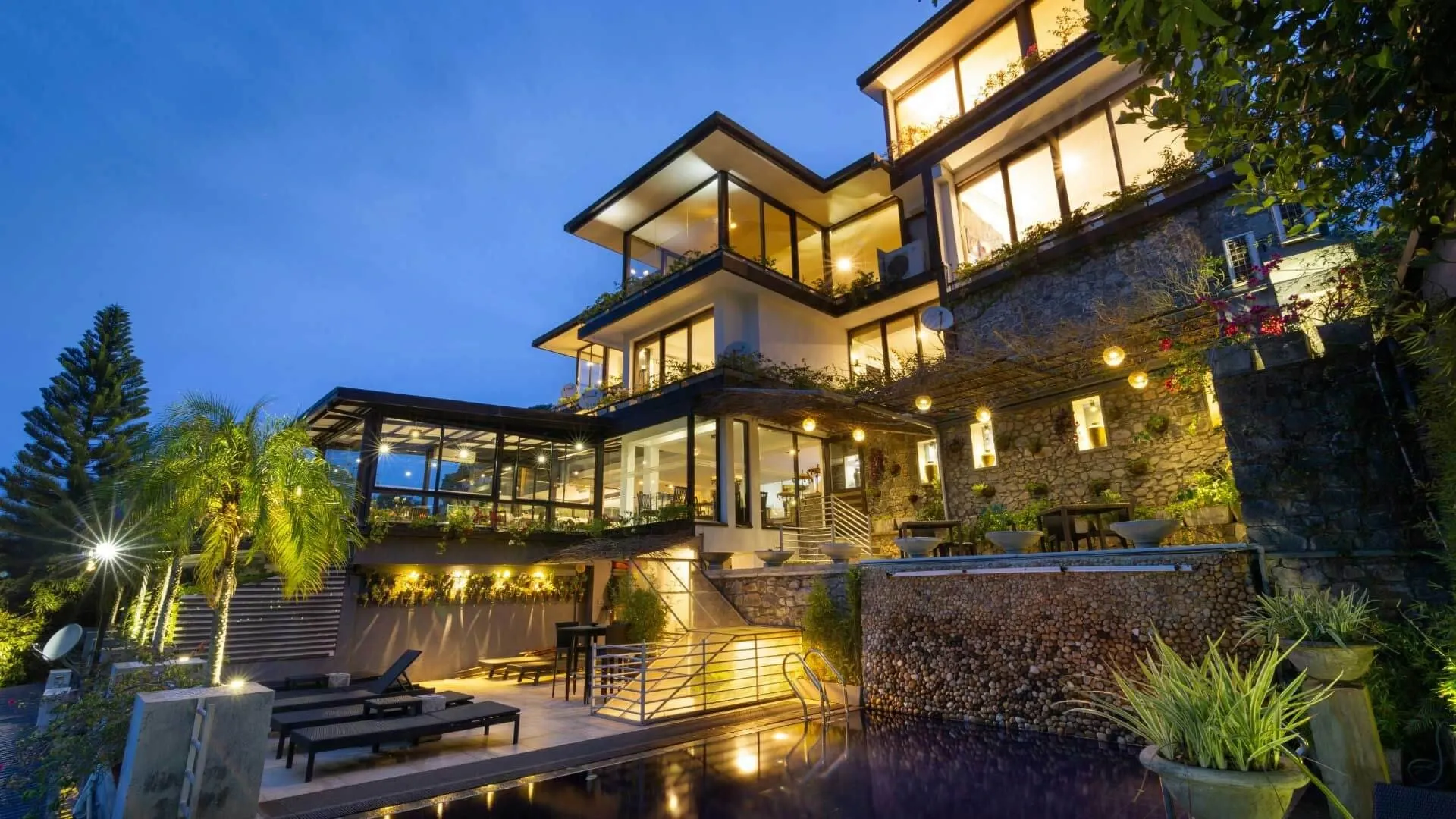 Boutique hotelTheva ResidencyOff Upper Tank Road on the Hanthana slopes, about 15 minutes' drive above Kandy town, looking across the valley
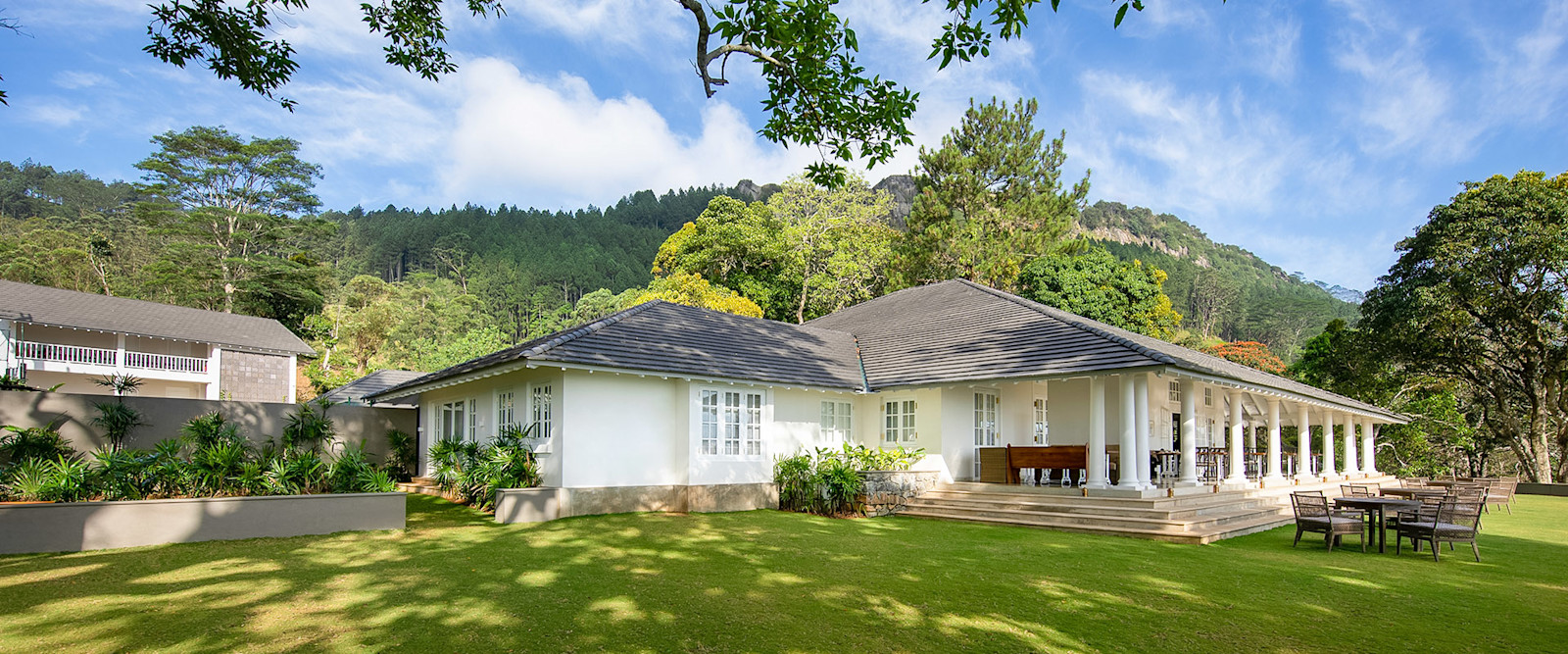 Boutique hotelW15 Hanthana EstateUduwela, Udugama West, in the tea valleys of the Hanthana hills, about 15 minutes south-west of Kandy city
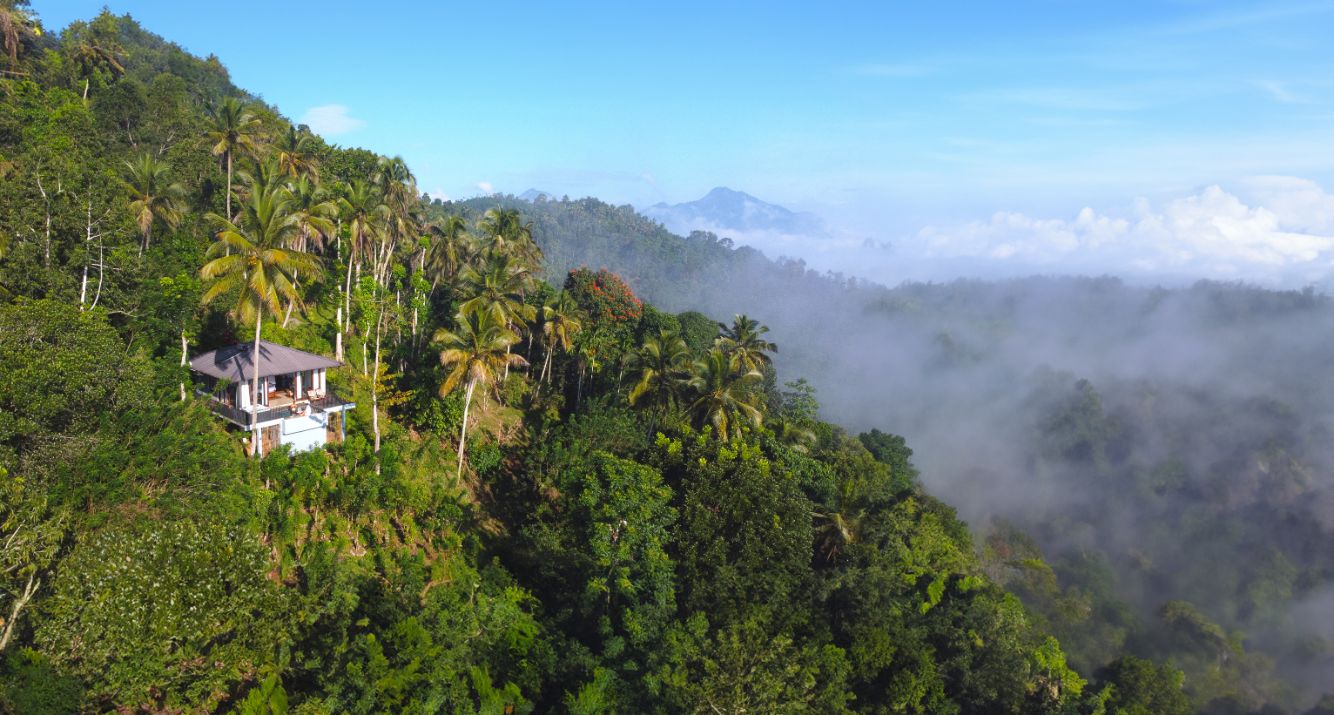 VillaAarunya Nature ResortA former tea and spice garden at Alawatugoda, in the hills north of Kandy, facing the Knuckles range
 Boutique hotelThe Elephant StablesA private road off Nittawela Road, on a hilltop about 10 minutes from Kandy city centre, looking to the Knuckles range
 HotelEarl's RegencyTennekumbura, near Kundasale, built into a rock face above the Mahaweli River on the eastern edge of Kandy
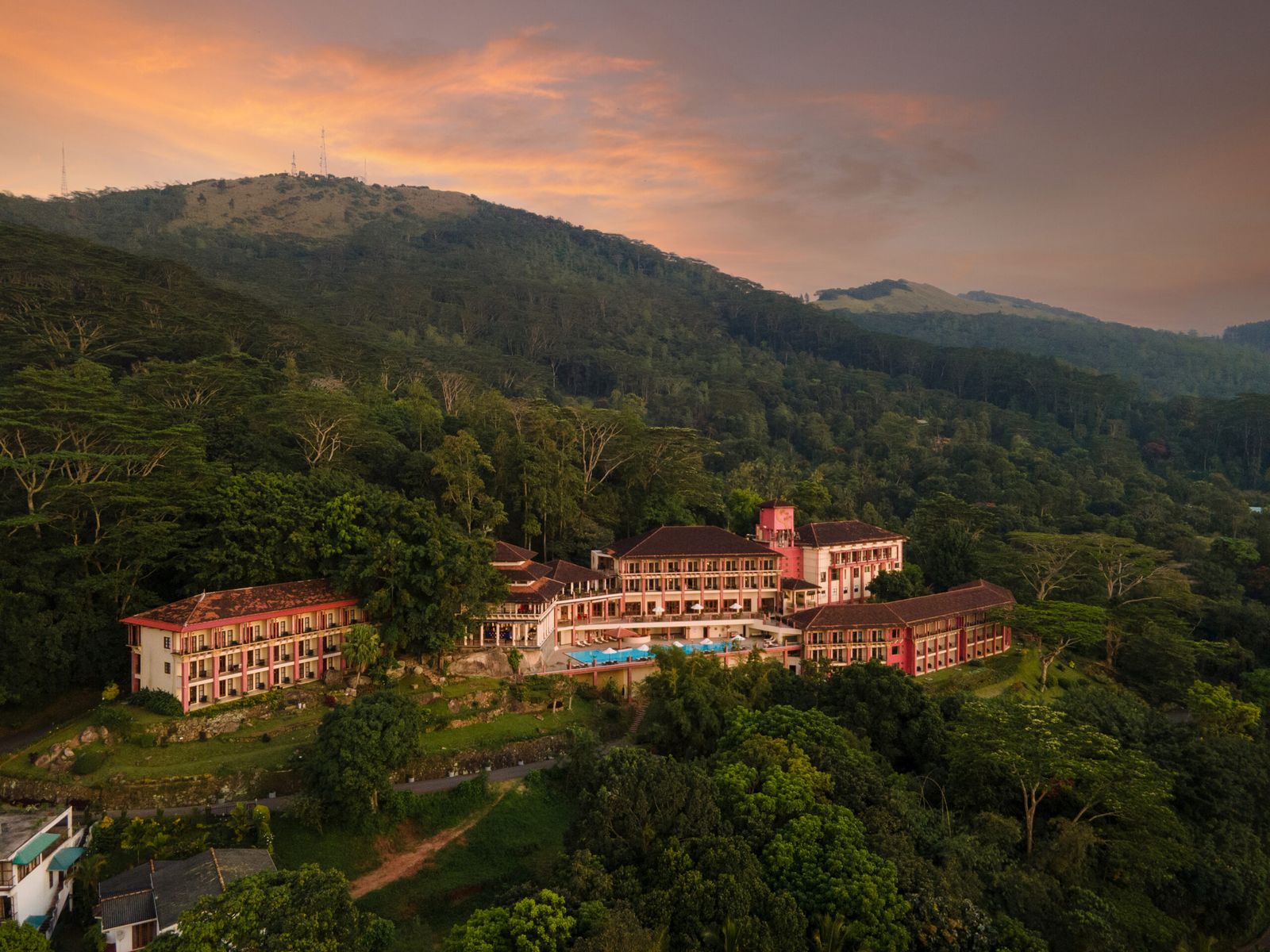 HotelAmaya HillsHeerassagala, on a hillside about 7 km from the centre of Kandy, overlooking the Heerassagala forest
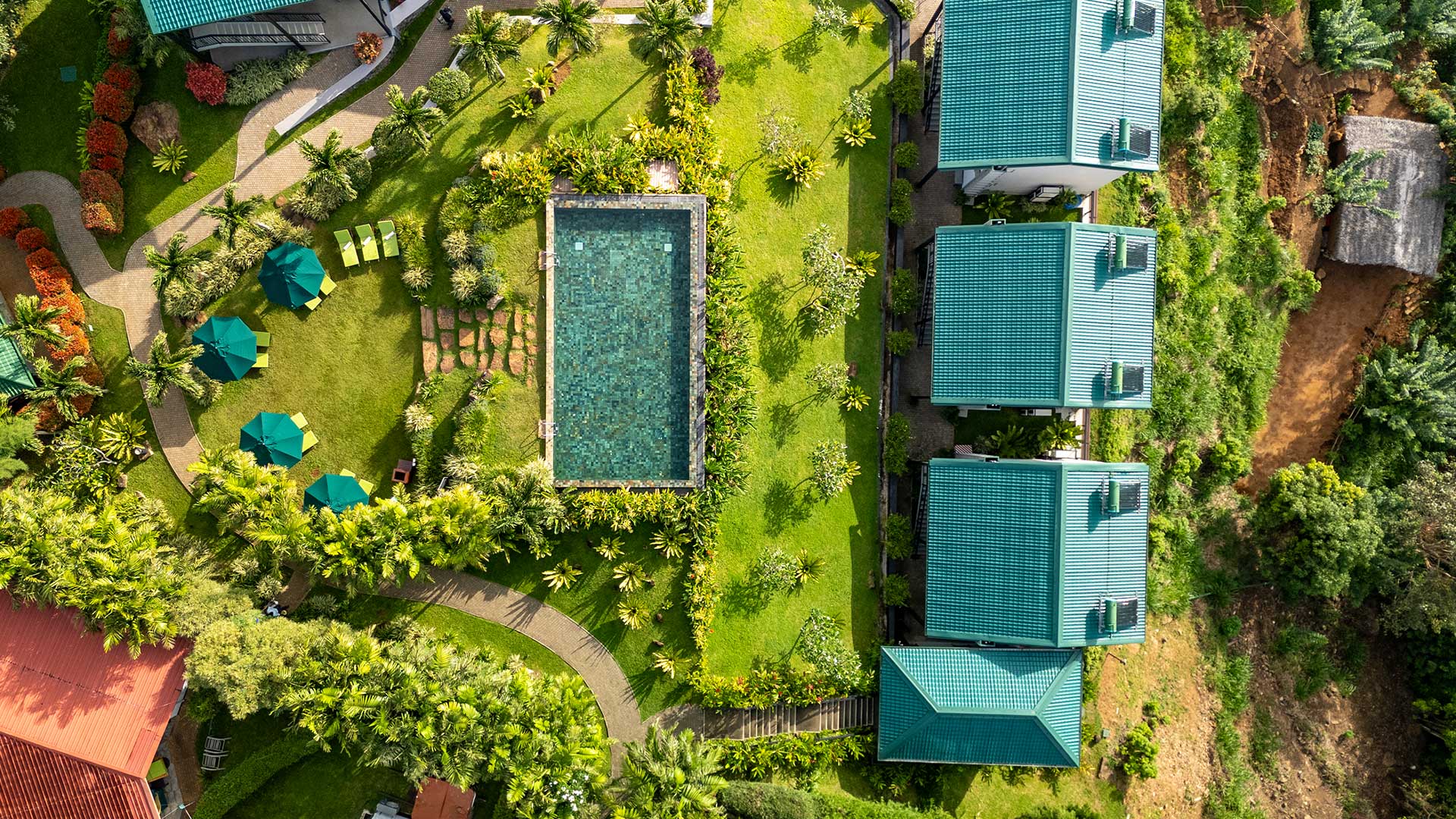 Boutique hotelFox Kandy125 Richmond Hill, Suduhumpola, on a hilltop in the Hanthana range about 10 minutes' drive above Kandy Lake
 Boutique hotelEllerton BungalowNawa Gurukelle, Doluwa, near Gampola, on a hilltop at about 2,400 feet some 40 minutes from Kandy, looking down the valley to Alagalla mountain
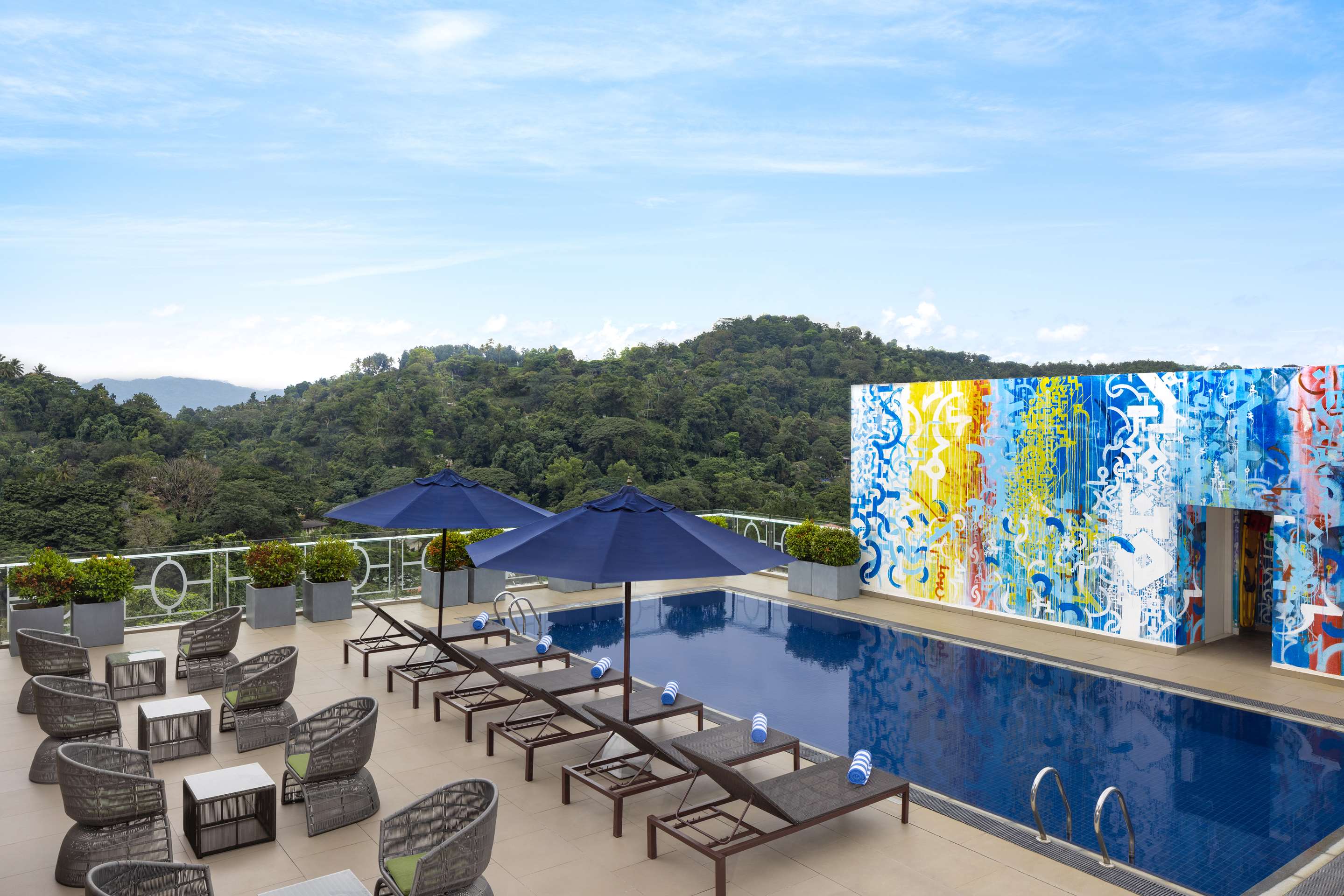 HotelRadisson Hotel KandyOn Saranankara Road in the centre of Kandy, 600 m from the Temple of the Tooth, with views over Kandy Lake and the hills
 HotelThe Golden Crown HotelAt Udagama on the Ampitiya road, on the edge of Kandy, 2.9 km from the Temple of the Tooth, with views of the hills and paddy fields
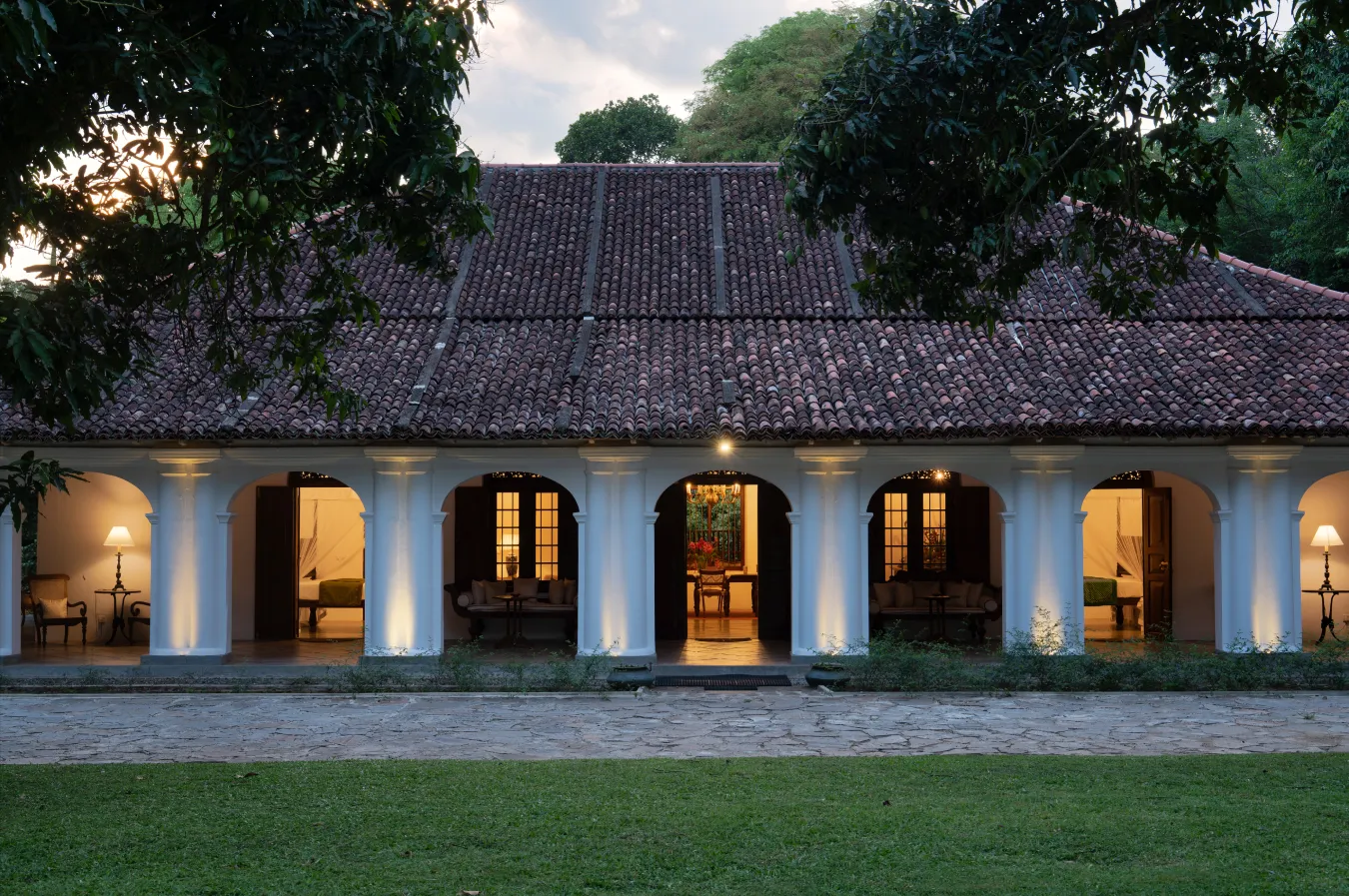 Boutique hotelAdigar's ManorAmunugama Walawwa, Gunnepana, in tropical gardens just beyond Kandy
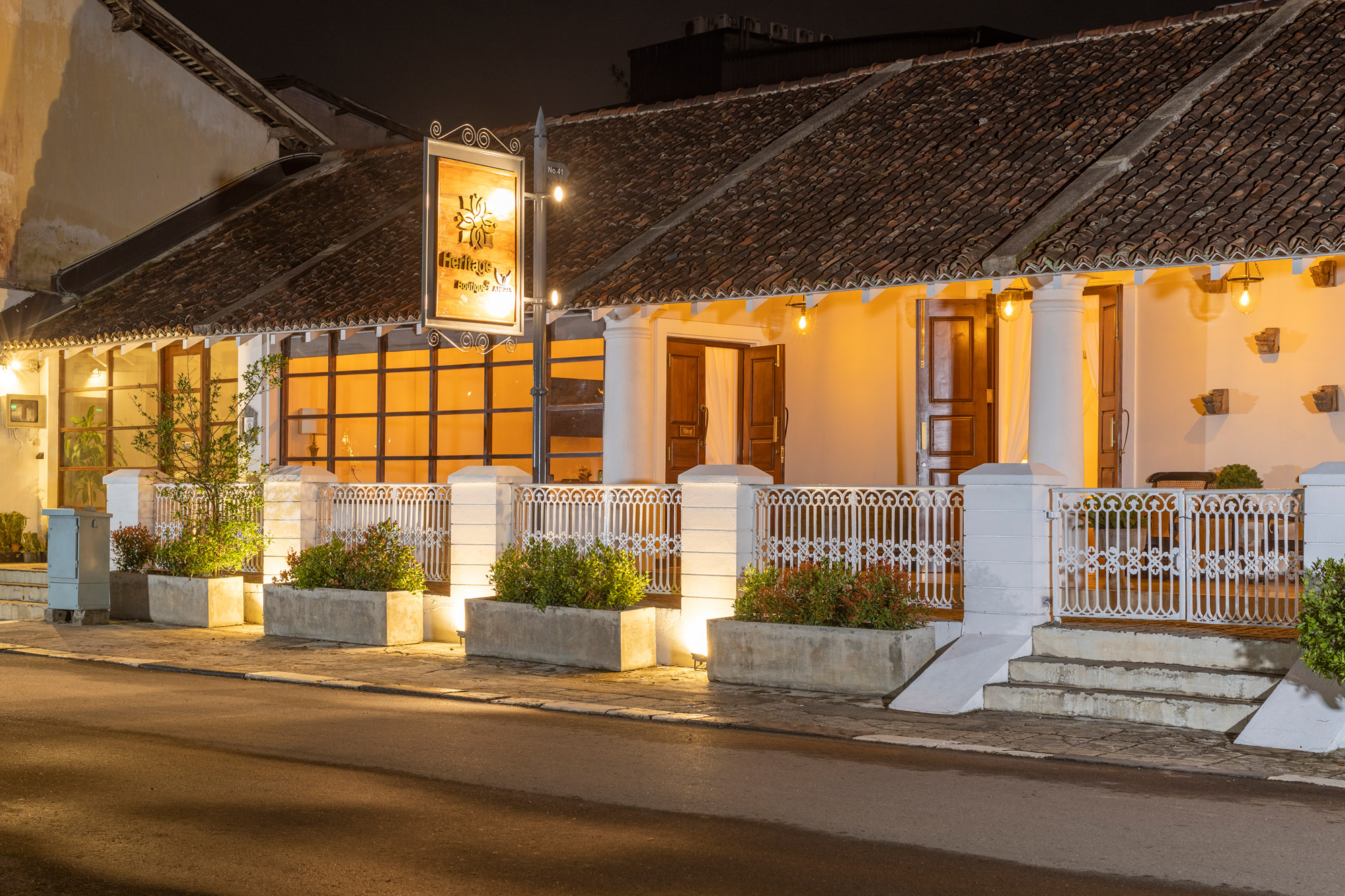 Boutique hotelHeritage Boutique by Seven AngelsIn a late 19th-century colonial house on Deva Veediya in the centre of Kandy, a few minutes' walk from the Temple of the Tooth and Kandy Lake
Things to do from Kandy
 Culture and heritageThe evening service at the Temple of the ToothThe Temple of the Sacred Tooth Relic, beside Kandy Lake, houses the relic that the Sinhalese kings held as their right to rule, and monks of 2 chapters perform services for it 3 times a day. The evening service runs from 18:30 to 20:00, when drinks, honey and ghee are offered to the relic in gold and silver vessels.
 Culture and heritageThe Esala Perahera, Kandy's festival of the toothThe Perahera is the annual procession in honour of the Sacred Tooth Relic, when the relic casket is carried through Kandy on the back of the temple's tusker, with whip-crackers, fire performers, drummers, dancers and decorated elephants from the city's 4 shrines to its guardian deities. The processions grow night by night, the last 5 nights are the largest, and the festival closes with a water-cutting ceremony on the Mahaweli river at Getambe.
 Nature and wildlifeThe Royal Botanic Gardens at PeradeniyaFormally founded in 1843, the gardens cover 147 acres beside the Mahaweli river, about 5.5 km west of Kandy, and hold more than 4,000 species of plants, among them orchids, spices, medicinal plants and palms. During the Second World War they served as the headquarters of South East Asia Command.
 Culture and heritageAn evening of Kandyan danceKandyan dance grew out of the Kohomba Kankariya, a ritual of the central hills, and its dancers were once attached to the Temple of the Tooth and its Perahera. The Ves dancer, in a headdress held sacred to the deity Kohomba, is its best-known figure.
 Nature and wildlifeA walk in the Udawattakele royal forestUdawattakele is a 104-hectare forest on the ridge above the Temple of the Tooth, kept as the royal pleasure garden of the Kandyan kings and closed to the public, then protected as a forest reserve from 1856. It holds 3 Buddhist forest hermitages and is known for its birds, giant lianas and small mammals.
 Culture and heritage · about half a dayThe 3 temples west of Kandy: Gadaladeniya, Lankatilaka and Embekke3 temples of the 14th century stand a few kilometres apart in the Udunuwara hills, about 12 km west of Kandy: Gadaladeniya, built in 1344 almost entirely of carved granite in a South Indian style; Lankatilaka, raised on a rock outcrop with Buddhist and Hindu shrines in a single building; and Embekke, a shrine to the god Kataragama. Lankatilaka also carries what is described as the longest Tamil inscription found in Sri Lanka.
 AdventureA day's trek in the Knuckles rangeThe Knuckles, or Dumbara, range north-east of Kandy is a massif of cloud forest, grassland and peaks, 9 of them above 1,200 m, and part of the Central Highlands World Heritage Site since 2010. More than 34 percent of the island's endemic trees, shrubs and herbs grow only in these forests.
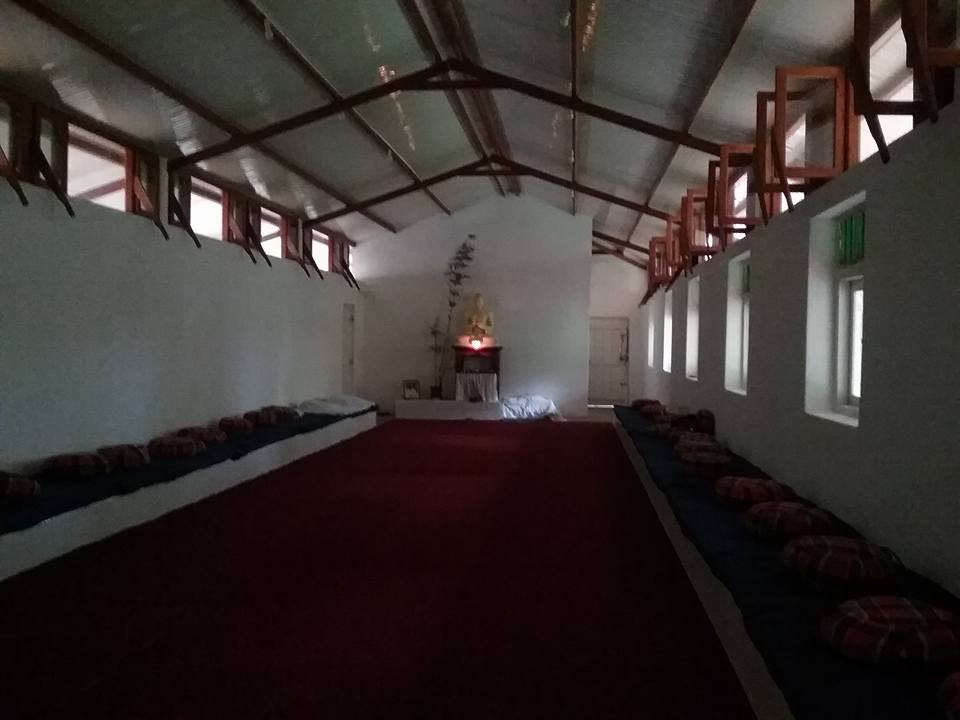 WellnessBuddhist meditation in and around KandyKandy is a centre of Buddhist learning: the forest above the Temple of the Tooth alone holds 3 meditation hermitages, and a society by the lake hosts discussions on Buddhism and meditation. In the tea country 17 km from the city, a lay meditation centre founded in the late 1970s takes guests on retreat.
 Culture and heritageThe Ceylon Tea Museum at HanthanaThe Ceylon Tea Museum fills a 4-storey tea factory built in 1925 on the Hanthana estate, just south of Kandy, in some of the first hill country to take to tea after coffee failed. The factory stood empty for more than a decade before the Sri Lanka Tea Board and the Planters' Association restored it and opened it as a museum in 2001.
 Culture and heritageDegaldoruwa, the painted cave temple near KandyDegaldoruwa is a Buddhist temple cut into a rock outcrop at Amunugama, east of Kandy, begun in 1771 under King Kirti Sri Rajasinha by his younger brother, who completed it after taking the throne. It is known for its murals of the Kandyan period, painted with colours made from the bark of local trees.
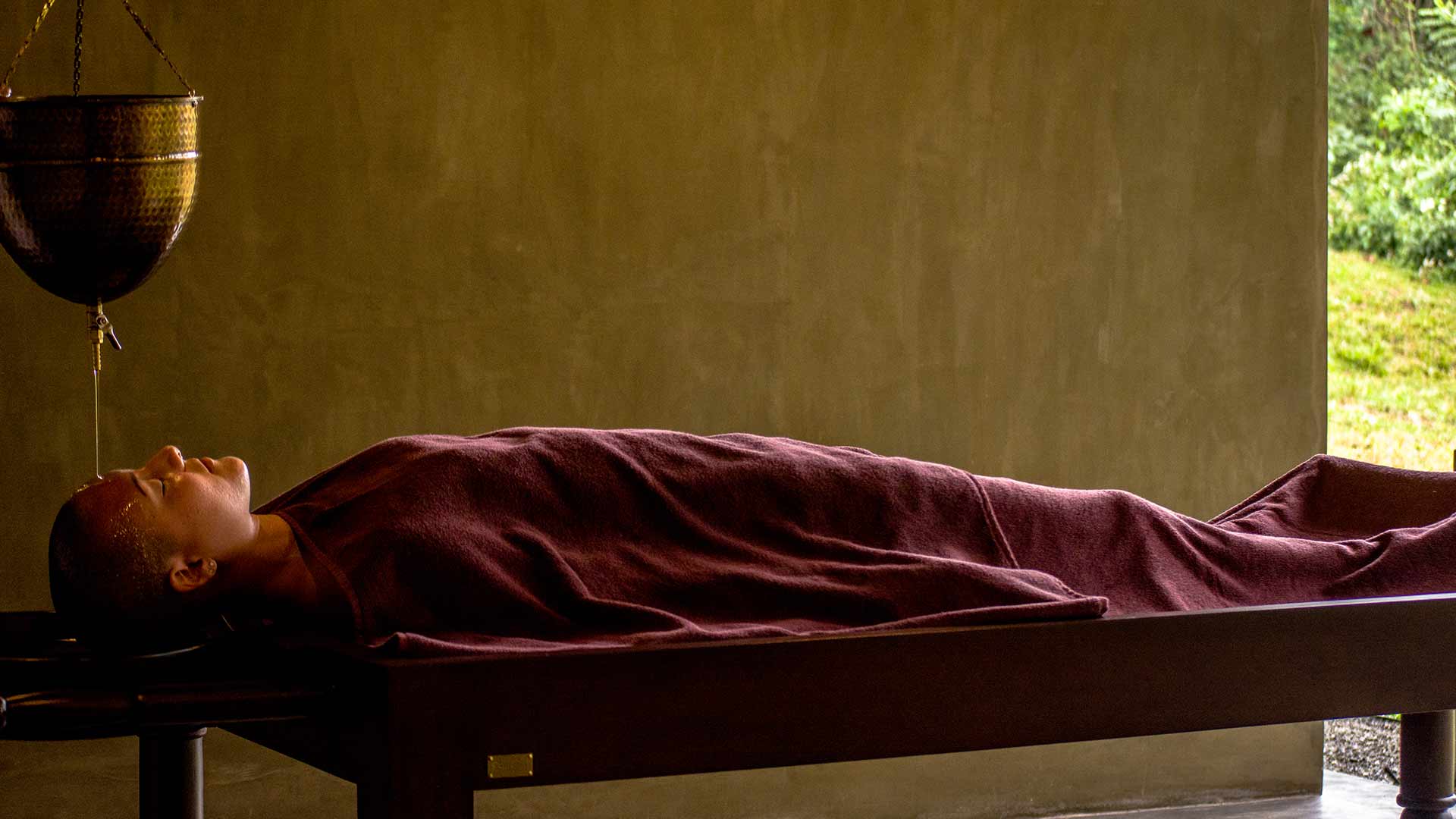 WellnessAn Ayurvedic treatment arranged with your stay near KandySeveral of the hill retreats around Kandy keep their own spas, where Ayurveda, the traditional medicine of the region, is offered alongside other therapies and arranged with your stay. Treatments range from herbal oil massages to shirodhara, in which warm oil is poured slowly over the forehead.
Photographs from Wikimedia Commons: The evening service at the Temple of the Tooth: Rashod Korala, CC BY-SA 4.0 via Wikimedia Commons; The Esala Perahera, Kandy's festival of the tooth: Shashikaprathibha, CC BY-SA 4.0 via Wikimedia Commons; The Royal Botanic Gardens at Peradeniya: Vyacheslav Argenberg, CC BY 4.0 via Wikimedia Commons; An evening of Kandyan dance: Philip Nalangan, CC BY-SA 4.0 via Wikimedia Commons; A walk in the Udawattakele royal forest: Hasindu2008, CC BY-SA 3.0 via Wikimedia Commons; The 3 temples west of Kandy: Gadaladeniya, Lankatilaka and Embekke: BluesyPete, CC BY-SA 3.0 via Wikimedia Commons; A day's trek in the Knuckles range: Astronomyinertia, CC BY-SA 3.0 via Wikimedia Commons; Buddhist meditation in and around Kandy: Photograph from Nilambe Buddhist Meditation Centre's own site; The Ceylon Tea Museum at Hanthana: qilin, CC BY 2.0 via Wikimedia Commons; Degaldoruwa, the painted cave temple near Kandy: A.Savin, Free Art License via Wikimedia Commons; An Ayurvedic treatment arranged with your stay near Kandy: Photograph from Santani Wellness Kandy's own site.
Questions about Kandy
Planning with us starts with a conversation, so ask anything: a person on our team replies to every message.
Yes. It was the last royal capital, and the Temple of the Sacred Tooth Relic beside the lake is a UNESCO World Heritage Site. The botanic gardens at Peradeniya are close by. We time your visit to the temple for the morning ritual.
Enough for the temple, the lake and the gardens without rushing. In July or August the Esala Perahera is worth planning around. We fit Kandy between the ancient cities and the hills.
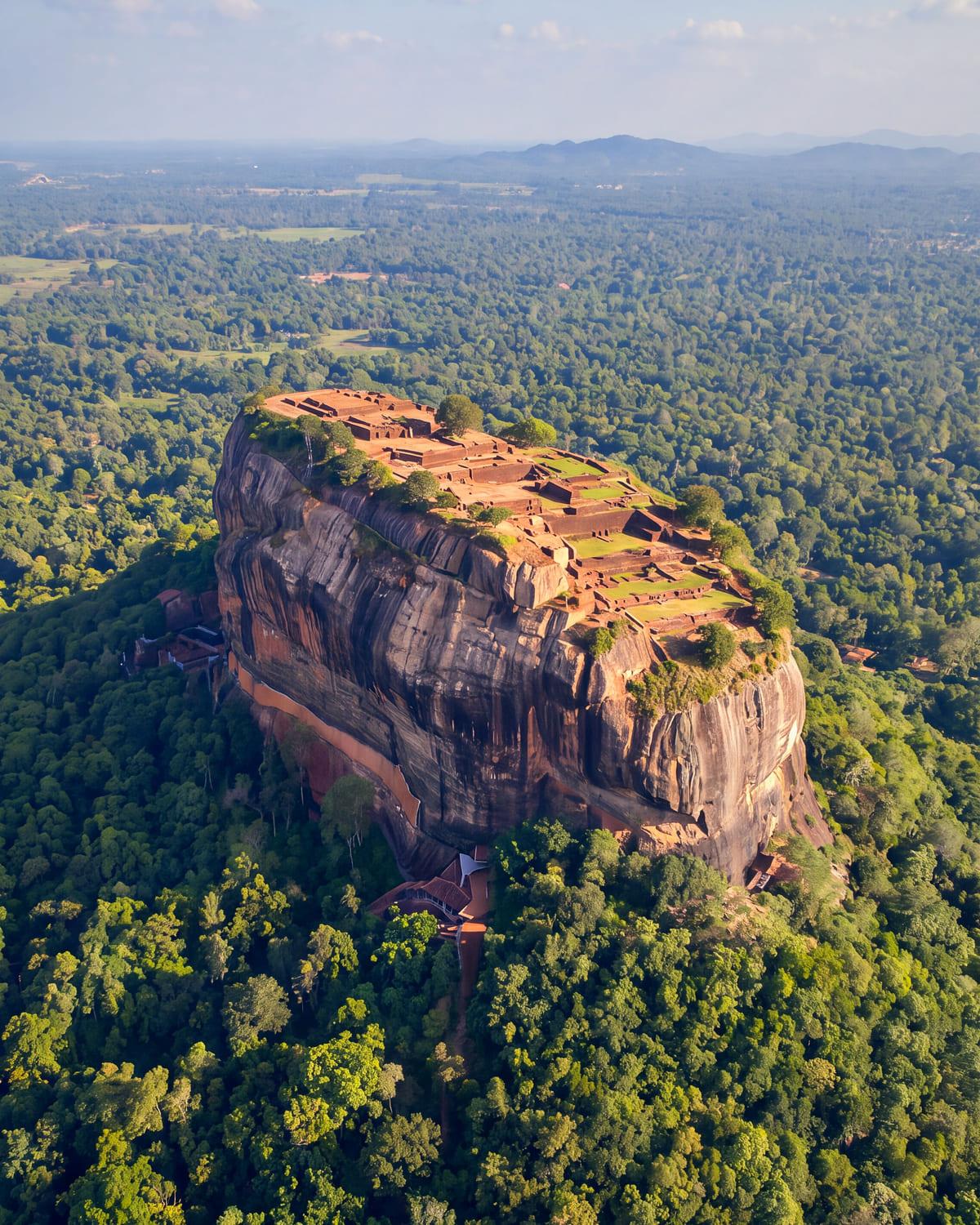
Sigiriya for the climb and the 5th-century rock fortress; Kandy for the last royal capital, the Temple of the Tooth and the start of the hills. They are different days, and most routes can hold both. We plan the one that fits your route best.
January to April. Kandy sits in the central hills, which take rain from both monsoons, May to July and October to December. January to April is the drier period; the Perahera falls in July or August.
By road, 2 to 4 hours from Bandaranaike International Airport, the shorter on the Central Expressway. Kandy station is on the Main Line; the intercity trains from Colombo take 2.5 to 3 hours. By air, Cinnamon Air flies scheduled seaplanes to the Victoria Reservoir, outside the city.
Also in the cultural triangle
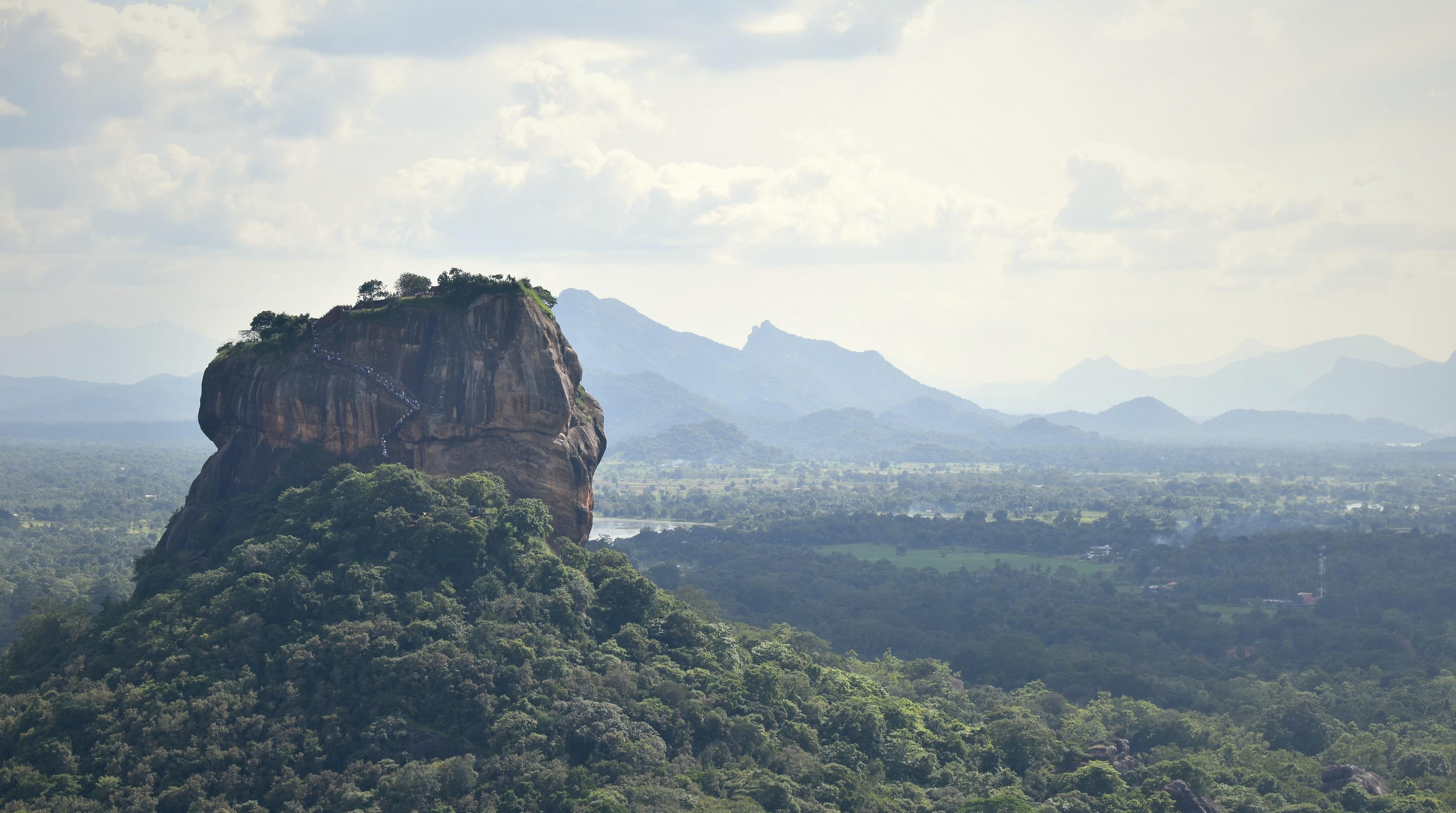
Sigiriya
The 5th-century rock fortress, 180 m above the plain
Best February to September
- Climbing Sigiriya rock at the opening
- Sunrise from Pidurangala rock
- The elephant gathering at Minneriya or Kaudulla
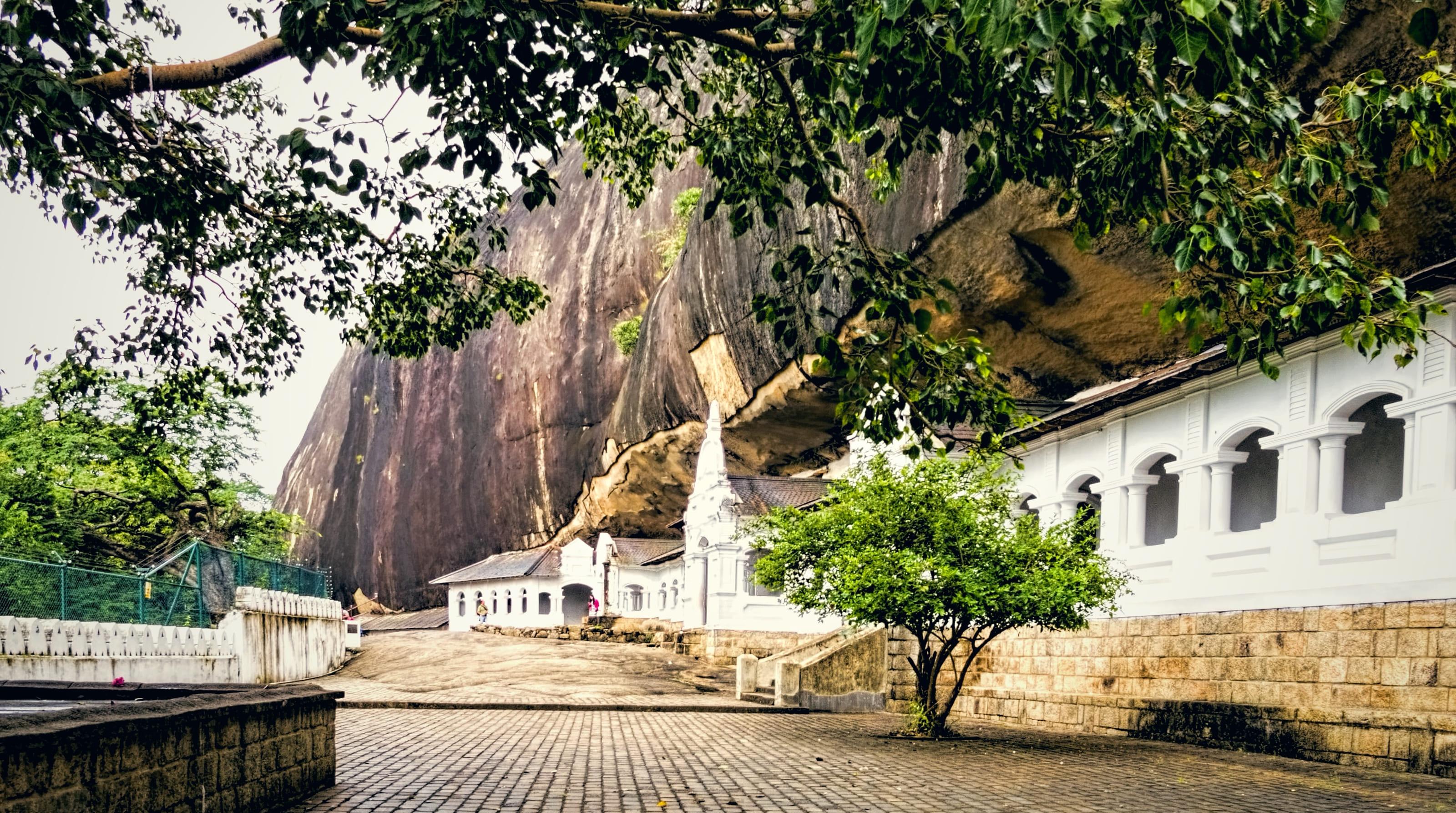
Dambulla
The cave temple with 153 Buddhas, at the hub of the Cultural Triangle
Best February to September
- The painted caves of the Dambulla cave temple
- Nalanda Gedige, the Hindu and Buddhist shrine
- The ironwood forest and rose quartz ridge of Namal Uyana
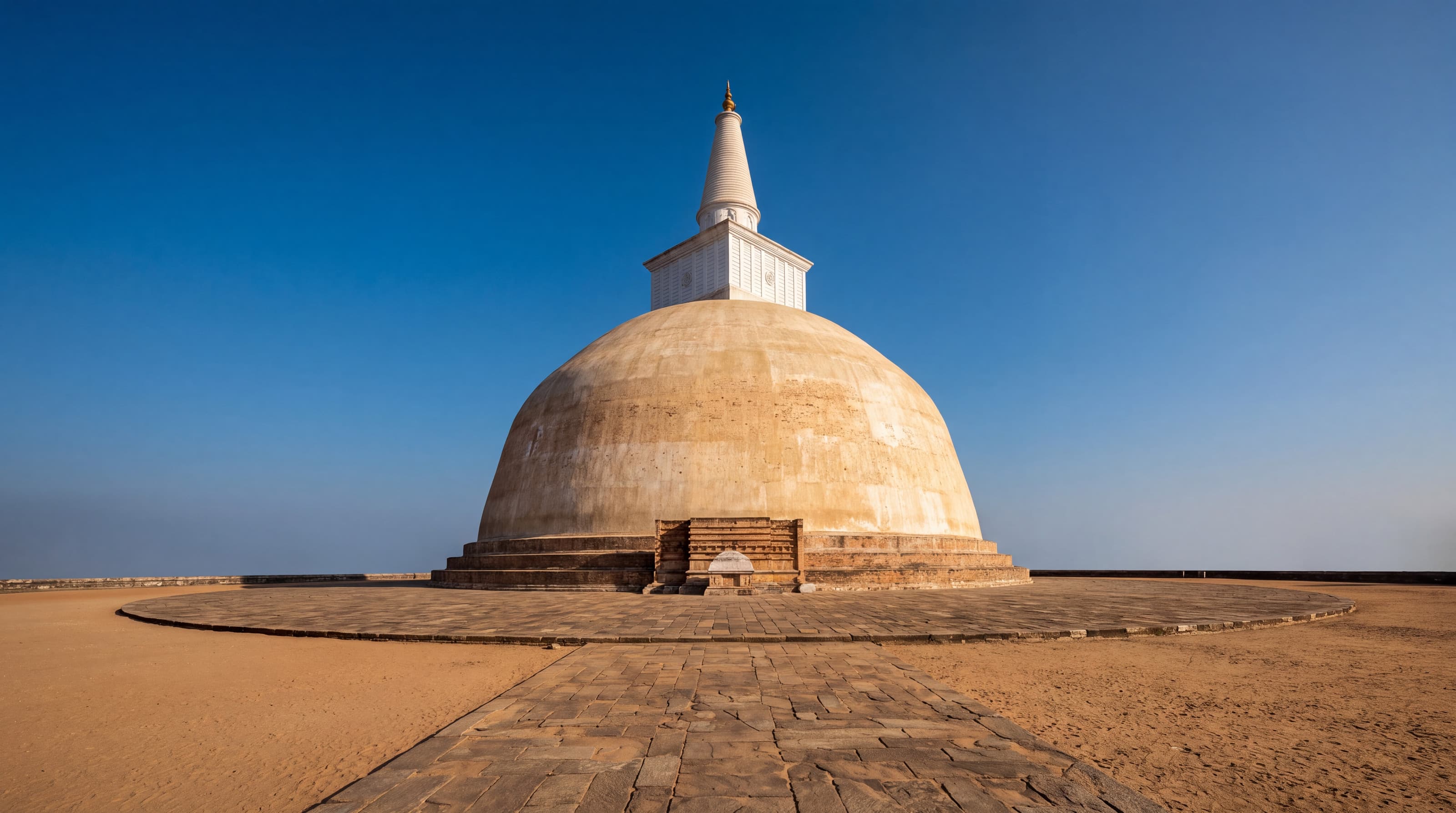
Anuradhapura
The first capital, 1,400 years of it, and the oldest planted tree on earth
Best February to September
- The Sacred City of Anuradhapura by bicycle
- Dusk at the Sri Maha Bodhi on a full moon day
- Mihintale, where Buddhism came to the island
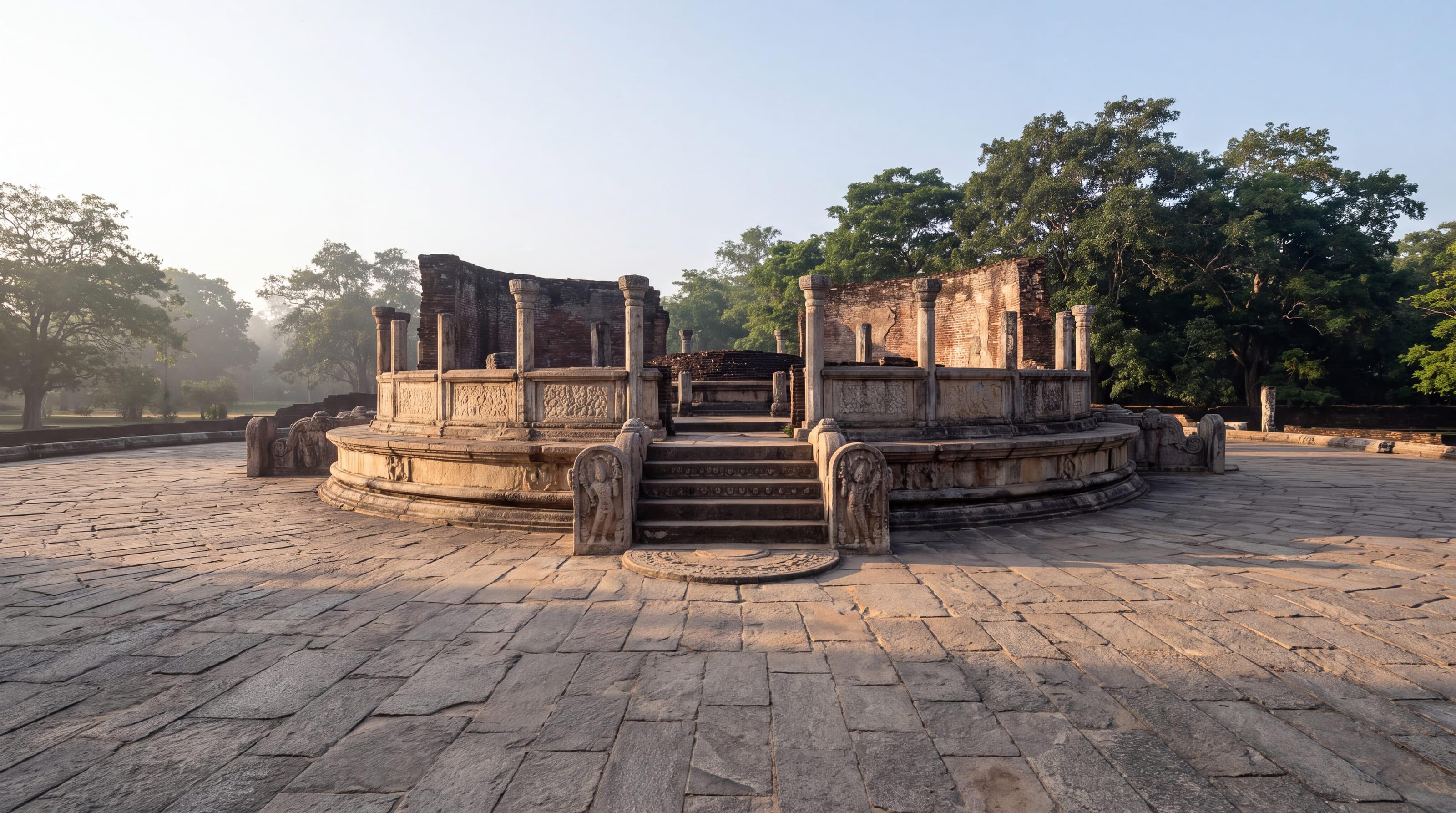
Polonnaruwa
The second capital: Gal Vihara's Buddhas beside the great reservoir
Best February to September
- The ancient city of Polonnaruwa by bicycle
- A safari in Wasgamuwa National Park
- The circular relic house of Medirigiriya
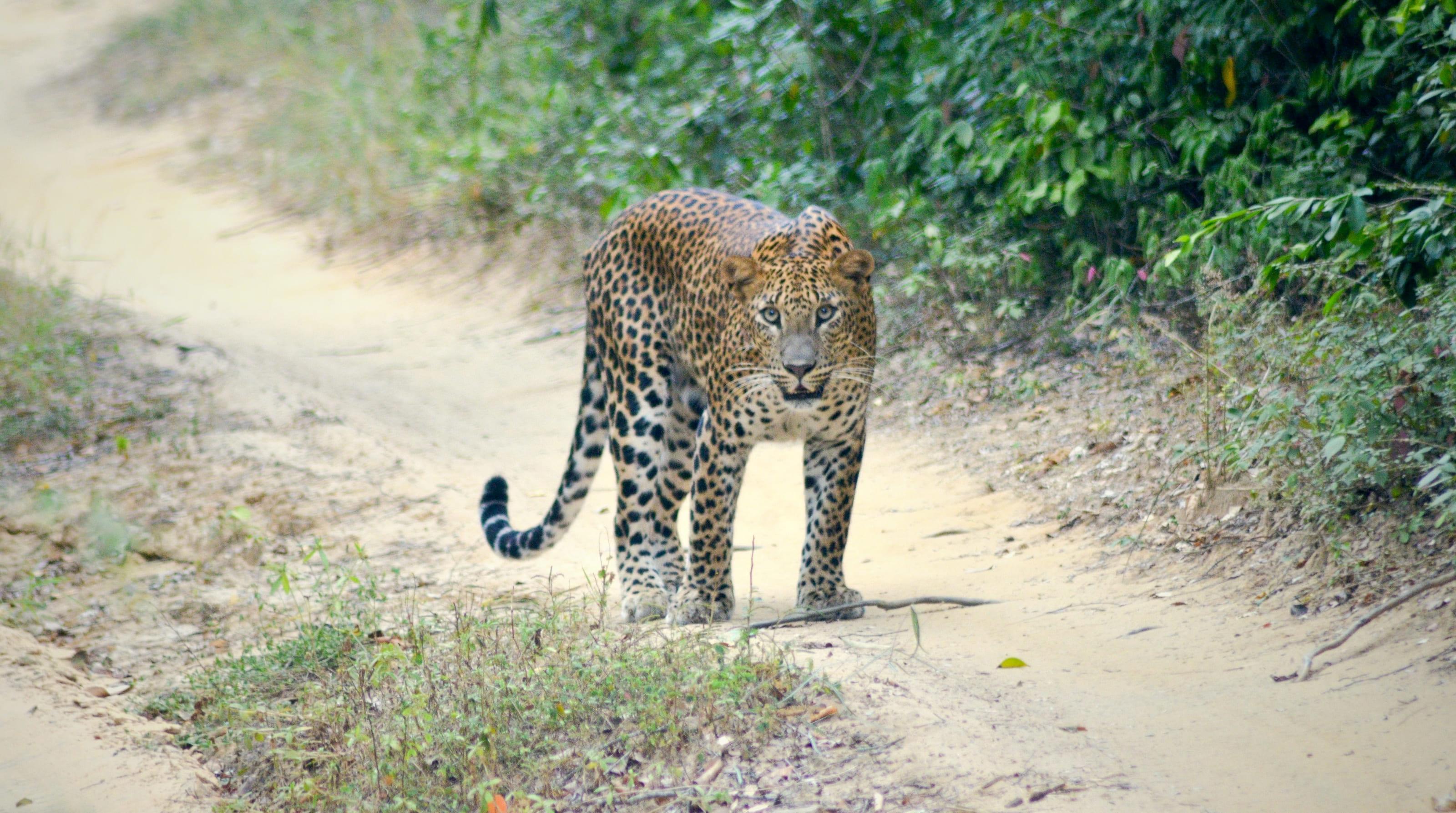
Wilpattu
The largest park, the quietest: leopards among 106 lakes
Best March to September
- A leopard safari in Wilpattu
- Dolphin watching off Kalpitiya
- Dinner by the campfire at a Wilpattu camp
