
Sigiriya The 5th-century rock fortress, 180 m above the plain
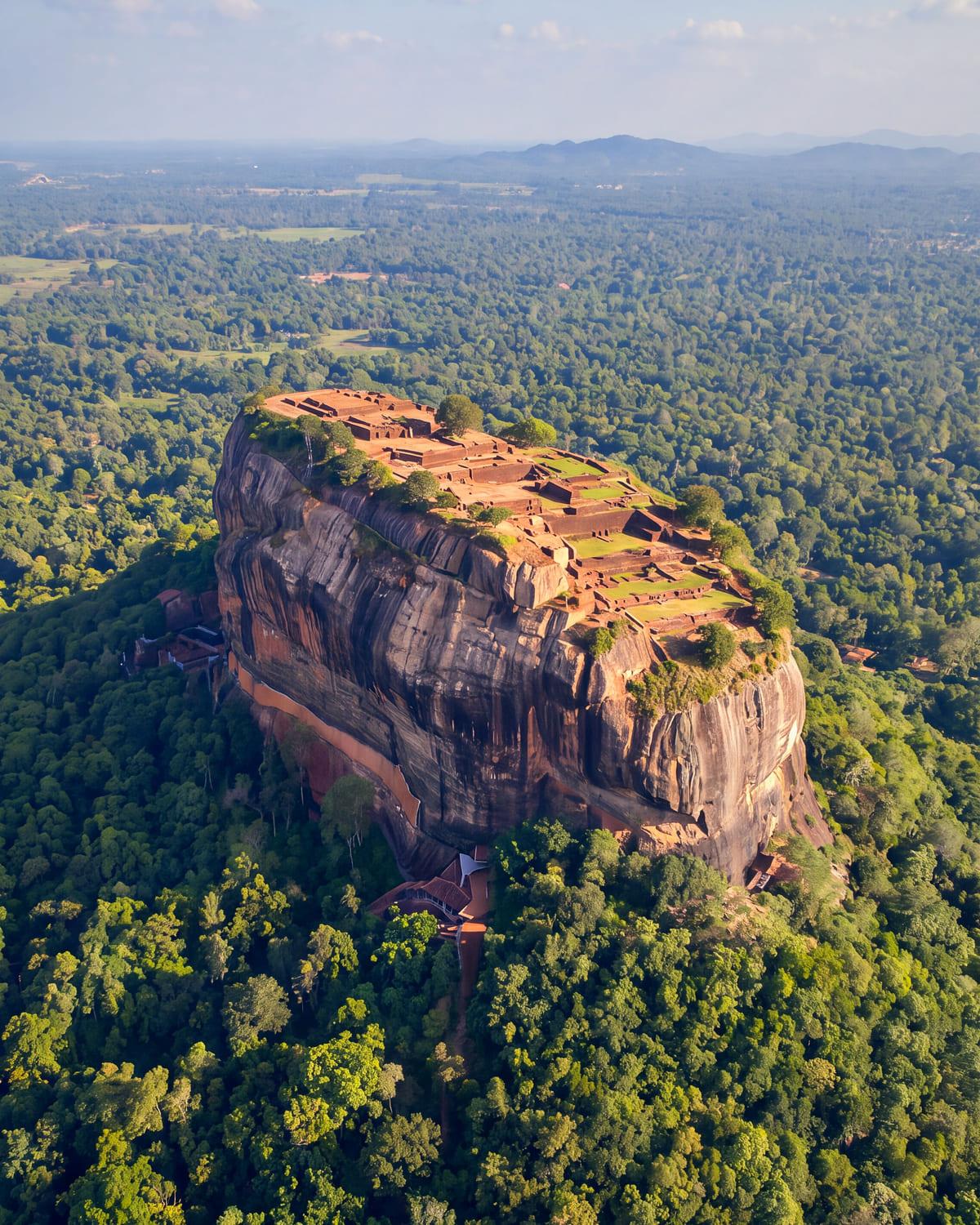
Sigiriya is a rock fortress of the 5th century in Matale District, about 160 km north-east of Colombo. King Kashyapa built it between 477 and 495 on a granite rock that rises some 180 m above the plain to 349 m above sea level. The Ancient City of Sigiriya is a UNESCO World Heritage Site, listed in 1982.
The climb passes the frescoes of celestial figures on the western face, the Mirror Wall, whose polished plaster carries more than 685 verses written between the 8th and 10th centuries, and the Lion's Paw gate, of which only the paws and legs remain. Below are 3 symmetrical water gardens whose conduits still run in the rains, and the boulder gardens on the lower slopes.
Photograph above: Gayomiw, CC BY-SA 4.0, cropped and colour-graded, via Wikimedia Commons
What to see in Sigiriya
- The frescoes
Celestial figures on the western face of the rock.
- The Mirror Wall
Polished plaster with more than 685 verses from the 8th to 10th centuries.
- Lion's Paw gate
Only the paws and legs of the lion remain.
- The water gardens
3 symmetrical gardens whose conduits still run in the rains.
- The boulder gardens
On the lower slopes.
The best time to visit Sigiriya
In the dry zone the north-east monsoon, roughly October to January, brings the rain; the rest of the year is dry.
February to September
How to reach Sigiriya
- By road3.5 to 5 hoursFrom the airport, 152 km
- By train5 hoursFrom Colombo to Habarana station
- By air30 to 35 minutesCinnamon Air to Sigiriya
- By helicopter50 minutesFrom the airport, 130 km, estimated
Hotels in Sigiriya
 VillaWater Garden SigiriyaIndigaswewa, on 38 acres of lakes, streams and paddy about 20 minutes by road from Sigiriya Rock
 ResortJetwing Vil UyanaOff Sigiriya Road, on reclaimed farmland about 7 km by road from Sigiriya Rock
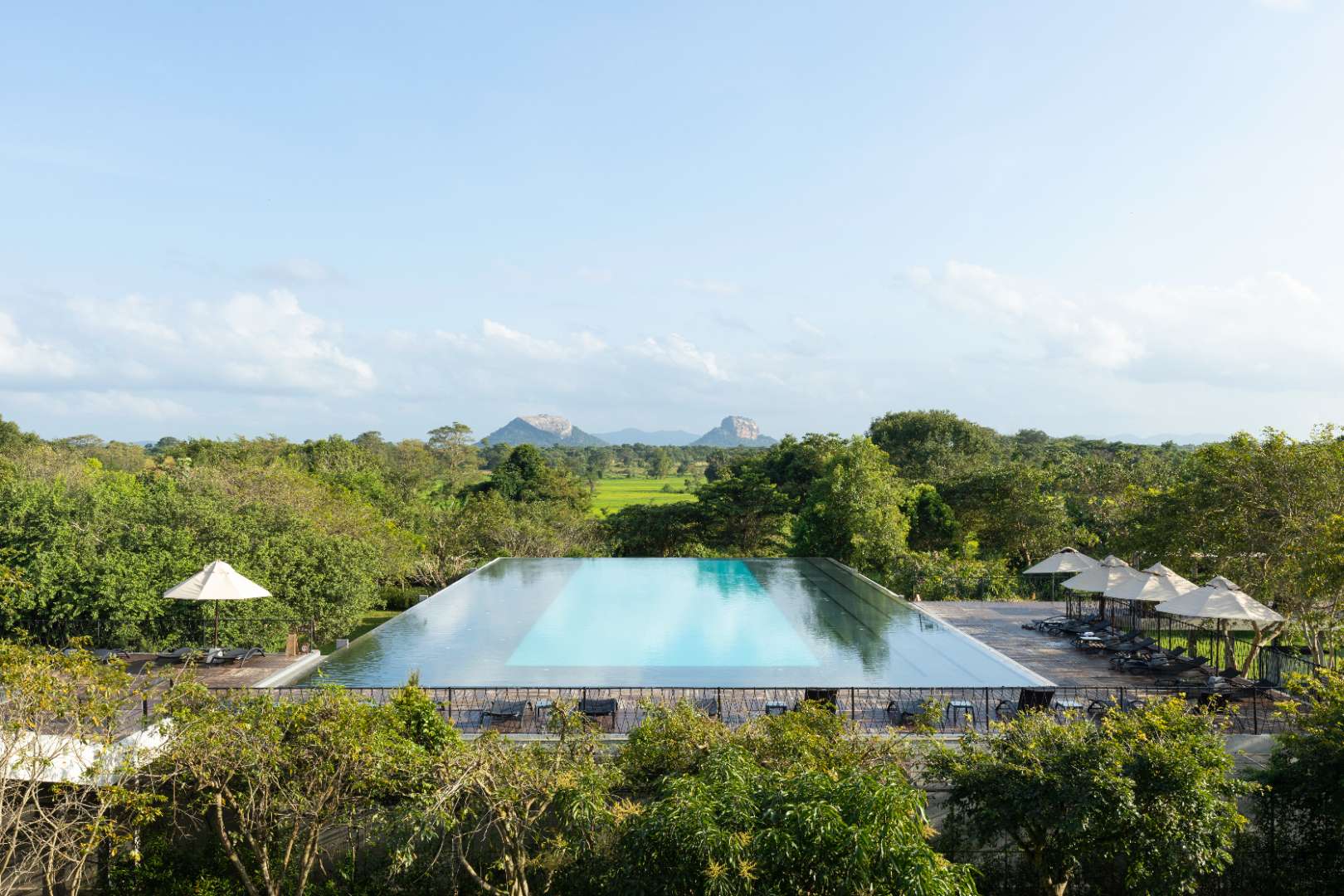 ResortAliya Resort and SpaAudangawa, west of Sigiriya, looking across paddy fields to Sigiriya and Pidurangala rocks
 ResortCinnamon Lodge HabaranaBeside Habarana lake at Habarana, in 27 acres of old forest garden
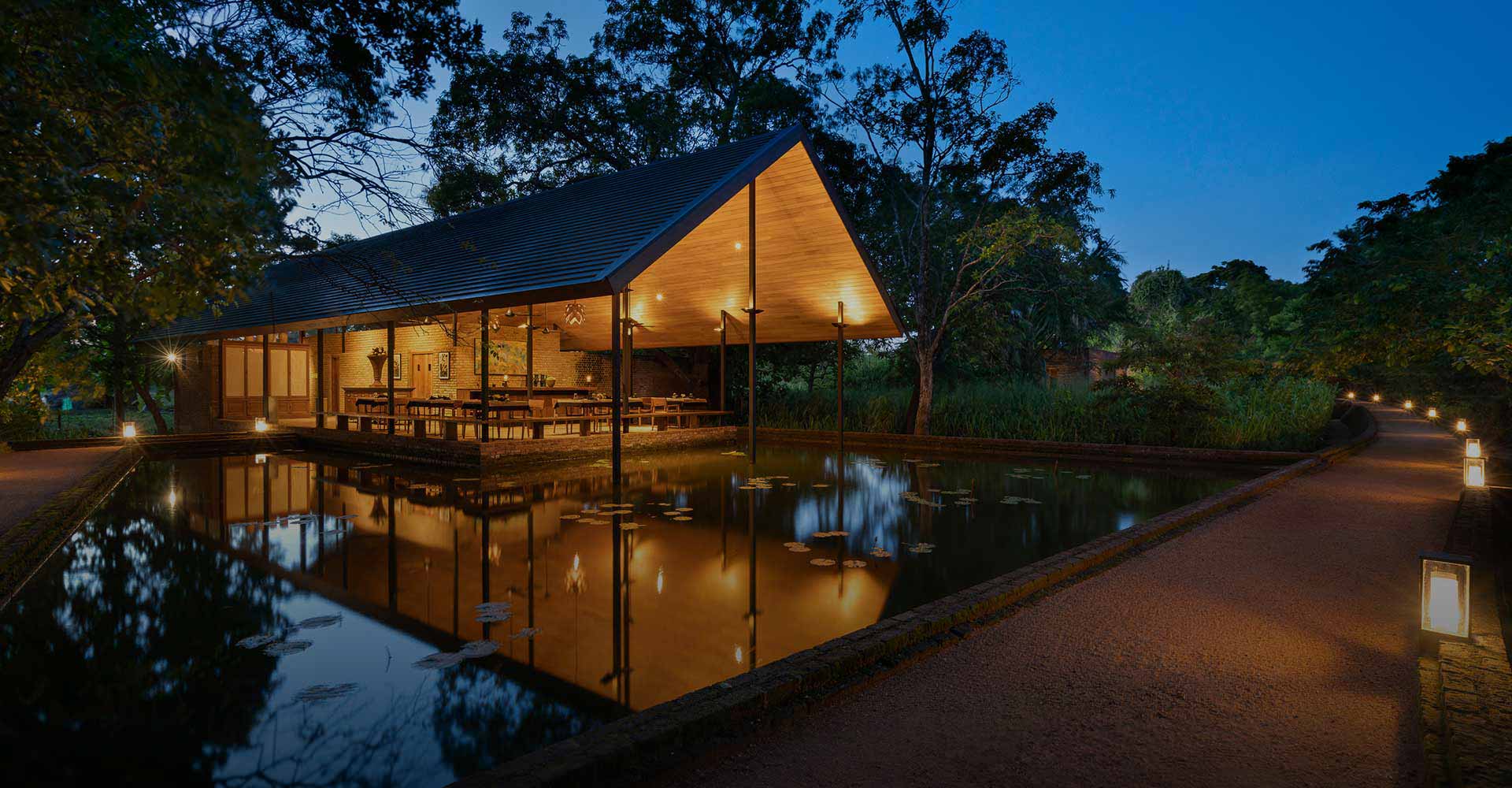 Boutique hotelTaru Villas MaiaKekirawa Road, Laksirigama, near Habarana lake, in scrub jungle
 VillaWild Grass Nature ResortKumbukkadanwala, near Lenawa Junction, on 25 acres of unfenced forest, grassland and water south-west of Sigiriya
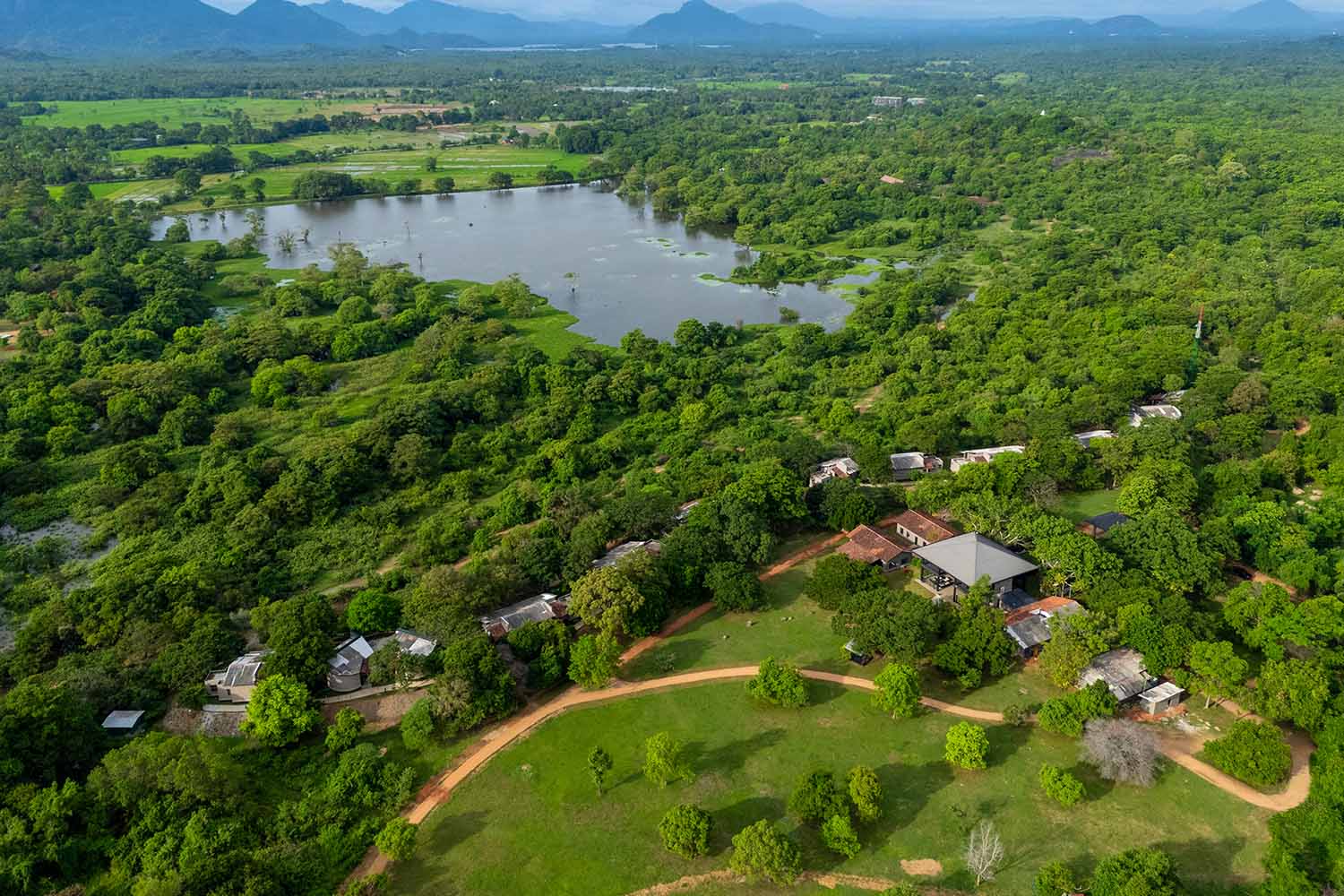 ResortAyugiri Ayurveda Wellness Resort SigiriyaPothana, Kimbissa, on 54 acres about 7.7 km from Sigiriya Rock and 17 km from Dambulla
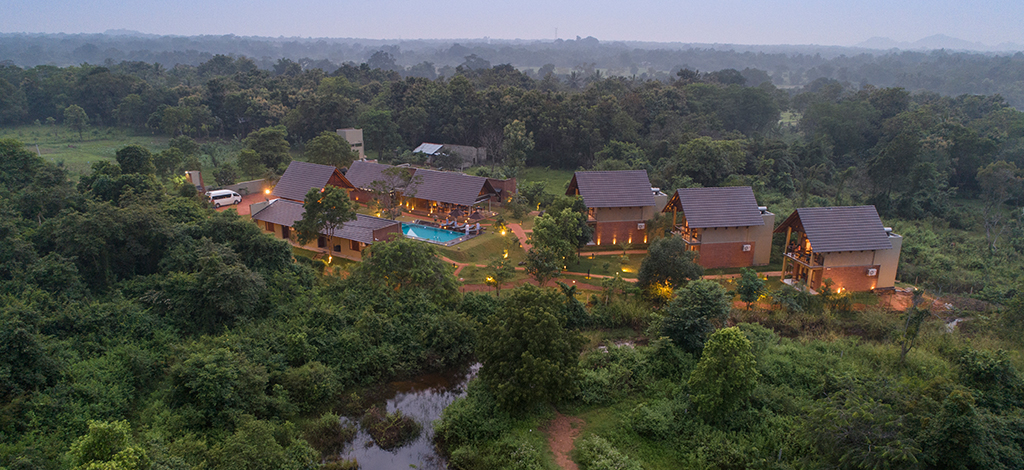 Boutique hotelRoo Mansala Boutique VillasThalkote, about 1 km from Sigiriya Rock, facing Sigiriya and Pidurangala
 ResortHabarana Village by CinnamonBeside Habarana lake at Habarana, next door to Cinnamon Lodge Habarana, in the Cultural Triangle
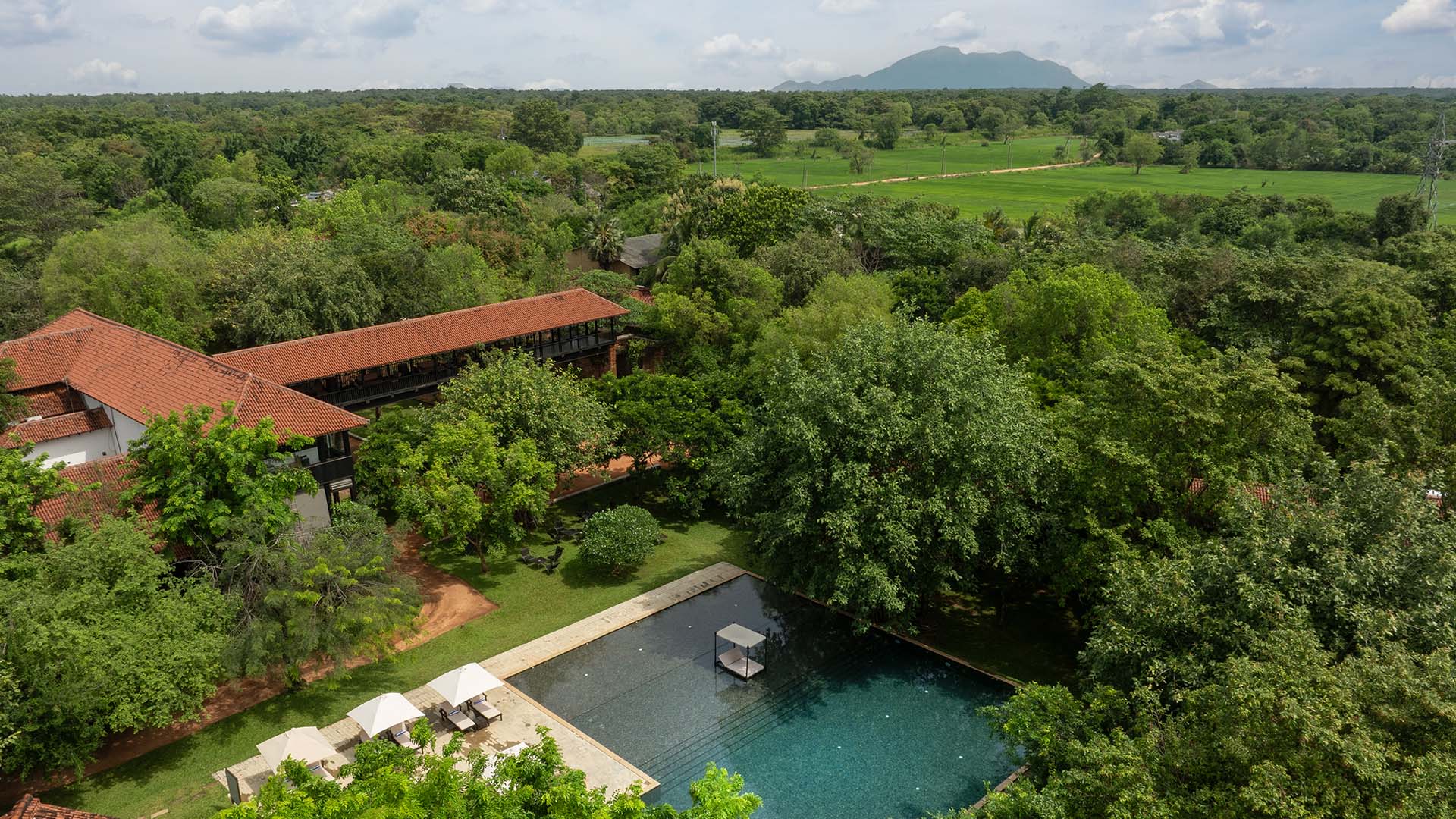 ResortSigiriya Jungles Resort & SpaAudangawa Road, Kimbissa, near Sigiriya, in 10 acres of gardens beside the paddy fields
Things to do from Sigiriya
 Culture and heritageClimbing Sigiriya rock at the openingSigiriya is the rock fortress of King Kashyapa, who reigned from 477 to 495 CE and built his palace on a granite rock rising about 200 m above the plain; after his death it became a monastery until the 14th century, and it has been a UNESCO World Heritage Site since 1982. The way up passes the water and boulder gardens, 22 surviving frescoes of celestial women, the Mirror Wall carved with verses by visitors from the 6th to the 14th centuries, and the paws of the great lion gate.
 AdventureSunrise from Pidurangala rockPidurangala is the rock just north of Sigiriya and almost as high, with a working Buddhist temple at its foot and a large reclining Buddha halfway up. From its top there is a clear view of Sigiriya rock across the forest, and it is a favourite climb for the sunrise.
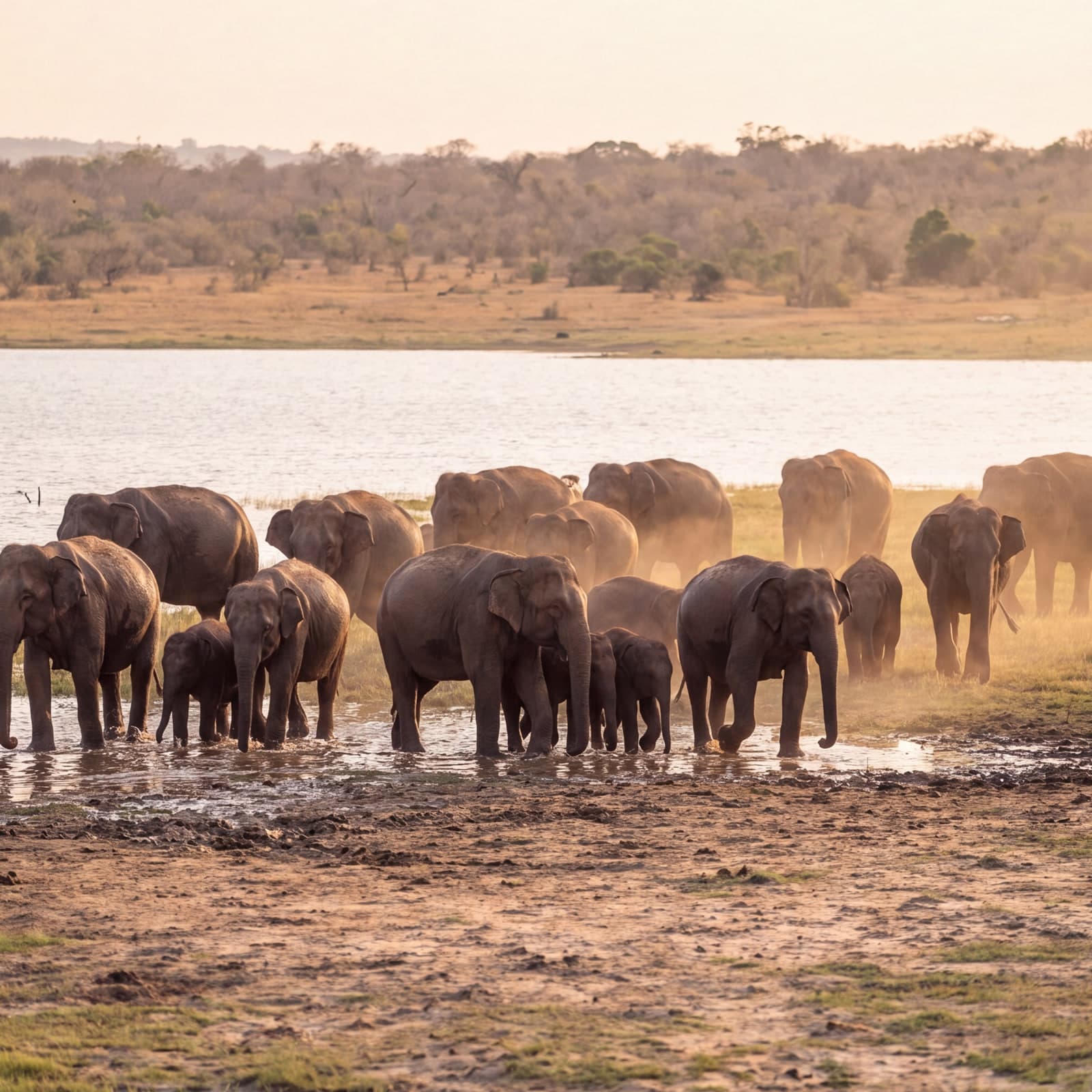
 Nature and wildlifeThe elephant gathering at Minneriya or KaudullaMinneriya and Kaudulla are neighbouring national parks joined by an elephant corridor, each built around an ancient reservoir from the time of the Anuradhapura kingdom. In the dry season the water recedes and fresh grass grows on the exposed shore, and up to 300 elephants gather at the Minneriya tank to feed, drink and bathe.
 DiningA village lunch in the paddy country near HabaranaIn the village of Hiriwadunna, near Habarana, a cart pulled by 2 bulls takes guests along farm tracks for 15 to 20 minutes to a lake, crossed on a simple catamaran with Sigiriya and Pidurangala rocks in view. A short walk through paddy fields and vegetable gardens leads to a village house and the tree hut where the farmers sleep.
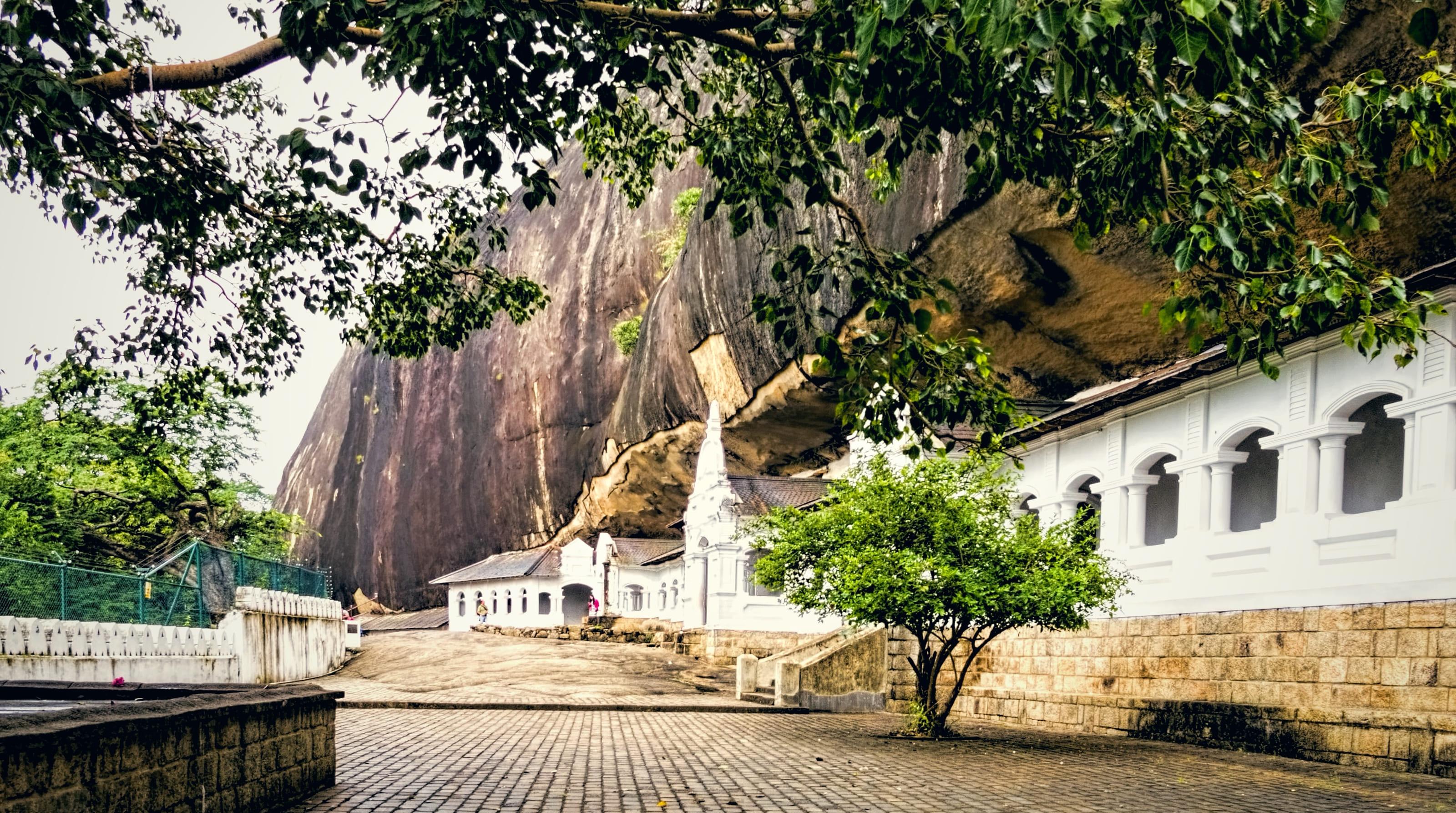
 Culture and heritageThe painted caves of the Dambulla cave templeThe Rangiri Dambulla cave temple fills 5 main caves under a granite outcrop that rises 160 m above the plains, begun in the 1st century BCE when King Valagamba took refuge here and enlarged by later kings as late as the 18th century. It holds 153 Buddha statues, 3 statues of kings and 4 of gods, a 14 m reclining Buddha carved from the rock and some 2,100 sq m of painted walls and ceilings, and has been a UNESCO World Heritage Site since 1991.
 Culture and heritageRitigala, the forest monasteryRitigala is a Buddhist forest monastery on the slopes of a mountain near Habarana, in the district of Anuradhapura, once home to an ascetic order known as the monks of the rag robes. It grew over many centuries into a place of pilgrimage and was left to the forest between the 10th and 12th centuries.
 Nature and wildlifeAn elephant safari in Hurulu Eco ParkHurulu Eco Park lies on the edge of the Hurulu Forest Reserve near Habarana, forest that was declared a biosphere reserve in January 1977. The reserve is an important home of the Sri Lankan elephant, and it forms part of the corridor along which the herds move between Minneriya and Kaudulla national parks.
 Nature and wildlifeA birdwatching walk with a naturalist, arranged with your stayMany of the lodges around Sigiriya, Dambulla and Polonnaruwa keep a resident naturalist who leads birdwatching walks on the grounds and along the edges of nearby tanks and paddy fields. Around Habarana the birds include Malabar pied hornbills, eagles and herons, and for those with a sharp eye the brown fish owl.
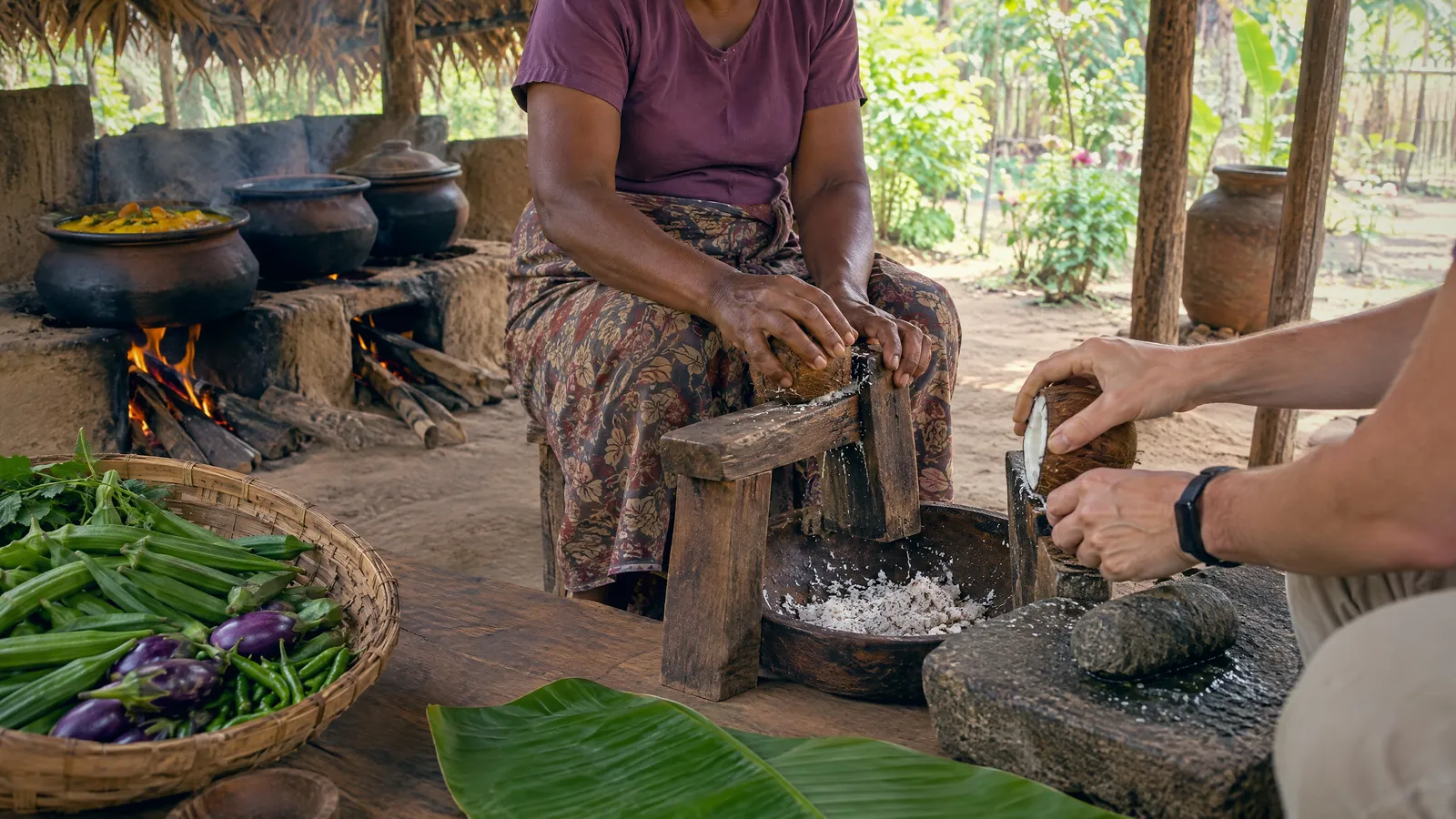 DiningA Sri Lankan cooking lesson, arranged with your stay near SigiriyaSeveral lodges around Sigiriya and Habarana teach guests to cook in a village-style kitchen over a wood fire, led by cooks from the nearby villages. A lesson often begins in the garden, picking the vegetables that go into the curries.
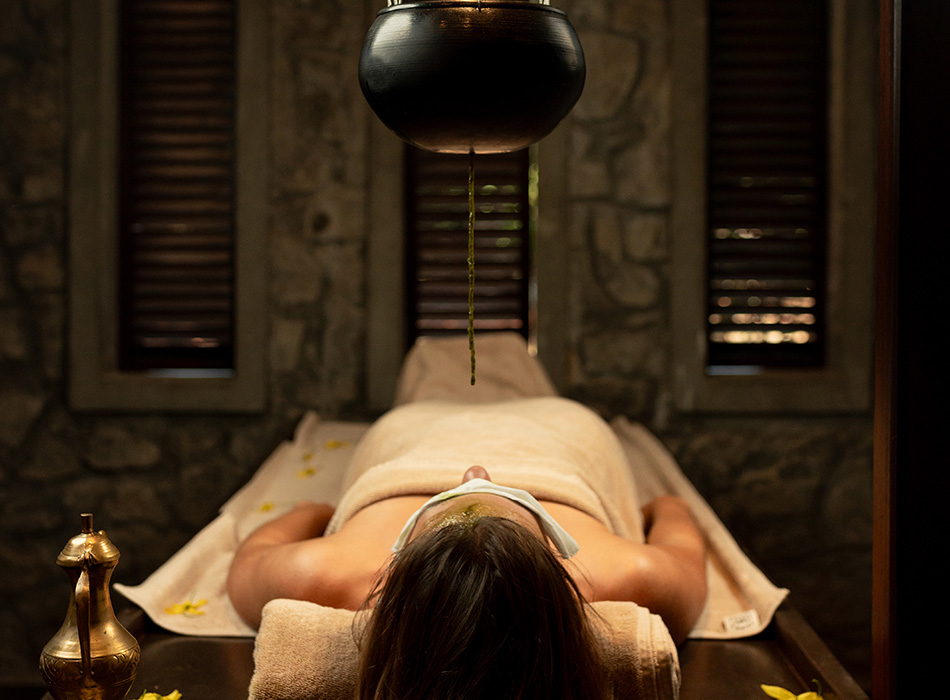 WellnessAn Ayurveda treatment, arranged with your stayAyurveda, the traditional medicine of Sri Lanka and India, is offered at several stays around Sigiriya and Dambulla, from a single treatment in a hotel spa to a resort built around programmes of 5 to 30 days. Treatments begin with an Ayurvedic doctor, who advises on the right ones for each guest.
 Nature and wildlifeA night walk for slender lorises, arranged with your stay near SigiriyaThe grey slender loris is a small nocturnal primate found only in southern India and Sri Lanka, where one race lives in the dry forests of the north and east. Several lodges near Sigiriya offer a night walk to look for it, on their own grounds or in the forest nearby, led by a resident naturalist.
 Culture and heritage · about 1 hourPottery with a village potter, arranged with your stay near SigiriyaSome stays near Sigiriya invite a potter from a nearby village, whose craft has come down through his family, to show guests how a pot is shaped on the wheel.
Photographs from Wikimedia Commons: Climbing Sigiriya rock at the opening: Bernard Gagnon, CC BY-SA 3.0 via Wikimedia Commons; Sunrise from Pidurangala rock: Ji-Elle, CC BY-SA 3.0 via Wikimedia Commons; The elephant gathering at Minneriya or Kaudulla: Walter Gehr, CC BY-SA 4.0 via Wikimedia Commons; A village lunch in the paddy country near Habarana: Cherubino, CC BY-SA 3.0 via Wikimedia Commons; The painted caves of the Dambulla cave temple: Philip Nalangan, CC BY 4.0 via Wikimedia Commons; Ritigala, the forest monastery: Prof Ranga Sai, CC BY 4.0 via Wikimedia Commons; An elephant safari in Hurulu Eco Park: Cherubino, CC BY-SA 3.0 via Wikimedia Commons; A birdwatching walk with a naturalist, arranged with your stay: Javahn19, CC BY-SA 3.0 via Wikimedia Commons; An Ayurveda treatment, arranged with your stay: Photograph from Browns Hotels and Resorts' own site; A night walk for slender lorises, arranged with your stay near Sigiriya: Dr. K.A.I. Nekaris, CC BY-SA 4.0 via Wikimedia Commons; Pottery with a village potter, arranged with your stay near Sigiriya: SL Trades and Crafts Documentation Project, CC BY-SA 4.0 via Wikimedia Commons.
Questions about Sigiriya
Planning with us starts with a conversation, so ask anything: a person on our team replies to every message.
Yes. The 5th-century rock fortress rises some 180 m above the plain, with frescoes and the Mirror Wall on the way up and the water gardens below; it is a UNESCO World Heritage Site. We take you at first light, before the stairs get busy.
Stay nearby rather than visit in a day: the climb is best at opening time, and Dambulla's caves and the ancient cities are around it. It makes a good base for the Cultural Triangle. We plan the climb for the cool of the morning.
Sigiriya is the monument: the fortress, the frescoes and the gardens. Pidurangala, the rock beside it, is the view of Sigiriya, with a short scramble near the top. If you can, do both: Sigiriya early, Pidurangala for the late light. We plan the timing.
February to September. In the dry zone the north-east monsoon, roughly October to January, brings the rain; the rest of the year is dry.
By road, 3.5 to 5 hours from Bandaranaike International Airport. Habarana station, 18 km away on the Trincomalee and Batticaloa lines, is about 5 hours from Colombo. By air, Cinnamon Air flies scheduled seaplanes to Sigiriya in 30 to 35 minutes from Colombo.
Also in the cultural triangle
Kandy
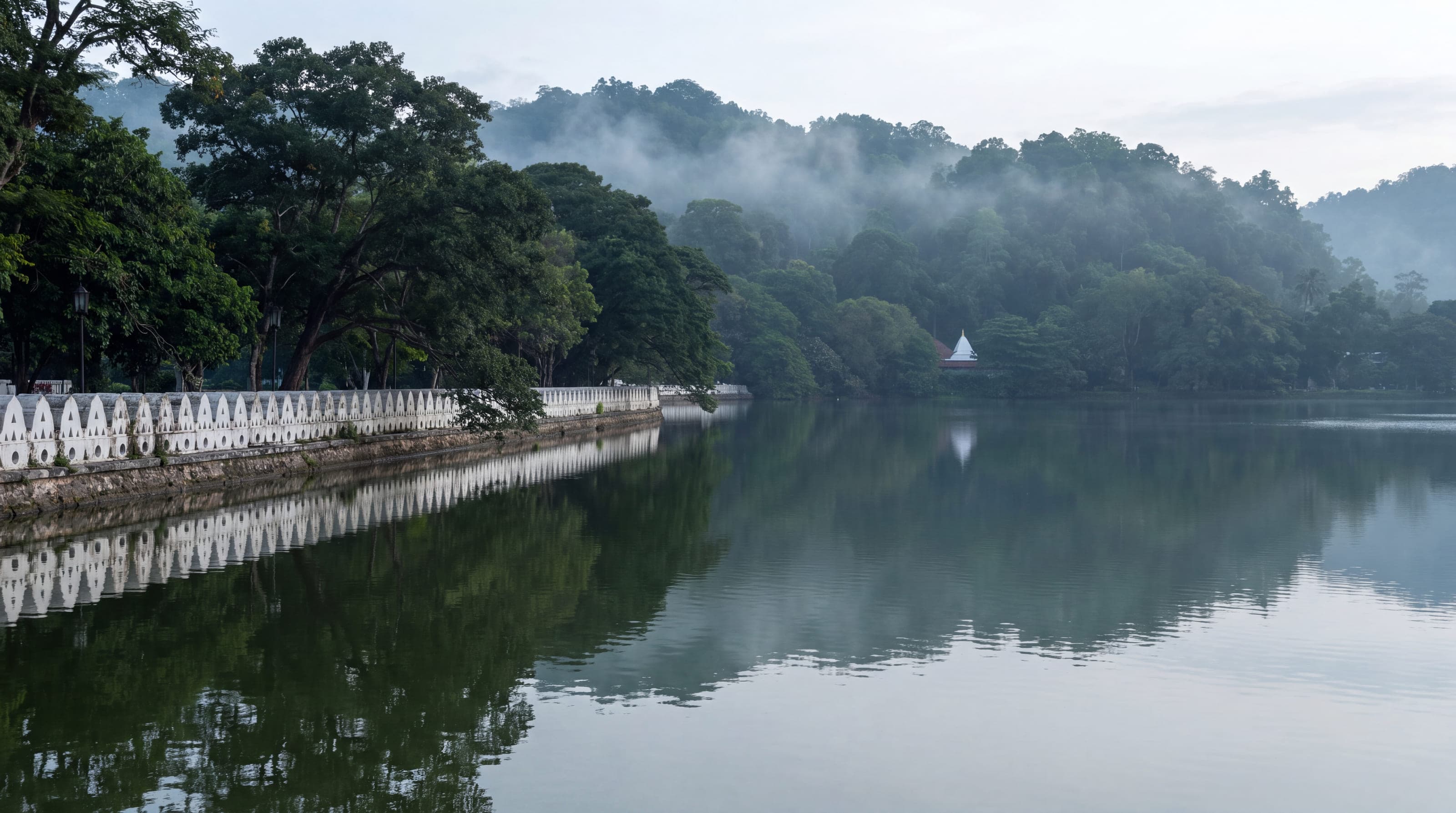
The last royal capital, the Temple of the Tooth, a World Heritage Site
Best January to April
- The evening service at the Temple of the Tooth
- The Royal Botanic Gardens at Peradeniya
- An evening of Kandyan dance
Dambulla
The cave temple with 153 Buddhas, at the hub of the Cultural Triangle
Best February to September
- The painted caves of the Dambulla cave temple
- Nalanda Gedige, the Hindu and Buddhist shrine
- The ironwood forest and rose quartz ridge of Namal Uyana
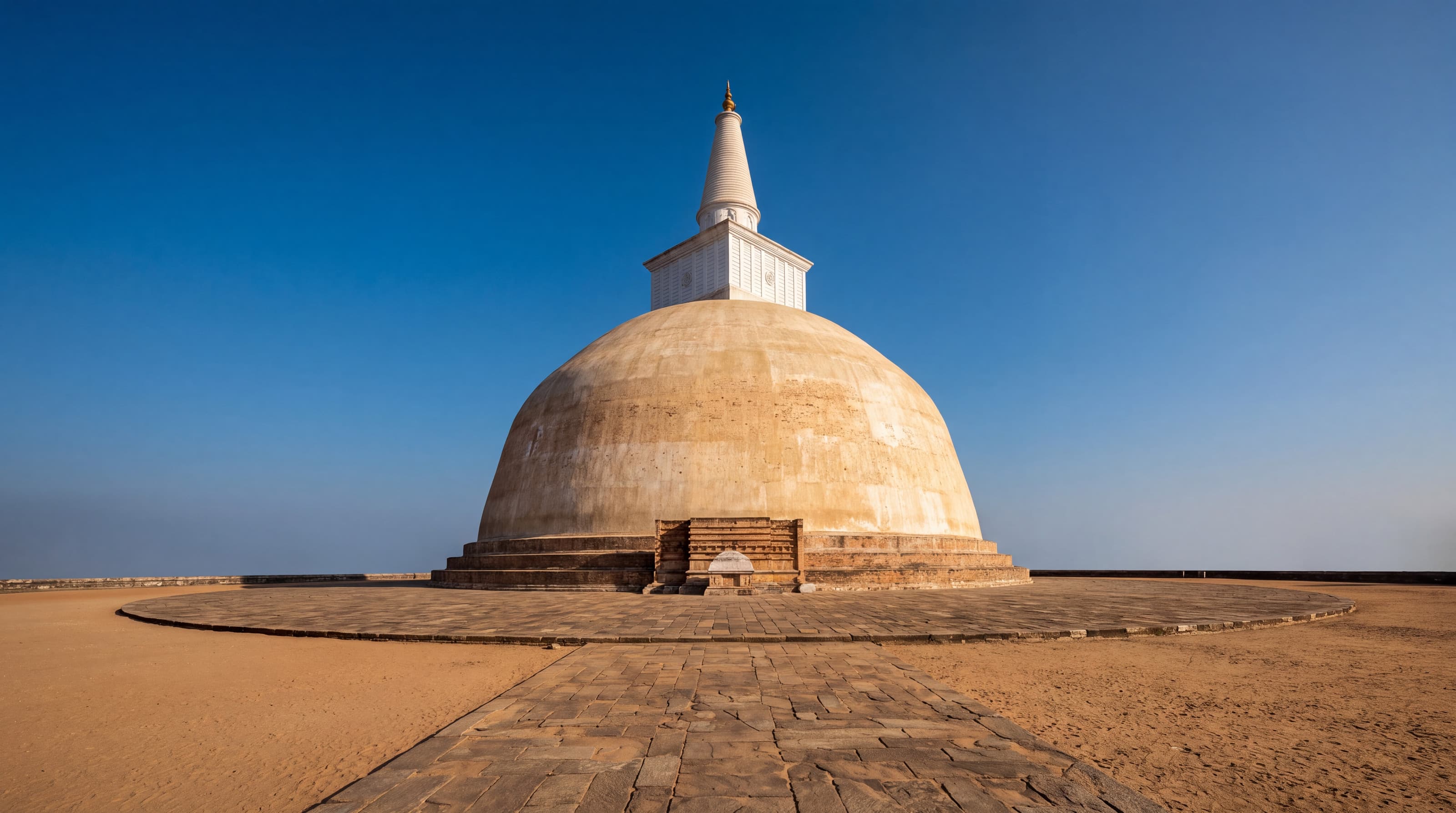
Anuradhapura
The first capital, 1,400 years of it, and the oldest planted tree on earth
Best February to September
- The Sacred City of Anuradhapura by bicycle
- Dusk at the Sri Maha Bodhi on a full moon day
- Mihintale, where Buddhism came to the island
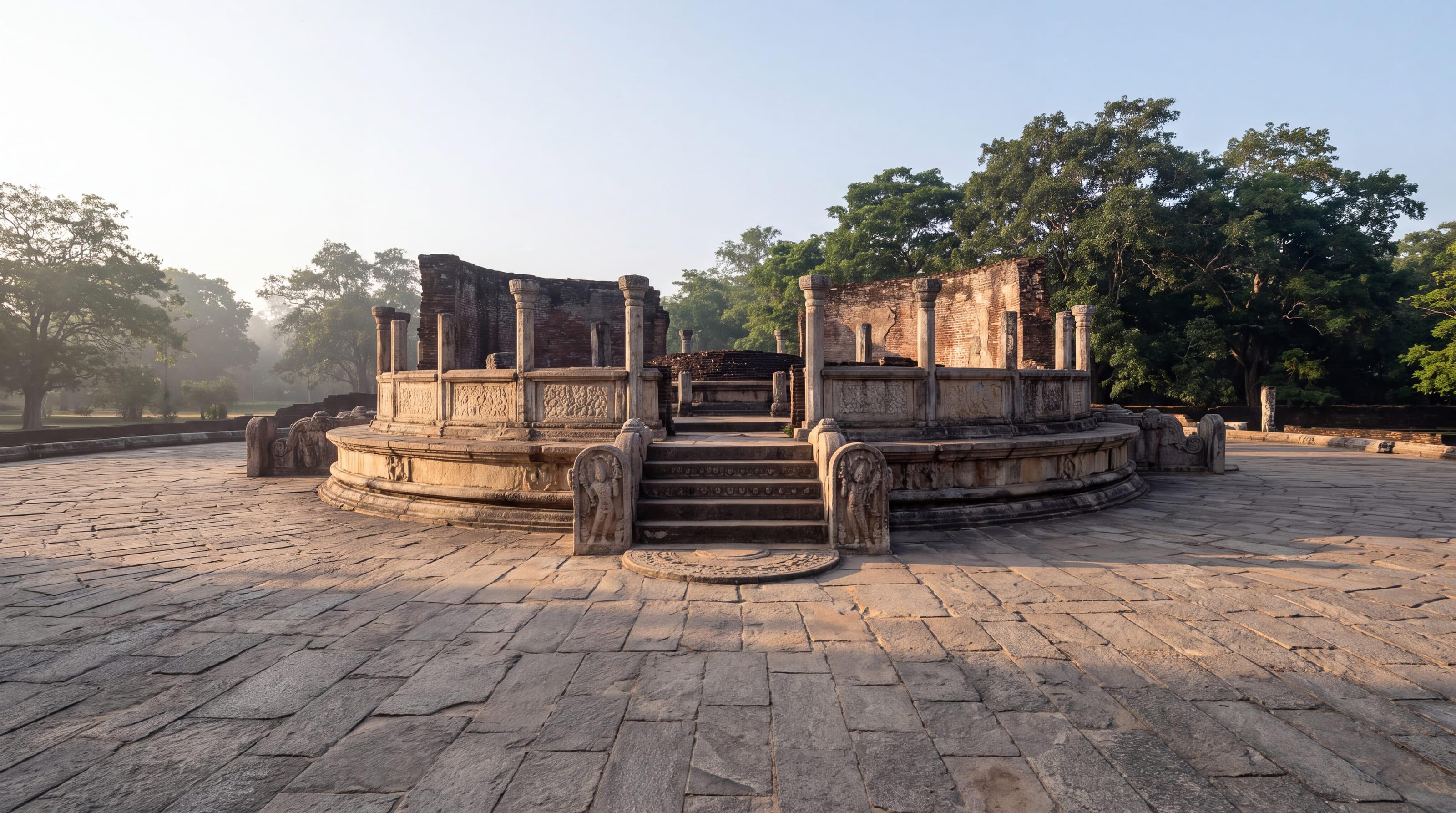
Polonnaruwa
The second capital: Gal Vihara's Buddhas beside the great reservoir
Best February to September
- The ancient city of Polonnaruwa by bicycle
- A safari in Wasgamuwa National Park
- The circular relic house of Medirigiriya
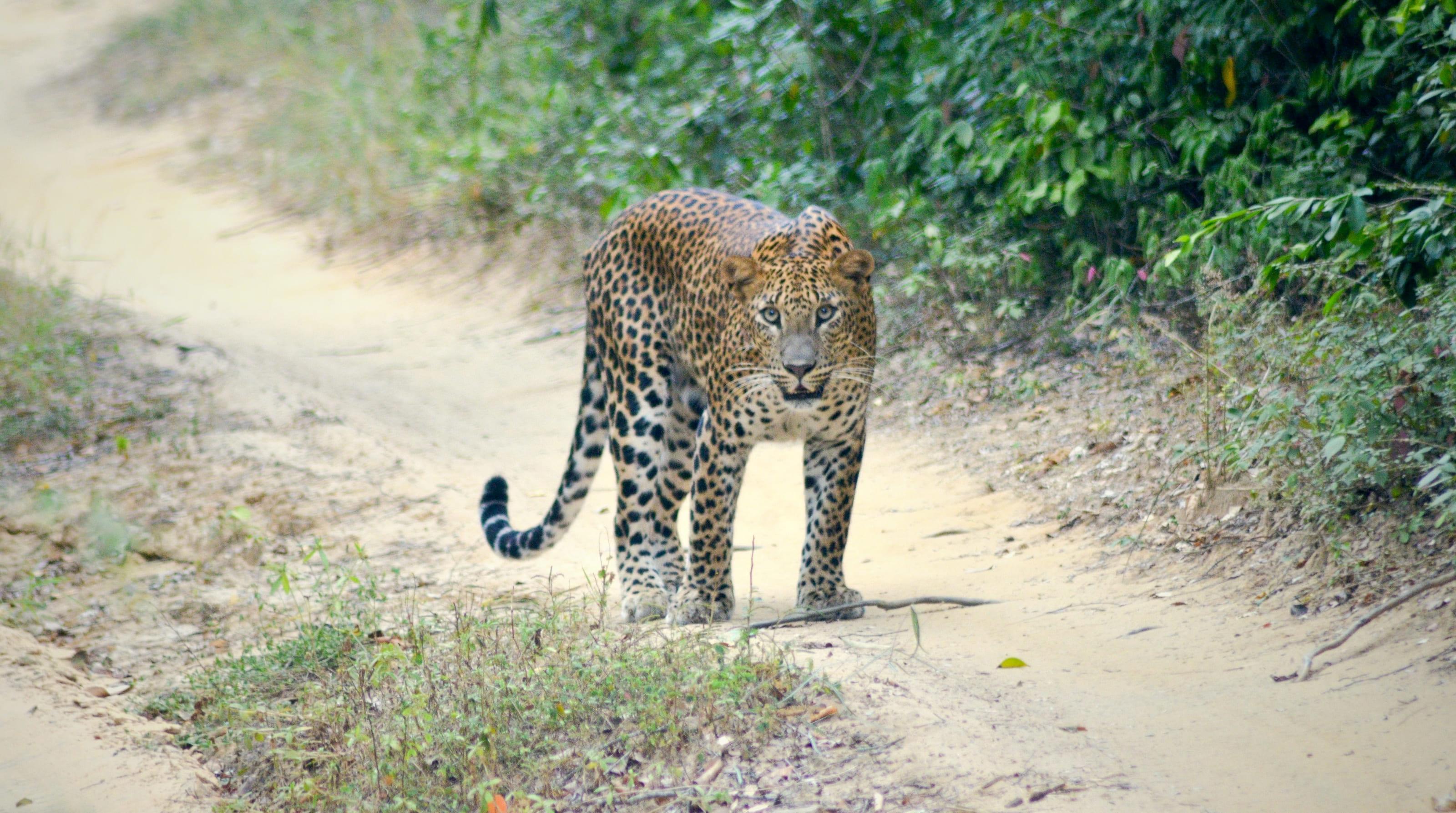
Wilpattu
The largest park, the quietest: leopards among 106 lakes
Best March to September
- A leopard safari in Wilpattu
- Dolphin watching off Kalpitiya
- Dinner by the campfire at a Wilpattu camp
