
Anuradhapura The first capital, 1,400 years of it, and the oldest planted tree on earth
Anuradhapura, 205 km north of Colombo, was the island's first capital for about 1,400 years, from around 377 BCE to 1017 CE. The Sacred City of Anuradhapura is a UNESCO World Heritage Site, listed in 1982, and it holds the great stupas of the early kingdom and the Jaya Sri Maha Bodhi, the oldest documented planted tree in the world.
Ruwanwelisaya, Jetavanaramaya, Abhayagiri and Thuparamaya are the stupas; Isurumuniya is the rock temple with its carvings. At Mihintale, nearby, Buddhism is held to have arrived on the island. The site is wide and still in use, so it is best taken slowly and early, with a guide who knows it.
What to see in Anuradhapura
- Jaya Sri Maha Bodhi
The oldest documented planted tree in the world.
- Ruwanwelisaya
The great white stupa.
- Jetavanaramaya
The great stupa of the Jetavana monastery.
- Abhayagiri and Thuparamaya
The monastery stupas.
- Isurumuniya
The rock temple with its carvings.
- Mihintale
Where Buddhism arrived on the island, nearby.
The best time to visit Anuradhapura
In the dry zone the north-east monsoon, roughly October to January, brings the rain; the rest of the year is dry.
February to September
How to reach Anuradhapura
- By roadFrom Bandaranaike International Airport, about 200 km north; allow the better part of half a day.
- By train4.5 hoursFrom Colombo to Anuradhapura station
- By airCinnamon Air lists Anuradhapura for charter; the scheduled service lands at Sigiriya.
- By helicopter55 minutesFrom the airport, 140 km, estimated
Hotels in Anuradhapura

Things to do from Anuradhapura
 Culture and heritageThe Sacred City of Anuradhapura by bicycleAnuradhapura was the island's first capital, founded in the 4th century BCE and a royal city for more than 1,300 years, and its Sacred City has been a UNESCO World Heritage Site since 1982. It holds the Sri Maha Bodhi and the great stupas of Ruwanwelisaya, Jetavanaramaya and Abhayagiri, among the tallest ancient brick structures ever built, with the twin ponds of Kuttam Pokuna and ancient reservoirs still in use.
 Culture and heritageDusk at the Sri Maha Bodhi on a full moon dayThe Jaya Sri Maha Bodhi is a sacred fig grown from a sapling of the tree under which the Buddha attained enlightenment, brought to the island in the 3rd century BCE and held to be the oldest documented planted tree in the world. Beside it rises Ruwanwelisaya, the great white stupa begun by King Dutugemunu in the 2nd century BCE.
 Culture and heritageMihintale, where Buddhism came to the islandMihintale is the mountain where, by tradition, the monk Mahinda met King Devanampiyatissa in 247 BC and brought Buddhism to Sri Lanka. After the king's conversion some 68 caves and a monastery were built here, and among the remains are one of the oldest hospitals known and the restored Kantaka Chetiya stupa, now 40 ft high.
 Culture and heritageRitigala, the forest monasteryRitigala is a Buddhist forest monastery on the slopes of a mountain near Habarana, in the district of Anuradhapura, once home to an ascetic order known as the monks of the rag robes. It grew over many centuries into a place of pilgrimage and was left to the forest between the 10th and 12th centuries.
 Culture and heritageThe standing Buddha of AvukanaThe Avukana Buddha is a standing figure of 38 ft 10 in, 46 ft with its pedestal, carved almost in the round from a single boulder and still joined to the rock behind by a narrow strip. It is usually dated to King Dhatusena in the 5th century CE, though some scholars place it later, and it looks east over the Kala Wewa reservoir that he built.
 Nature and wildlifeA leopard safari in WilpattuWilpattu, 1,317 sq km of dry-zone forest and scrub on the north-west coast, is the island's largest national park and is named for its villus, some 106 natural, sand-rimmed lakes and tanks. A 2018 camera-trap survey counted 133 leopards, and sloth bears, elephants, sambar and spotted deer share the forest with mugger crocodiles and water birds.
 Culture and heritageIsurumuniya's rock carvings and the royal gardensIsurumuniya is a rock temple beside the Tissa Wewa reservoir, founded by King Devanampiya Tissa in the 3rd century BCE for 500 newly ordained monks and restored in the 5th century by Kasyapa I. Its granite boulders are carved in relief with elephants bathing at the edge of the pool and a seated man with a horse's head behind him, and the temple's small museum, opened in 1984, keeps the carving known as the Lovers and a panel of a royal family.
- Culture and heritageThe Western Monasteries, where Anuradhapura's forest monks meditatedWest of the ancient city, in scrub forest that was once a place of burials and cremation, stand the ruins of 14 monasteries, labelled A to N by archaeologists, built for the pamsukulika monks, an ascetic order who wore robes of discarded cloth. The area is first recorded under Kassapa IV, who reigned from 898 to 914 CE and built a dwelling there for the order.
 Culture and heritageThe Archaeological Museum of AnuradhapuraThe Archaeological Museum near Ruwanwelisaya was established in 1947 through the work of the archaeologist Senarath Paranavithana, and it is the oldest and largest archaeological museum of the island's Department of Archaeology. It holds the country's largest collection of inscriptions, alongside finds from the excavation of the ancient city.
 Culture and heritageKaludiya Pokuna, the black-water pond below MihintaleKaludiya Pokuna, the black-water pond, is a monastery of the Anuradhapura period at the western foot of Mihintale. It is named for its pool, about 200 ft long and 70 ft wide, whose water looks dark under the trees and granite that surround it.
Photographs from Wikimedia Commons: The Sacred City of Anuradhapura by bicycle: Kondephy, CC BY-SA 4.0 via Wikimedia Commons; Dusk at the Sri Maha Bodhi on a full moon day: Balou46, CC BY-SA 3.0 via Wikimedia Commons; Mihintale, where Buddhism came to the island: Hesandu Uyangoda, CC BY-SA 4.0 via Wikimedia Commons; Ritigala, the forest monastery: Prof Ranga Sai, CC BY 4.0 via Wikimedia Commons; The standing Buddha of Avukana: Carlos Delgado, CC BY-SA 4.0 via Wikimedia Commons; A leopard safari in Wilpattu: W.Hasitha Gayal Welgama, CC BY-SA 4.0 via Wikimedia Commons; Isurumuniya's rock carvings and the royal gardens: A.Savin, FAL via Wikimedia Commons; The Archaeological Museum of Anuradhapura: J. Ollé, CC BY-SA 3.0 via Wikimedia Commons; Kaludiya Pokuna, the black-water pond below Mihintale: Nipuna Gamage, CC BY-SA 4.0 via Wikimedia Commons.
Questions about Anuradhapura
Planning with us starts with a conversation, so ask anything: a person on our team replies to every message.
Yes. It was the island's first capital for some 1,400 years, a UNESCO World Heritage Site with great white stupas and the Jaya Sri Maha Bodhi, the oldest documented planted tree in the world. It is still a living place of worship. We take it slowly and early, with a guide who knows it.
The site is wide, so give it a full day, with Mihintale nearby, where Buddhism arrived on the island. Early morning and late afternoon are the best of it. We plan the day around the heat.
Polonnaruwa is compact, easy to see, and has the rock-cut Buddhas of Gal Vihara. Anuradhapura is larger and older, spread out, and still a living place of worship. If you choose one, Polonnaruwa is the easier day; we can plan both.
February to September. In the dry zone the north-east monsoon, roughly October to January, brings the rain; the rest of the year is dry.
By road from Bandaranaike International Airport, about 200 km north; allow the better part of half a day. Anuradhapura station, opened in 1904, is on the Northern Line, about 4.5 hours from Colombo and 4 to Jaffna. By air, Cinnamon Air lists Anuradhapura for charter; the scheduled service lands at Sigiriya.
Journeys and experiences
Also in the cultural triangle
Kandy
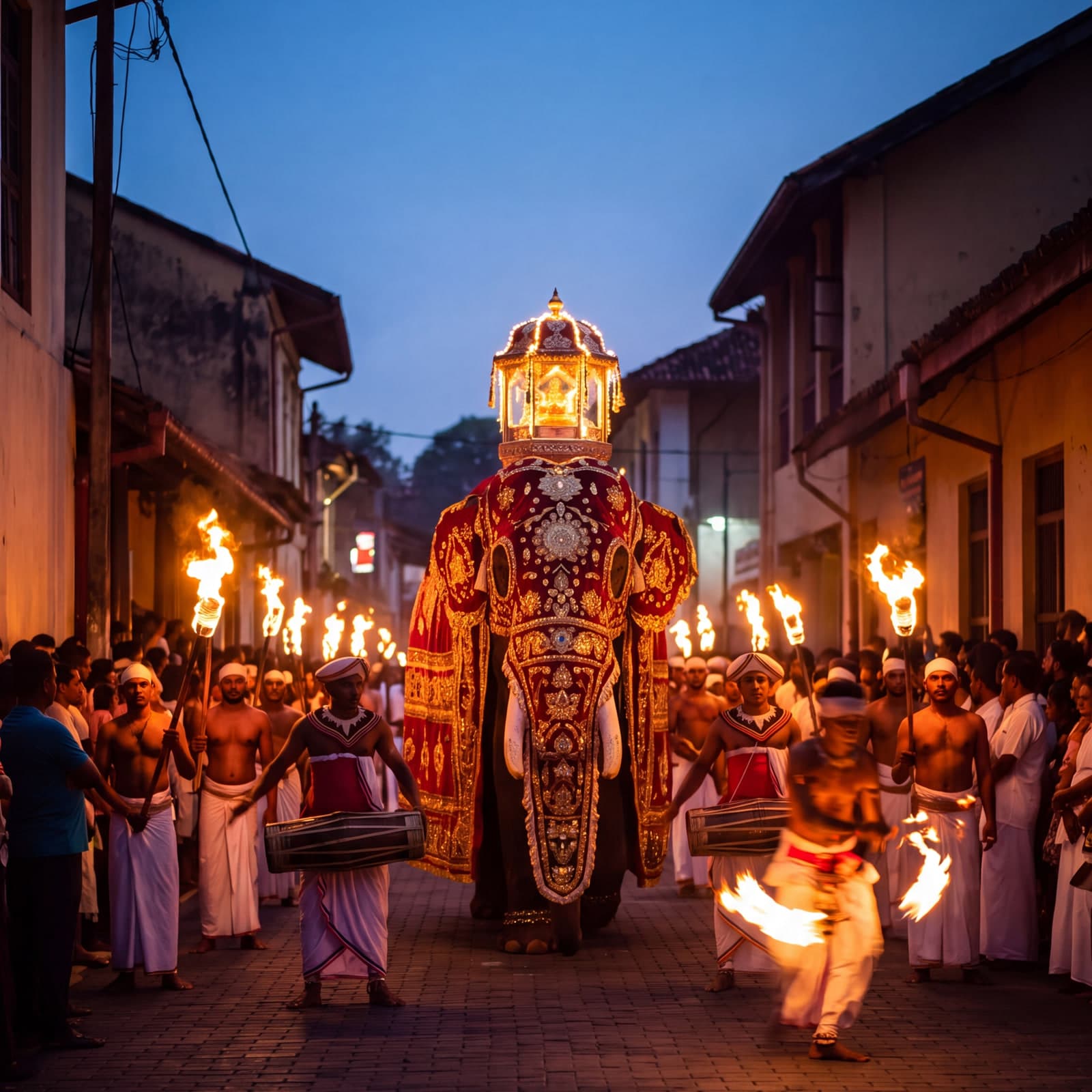
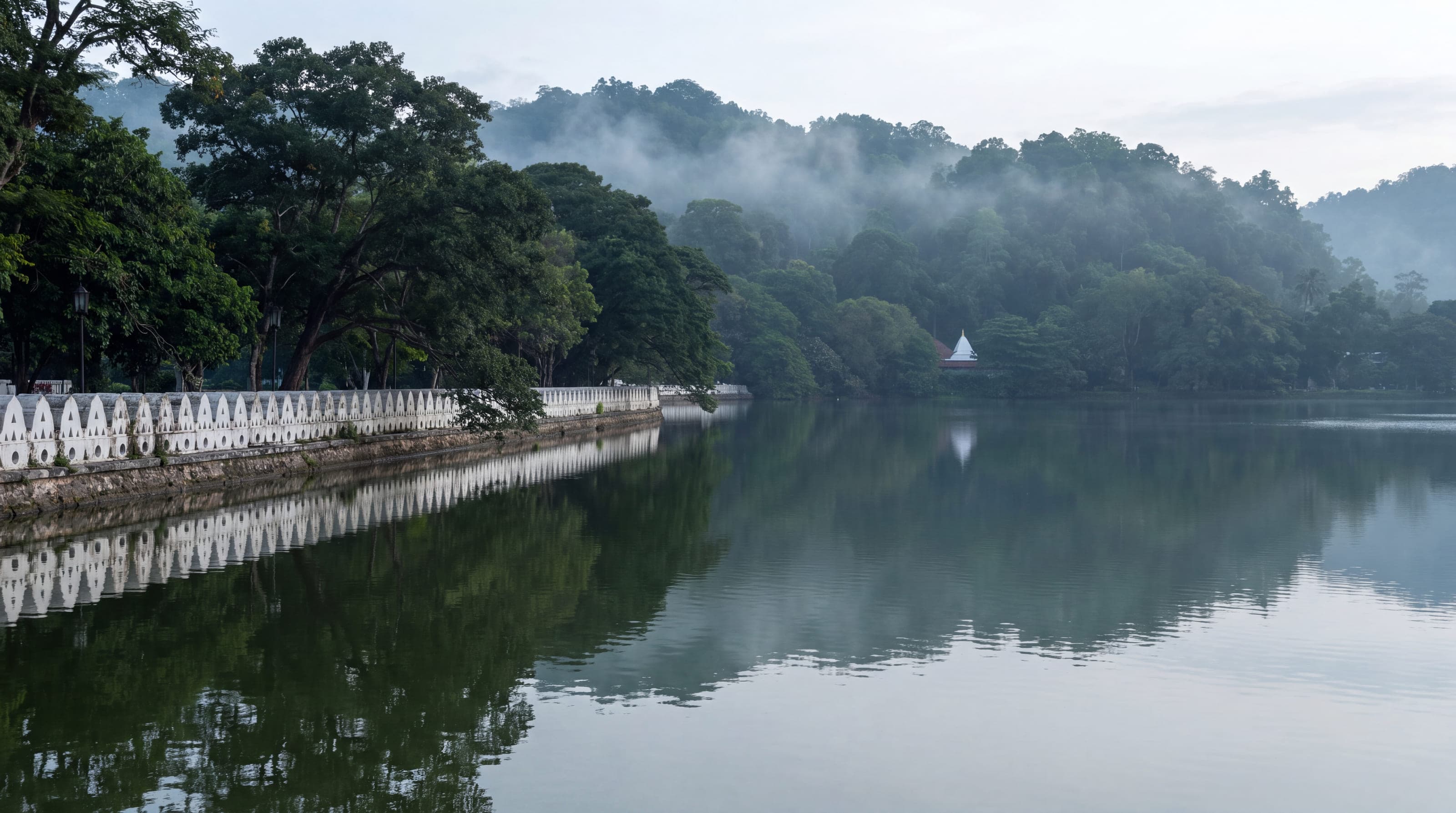
The last royal capital, the Temple of the Tooth, a World Heritage Site
Best January to April
- The evening service at the Temple of the Tooth
- The Royal Botanic Gardens at Peradeniya
- An evening of Kandyan dance
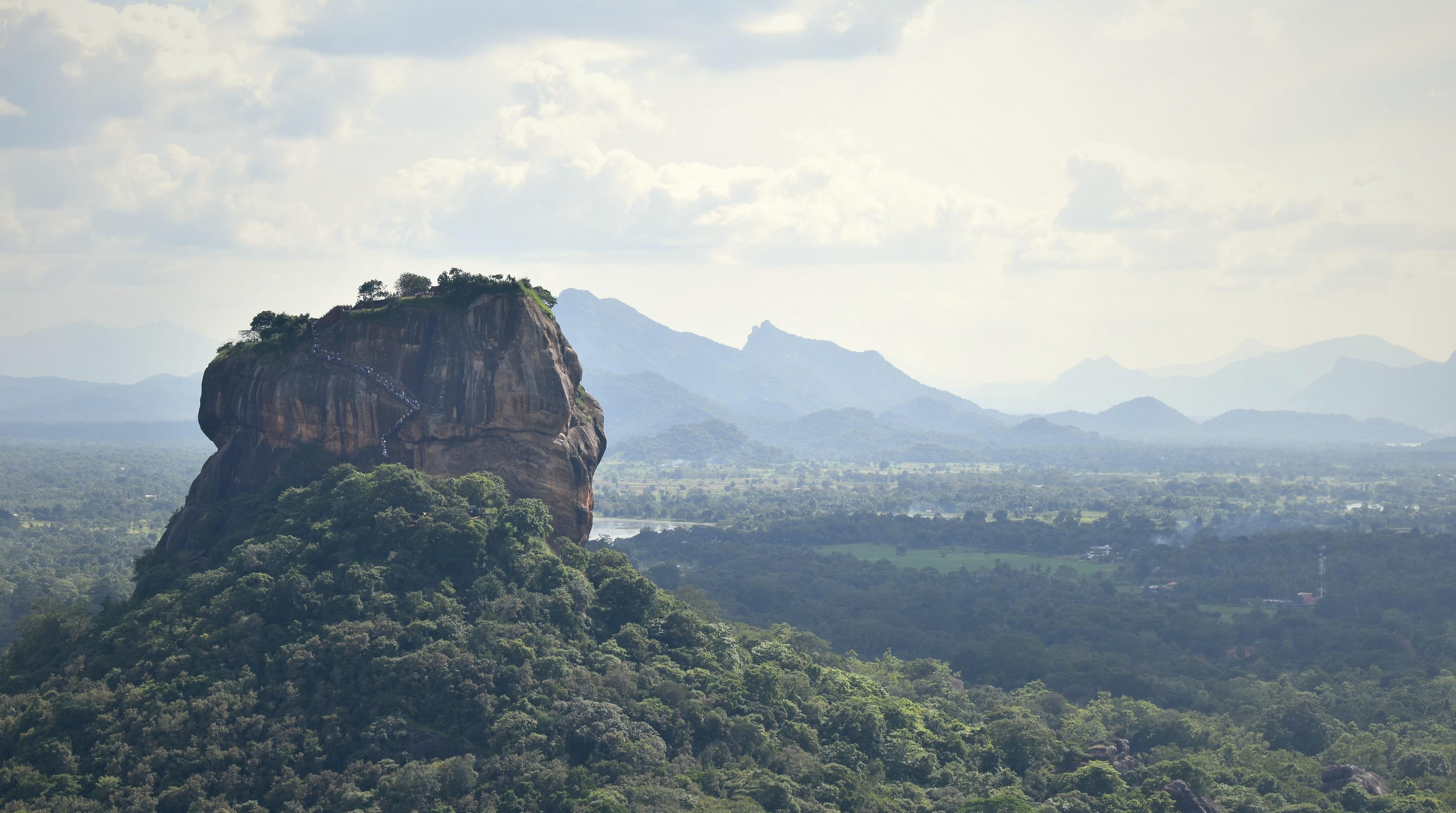
Sigiriya
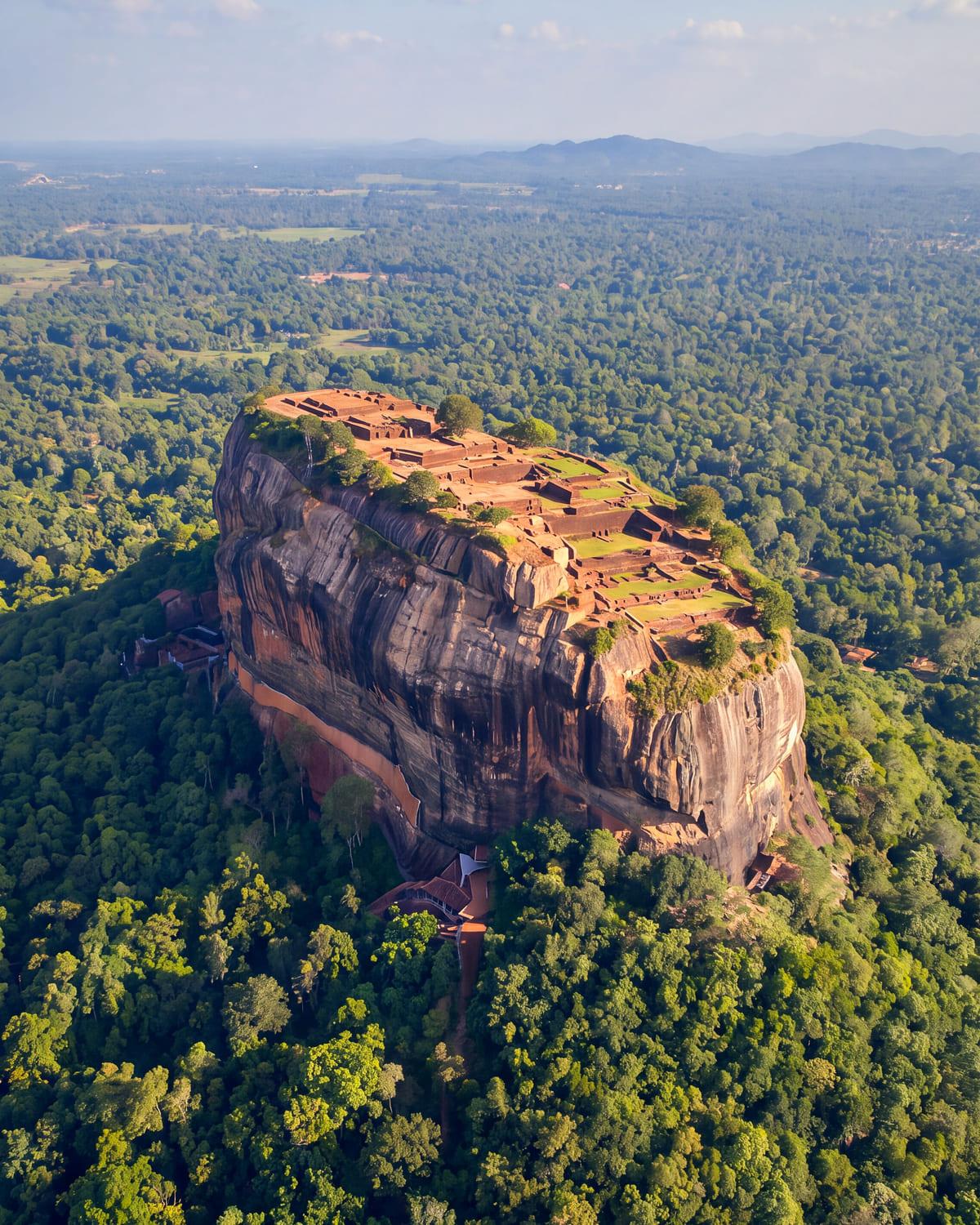
The 5th-century rock fortress, 180 m above the plain
Best February to September
- Climbing Sigiriya rock at the opening
- Sunrise from Pidurangala rock
- The elephant gathering at Minneriya or Kaudulla
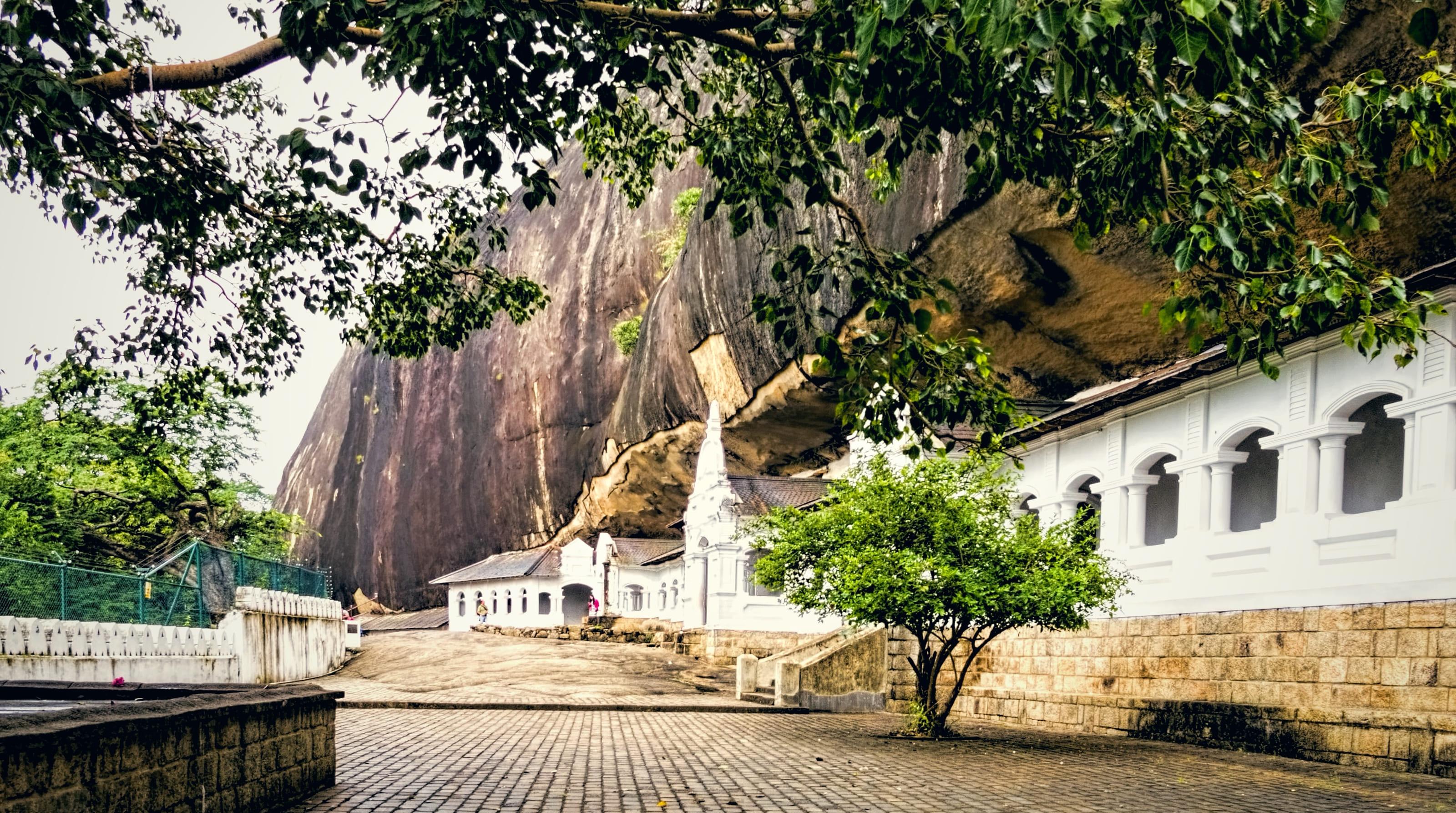
Dambulla
The cave temple with 153 Buddhas, at the hub of the Cultural Triangle
Best February to September
- The painted caves of the Dambulla cave temple
- Nalanda Gedige, the Hindu and Buddhist shrine
- The ironwood forest and rose quartz ridge of Namal Uyana
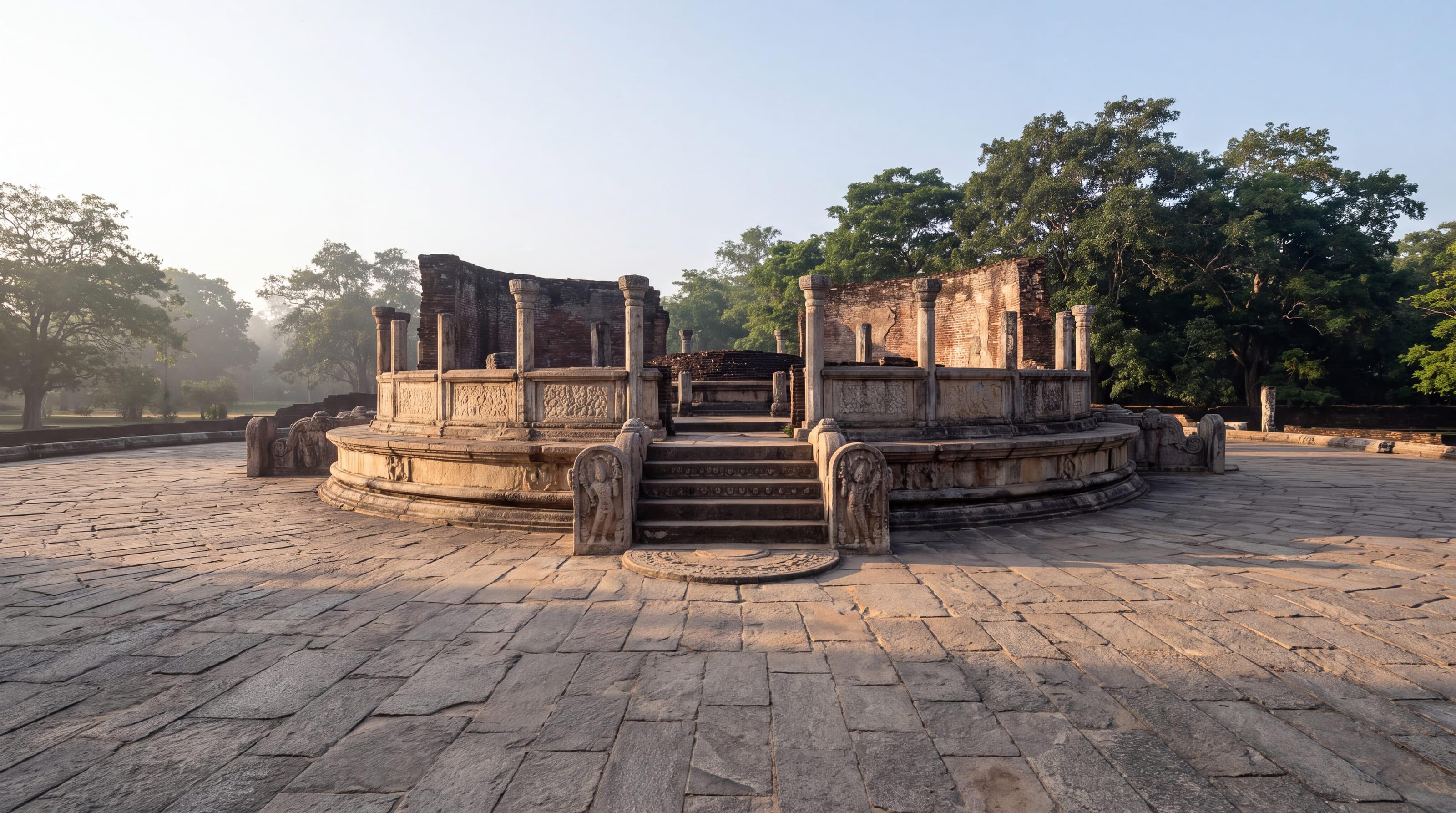
Polonnaruwa
The second capital: Gal Vihara's Buddhas beside the great reservoir
Best February to September
- The ancient city of Polonnaruwa by bicycle
- A safari in Wasgamuwa National Park
- The circular relic house of Medirigiriya
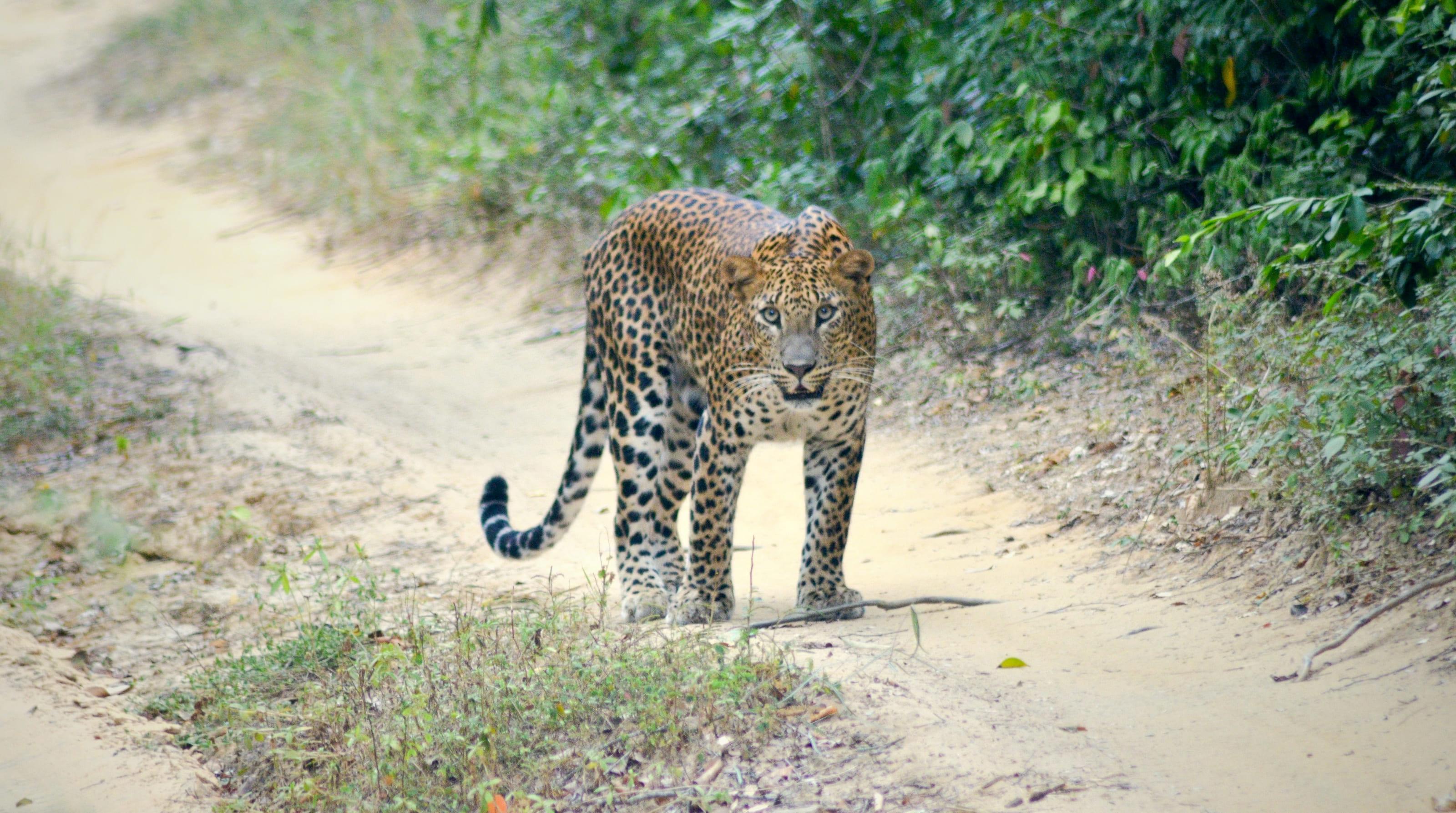
Wilpattu
The largest park, the quietest: leopards among 106 lakes
Best March to September
- A leopard safari in Wilpattu
- Dolphin watching off Kalpitiya
- Dinner by the campfire at a Wilpattu camp
