
Galle The Dutch fort on the south-west tip, a World Heritage Site since 1988
The place
Galle is the capital of Southern Province, 119 km south of Colombo on the island's south-west tip. The Old Town of Galle and its Fortifications is a UNESCO World Heritage Site, listed in 1988 as the best example of a fortified city built by Europeans in South and South-East Asia. The Portuguese began it; the Dutch built the present fort in 1663.
Inside the walls the streets are low, shaded and walkable, with the Dutch Reformed Church, the maritime museum and the bastions named Sun, Moon and Star along the ramparts. The cricket ground beside the fort is among the most beautiful anywhere. Rumassala hill and its Peace Pagoda rise across the bay, with Unawatuna's beach beyond.
When to go
December to March
The south-west monsoon, May to October, is the wet season here; December to March is driest. January and February are the most reliably settled.
Getting there
- By road, 2.5 to 3.5 hours from Bandaranaike International Airport on the Southern Expressway.
- Galle station is where the west-coast and south-coast segments of the Coastal Line meet.
- By air, Cinnamon Air flies scheduled seaplanes to Koggala, just beyond Galle, in about 35 minutes from Colombo.
Worth seeing
Galle Fort
The Dutch fort of 1663, with its Sun, Moon and Star bastions.
National Maritime Museum
Inside the fort.
Galle International Stadium
One of the most picturesque cricket grounds in the world.
Dutch Reformed Church
Beside St Mary's Cathedral, within the walls.
Japanese Peace Pagoda
On Rumassala hill, across the bay.
Unawatuna Beach
The beach beside the city.
Asked often
- When is the best time to visit Galle?
- December to March. The south-west monsoon, May to October, is the wet season here; December to March is driest. January and February are the most reliably settled.
- How do you get to Galle?
- By road, 2.5 to 3.5 hours from Bandaranaike International Airport on the Southern Expressway. Galle station is where the west-coast and south-coast segments of the Coastal Line meet. By air, Cinnamon Air flies scheduled seaplanes to Koggala, just beyond Galle, in about 35 minutes from Colombo.
In Explore
Open Galle in Explore to choose your stay, your room and your experiences, and add them to your journey.
Where to stay in Galle
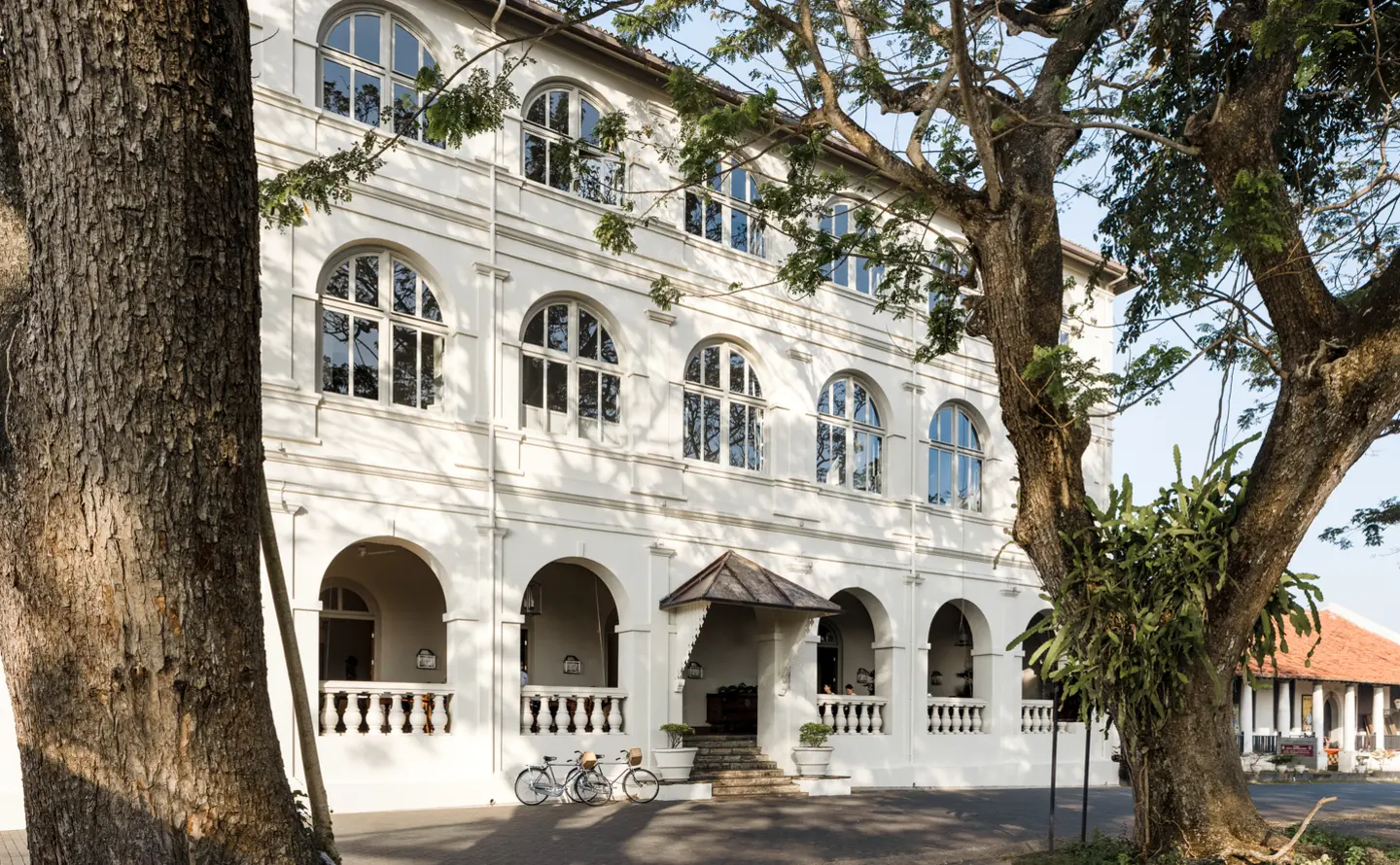 HotelAmangalla10 Church Street, inside the ramparts of Galle Fort, opposite the Groote Kerk
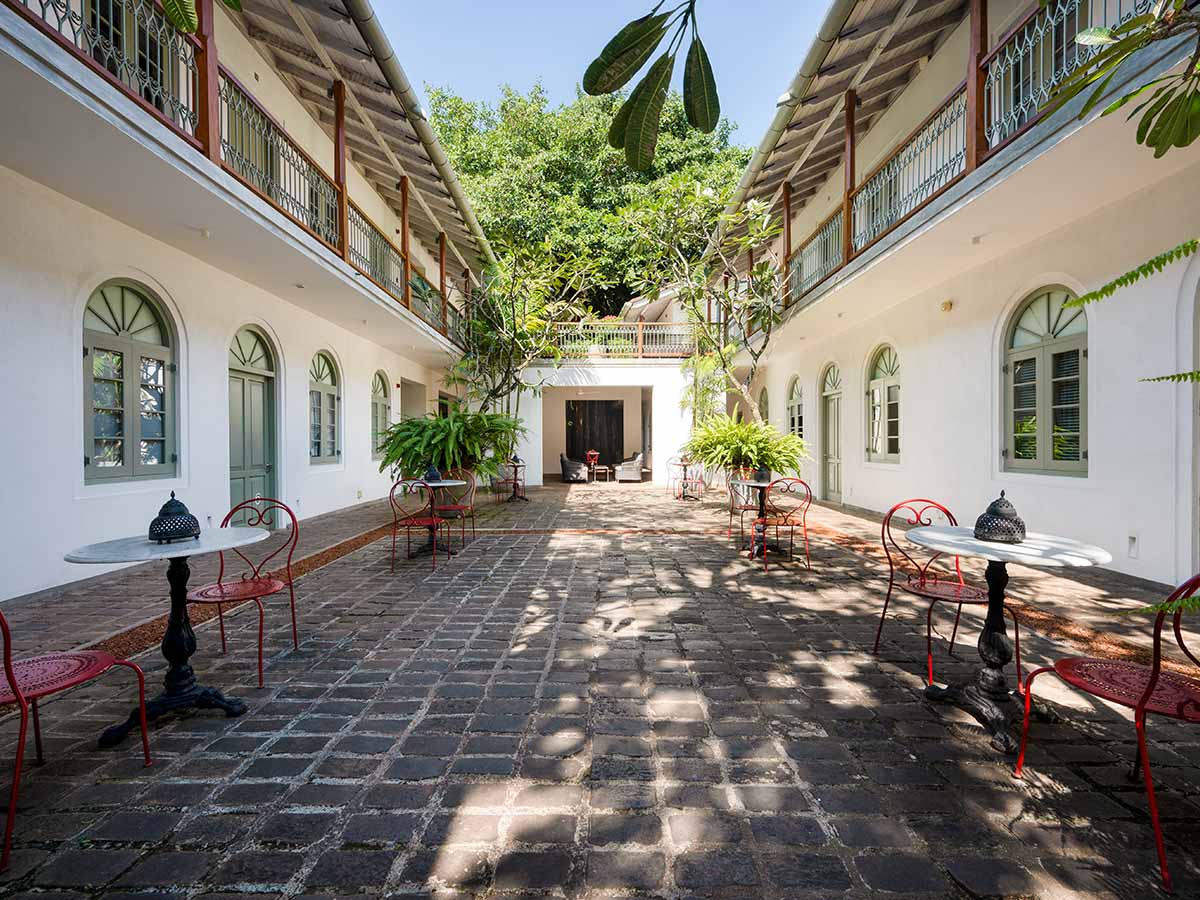 Boutique hotelFort Bazaar26 Church Street, in the middle of Galle Fort
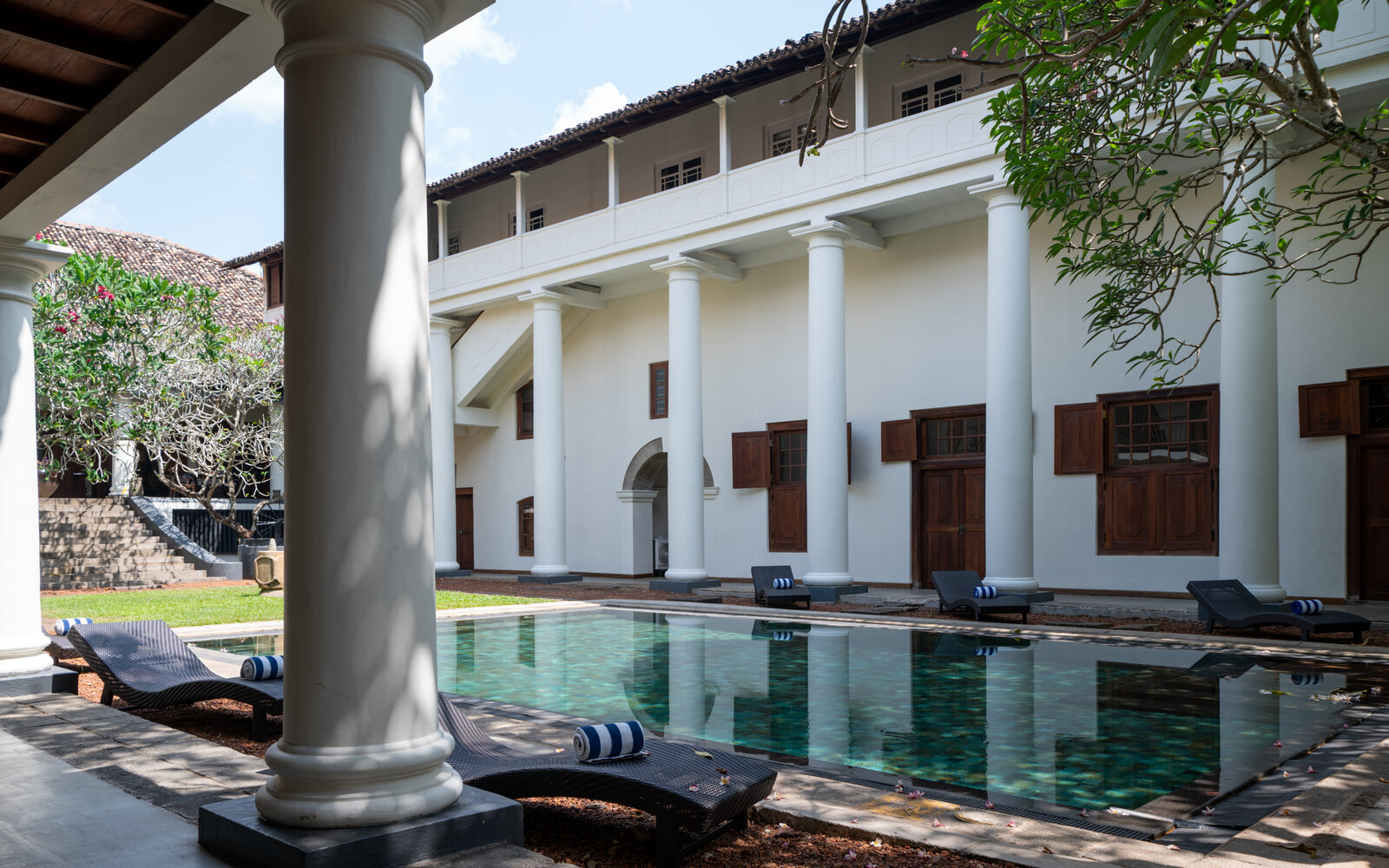 Boutique hotelGalle Fort Hotel28 Church Street, inside Galle Fort
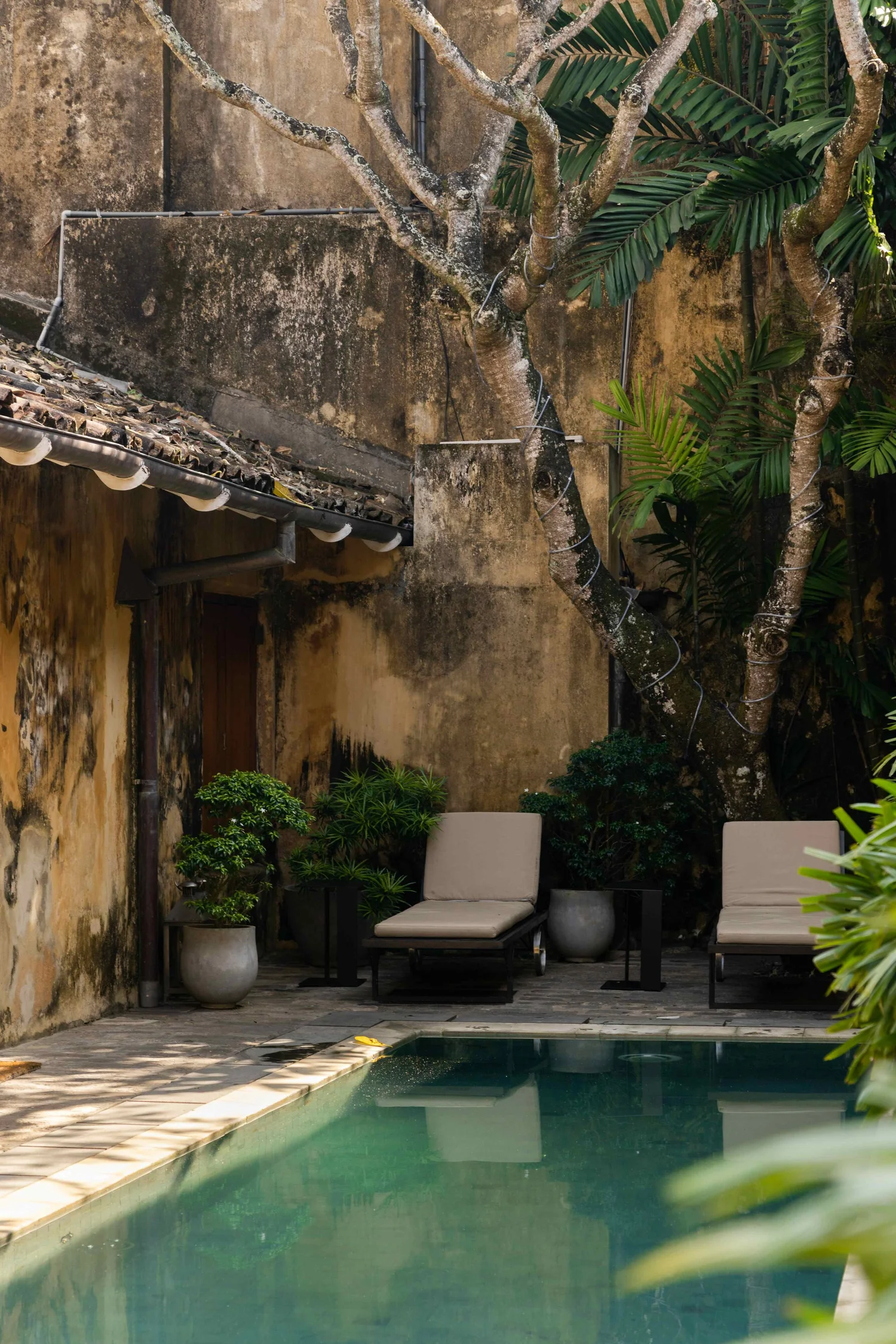 Boutique hotelThe Fort Printers39 Pedlar Street, inside Galle Fort, with suites at 41 Church Street and a villa at 65 Pedlar Street
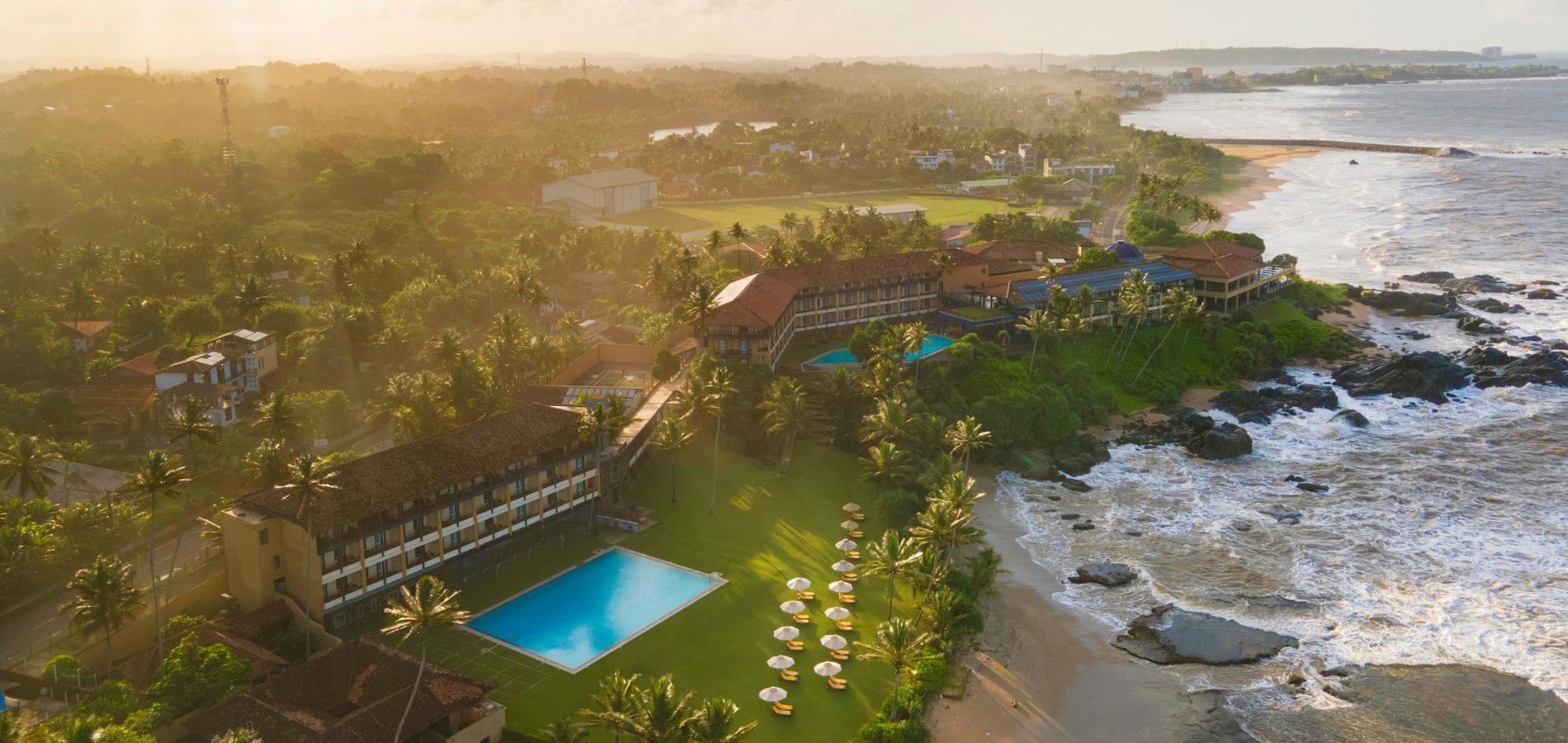 HotelJetwing LighthouseDadella, on a rocky headland about 1.6 km north of Galle Harbour, between the sea and the coast road
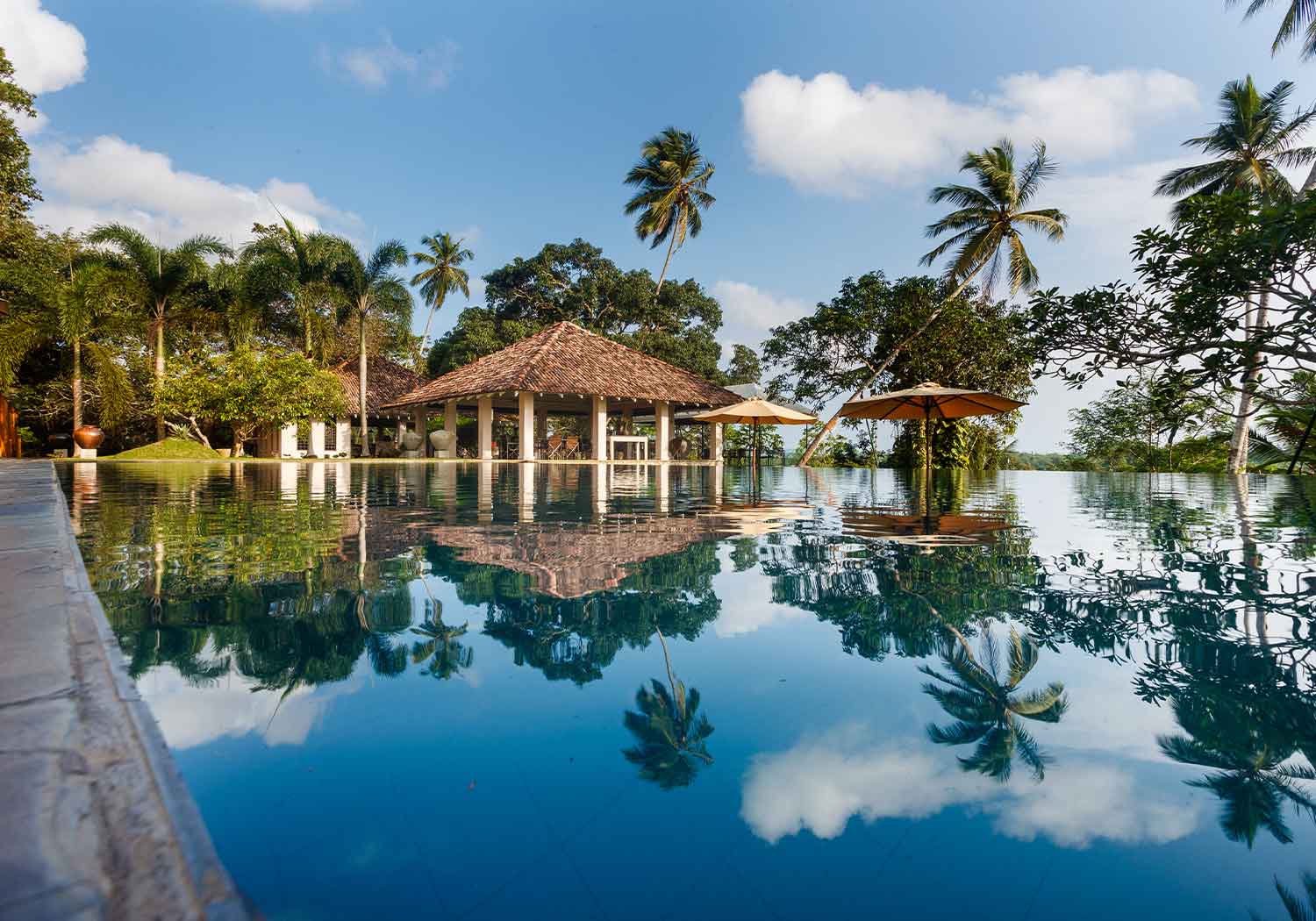 Boutique hotelKahanda KandaAngulugaha, on a hilltop tea estate above Koggala Lake, about 5 km inland from the coast
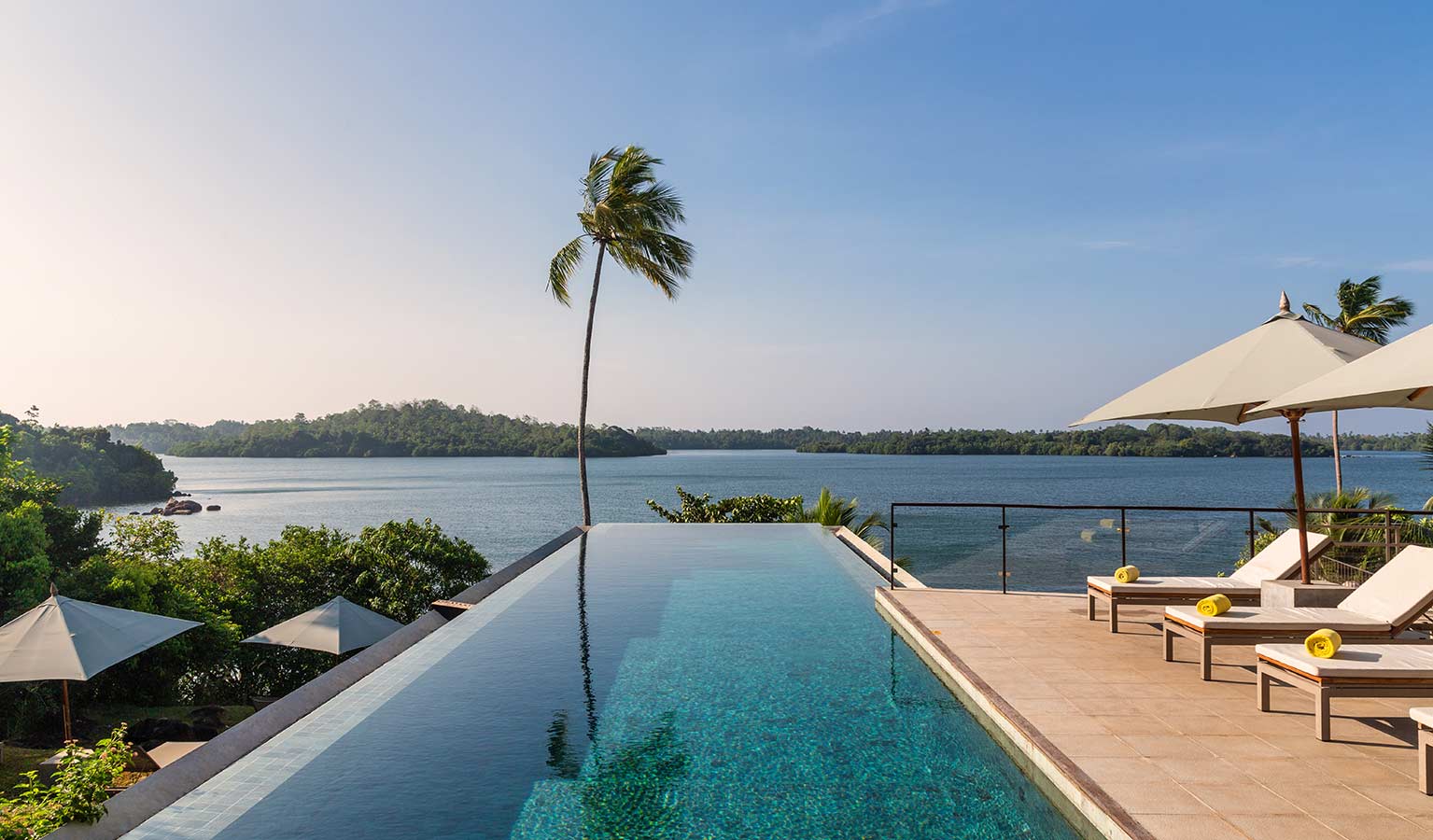 Boutique hotelTriAladuwa Watte, Pelassa, on a 6-acre hill on the shore of Koggala Lake, inland from Ahangama
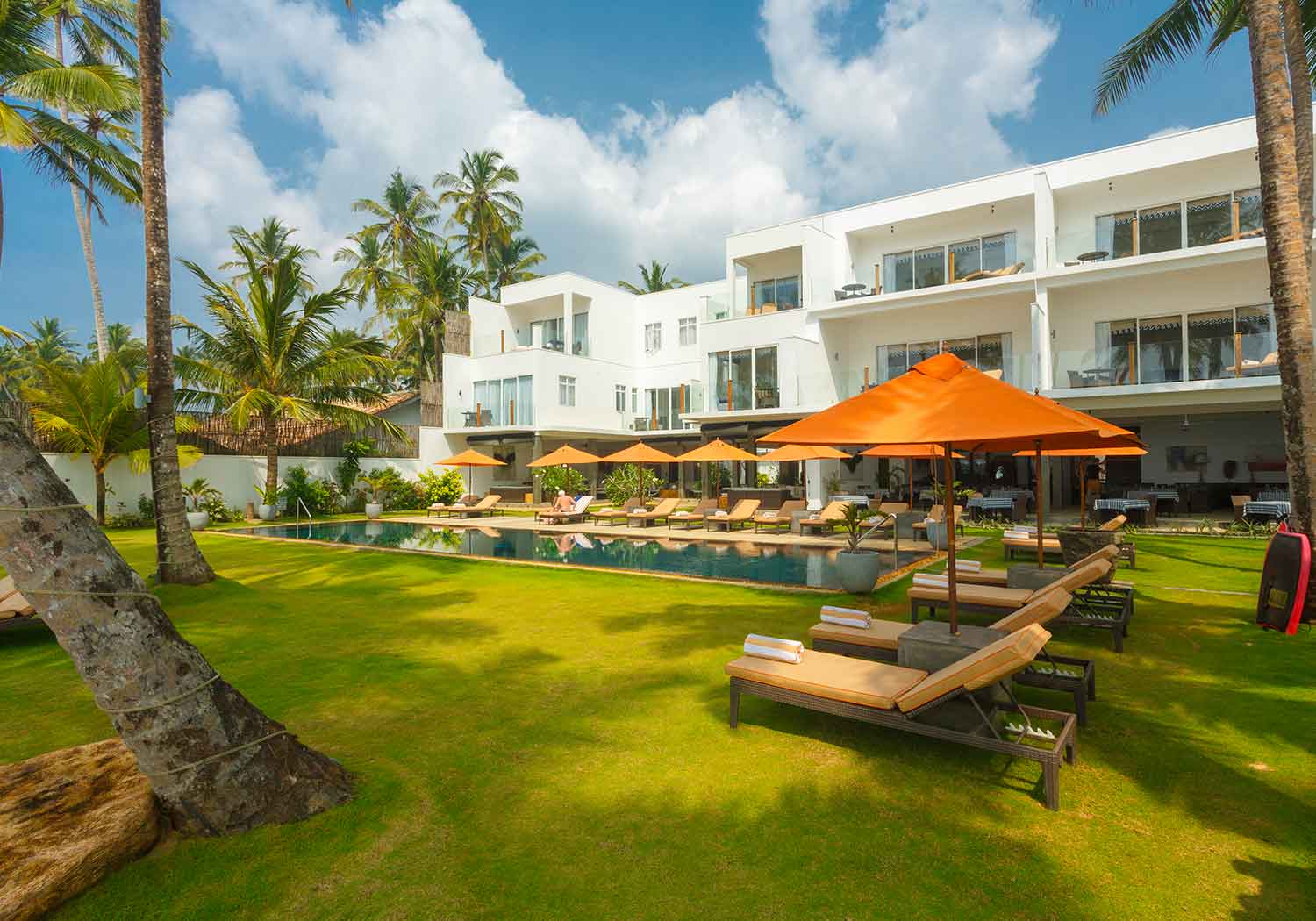 Boutique hotelKK BeachHabaraduwa, on the beach between Unawatuna and Koggala, about 12 km from Galle Fort
Boutique hotelOwl and the Pussycat Hotel788 Matara Road, Thalpe, on the beach about 10 km east of Galle Fort
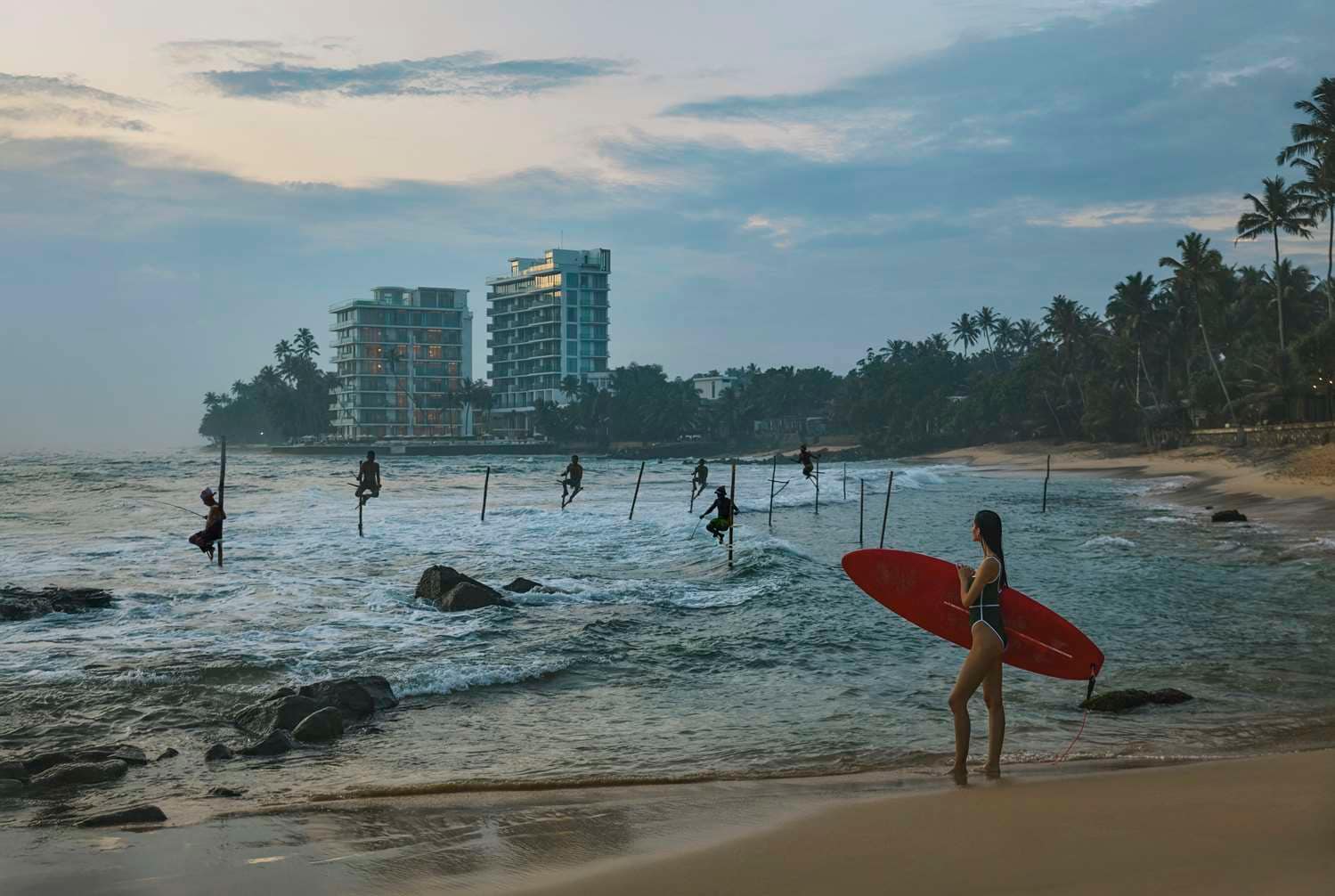 ResortRadisson Collection Resort & Spa, GalleOn the beach at Talpe, near Unawatuna, beside the Matara Road east of Galle
Things to do from Galle
- Culture and heritage · a morning or an afternoon, for both sitesKoggala: the folk museum and the painted temple at KataluwaThe folk museum at Koggala, about 15 minutes west of Weligama, is set around the ancestral home of Martin Wickramasinghe, regarded as the father of modern Sinhala literature, who was born here in 1890. Opened in 1981, it keeps the house with its original furniture and the writer's belongings, and newer galleries hold the folk crafts and tools of the southern countryside: farming, fishing, pottery and metalwork, masks, puppets, drums and the costumes of folk dance and ritual.
- Water and coast · 30 to 45 minutes by glass-bottomed boat, longer to snorkelThe coral reef of Hikkaduwa National ParkHikkaduwa National Park, 17 km north-west of Galle and about 33 km south of Bentota, is one of the island's 3 marine national parks: a shallow fringing reef with an average depth of about 5 m, where 60 species of coral and more than 170 species of reef fish have been recorded. Hawksbill, green and olive ridley turtles visit the reef, and blacktip reef sharks keep to its outer slope.
- Culture and heritage · a short stop on the coast road, just north of HikkaduwaThe tsunami memorial at PeraliyaOn 26 December 2004 the tsunami struck the coast at Peraliya, just north of Hikkaduwa, and swept a crowded train, the Matara Express from Colombo, off its tracks, killing at least 1,000 people and possibly as many as 1,700, in what is considered the largest rail disaster in history. The village itself lost all but 10 of its buildings.
- Nature and wildlife · about 2 hours at Kottawa, longer with HiyareRainforest birding at Kottawa and Hiyare, near GalleNorth-east of Galle, off the road to Udugama, 2 small patches of lowland rainforest lie within easy reach of the town. Kottawa, about 17 km from Galle, covers only about 37 acres but holds around 170 tree species, about 100 of them endemic, and around 70 species of birds, 12 of them endemic, among them the yellow-fronted barbet, the brown-capped babbler and the grey hornbill.
- Culture and heritage · about 1 hour, about 6 km from GalleYatagala, the rock temple near UnawatunaYatagala Raja Maha Viharaya is a Buddhist rock temple set among huge granite boulders near Unawatuna, about 6 km from Galle. By tradition it was founded in the reign of King Devanampiya Tissa of Anuradhapura, when a sapling of the sacred Bodhi tree was planted here, and a reclining Buddha lies in a cave formed by the rock.
- Culture and heritage · 2 to 3 hours, from 08:00 or from 16:00A walk around Galle FortGalle Fort was begun by the Portuguese and walled by the Dutch from 1649, and its 14 bastions enclose a lived-in town of about 52 ha, a UNESCO World Heritage Site since 1988. Its grid of low gabled houses with verandas, churches, mosques and old warehouses is still home to a mixed community.
- Dining · about 4 hours, from mid-morning through lunchA Galle market visit and a Sri Lankan cookery lessonGalle's fruit, vegetable and fish markets sit in the town just outside the fort, on and around Sea Street, with stalls of banana blossom, breadfruit, jackfruit, drumsticks, snake gourd, greens and spices, and the day's catch of fish, cuttlefish, crabs and prawns. A cook or guide walks the stalls with the guest and buys what the lesson needs.
- Culture and heritage · about 1.5 hoursA tea estate near the sea at AhangamaTea is not only a hill-country crop: the warm, wet low country of the Galle and Matara districts grows a strong, astringent tea. A few minutes inland from the sea at Ahangama, a family estate opens its tea gardens and factory to visitors.
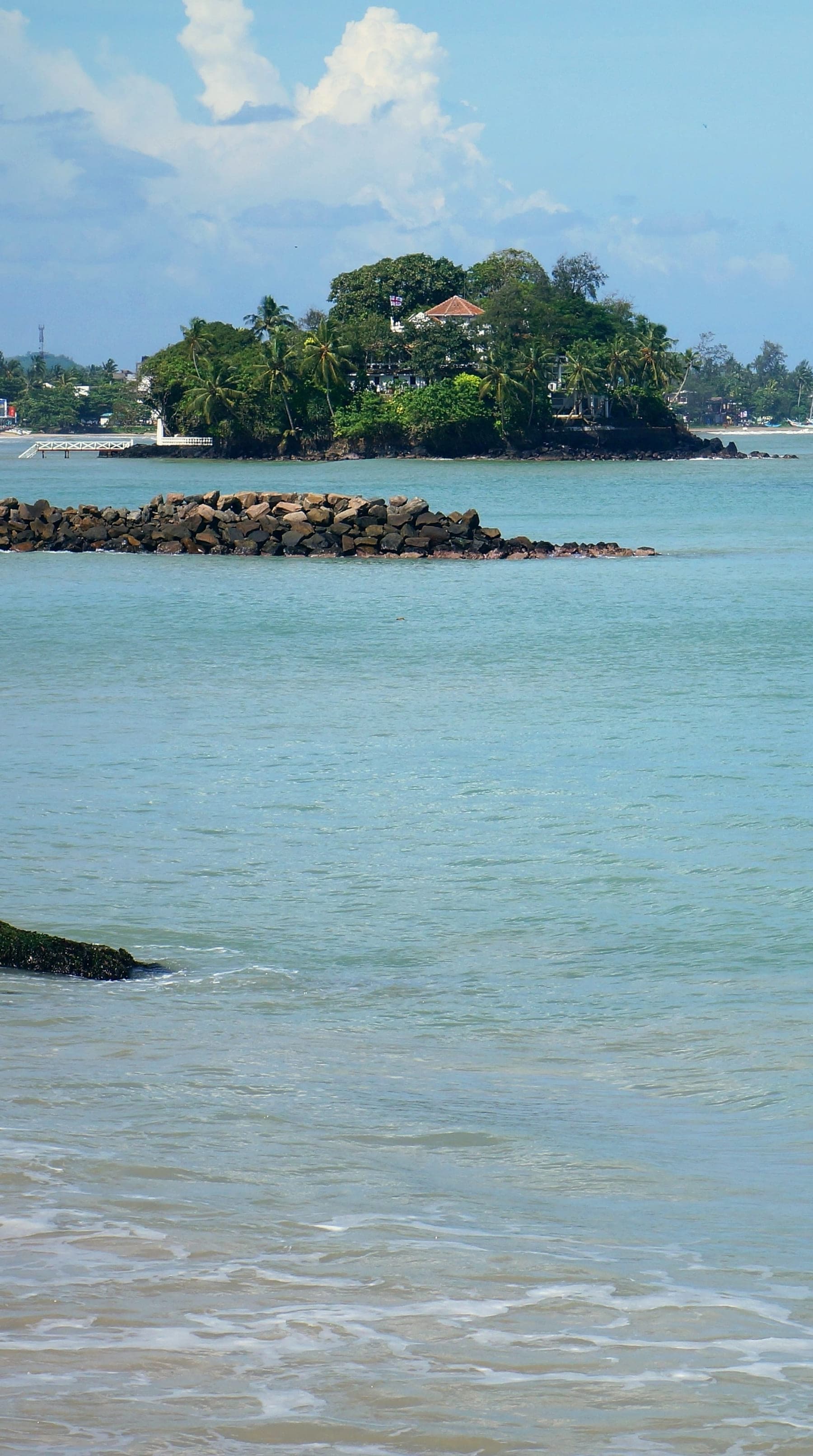
- Nature and wildlife · a morning, with time to swimRumassala hill, the Peace Pagoda and Jungle BeachRumassala is the wooded headland that closes Galle harbour on its eastern side, held by local tradition to be a piece of the Himalayan mountain that Hanuman dropped while carrying it south in the Ramayana. Its scrub jungle shelters birds and the endemic purple-faced langur, and Japanese monks built a white Peace Pagoda on the headland facing Galle.
- Culture and heritage · about an hour, from first lightThe stilt fishermen of the south coastStilt fishing, ritipanna, is practised in only 3 places, all on the south coast: Koggala and Ahangama in Galle district and Weligama. Each fisherman sits on a crossbar tied to a single pole set in chest-deep water and casts a kithul-wood rod beyond the surf for small fish such as sardines and mackerel.
- Adventure · a morning, with 1 or 2 divesDiving the reefs and wrecks off Galle and UnawatunaOff Unawatuna and the mouth of Galle harbour lie coral reefs, rock pinnacles with swim-throughs and several shipwrecks, home to reef fish, moray eels and, at times, turtles. The best known wreck is the SS Rangoon, a 60 m steamer built in London in 1863 that sits upright on white sand at 32 m, a dive for experienced divers.
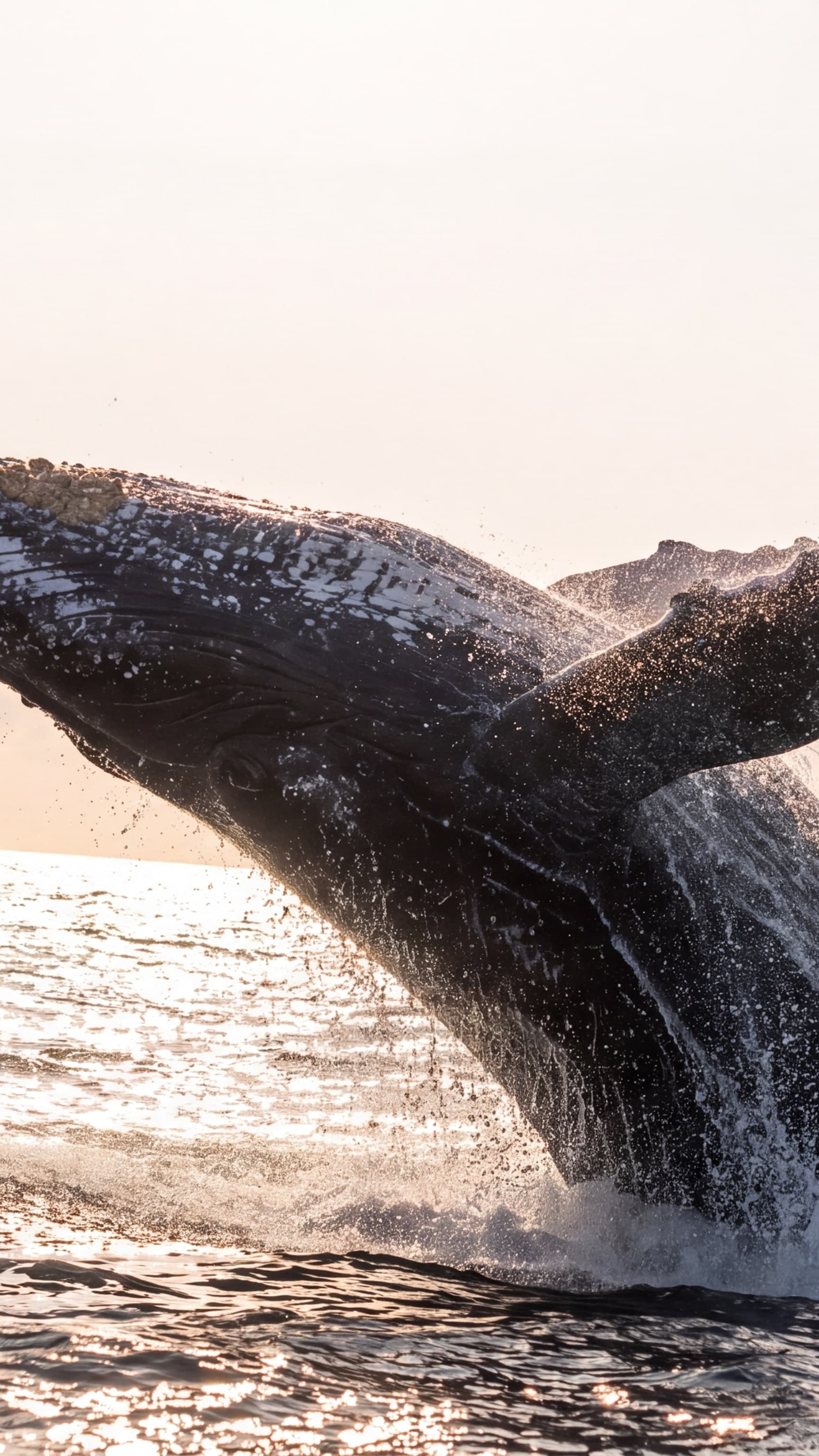
- Nature and wildlife · 3 to 5 hours, leaving the harbour at about 06:30Whale watching from MirissaThe continental shelf drops away sharply off Mirissa, so blue whales pass close to the south coast on their seasonal migration, and the town is one of the island's main whale and dolphin watching bases. Boats leave the harbour at about 06:30, for the calmest water and the best light.
- Adventure · about 90 minutes a lessonSurf lessons on the south coastWeligama Bay is where most people learn: a long sandy beach with no reef, waves that break gently, and water shallow enough to stand in across much of the bay, at 27 to 29 °C all year. A lesson of about 90 minutes starts on the sand with safety and technique, then moves into the water beside the instructor.
- Wellness · a private class, or a retreat of 5 to 8 daysYoga on the south coastThe south coast, around Weligama, Ahangama, Mirissa, Hiriketiya and Tangalle, is where many of the island's yoga retreats are based, often paired with surfing. Hatha, vinyasa and yin are the usual styles, taught in open-sided shalas facing the sea or set among the palms.
Galle in your journey? Build it in Explore.