
Yala The leopard park: 979 sq km of the dry south-east, a sanctuary since 1900
The place
Yala is Sri Lanka's most visited national park, 979 sq km across the south-east where Southern, Uva and Eastern provinces meet. It was declared a sanctuary in 1900 and a national park on 1 March 1938. It has one of the highest leopard densities in the world, with elephants, sloth bears, 44 species of mammal and 215 of birds, and it is divided into 5 blocks; the main entrance is at Palatupana.
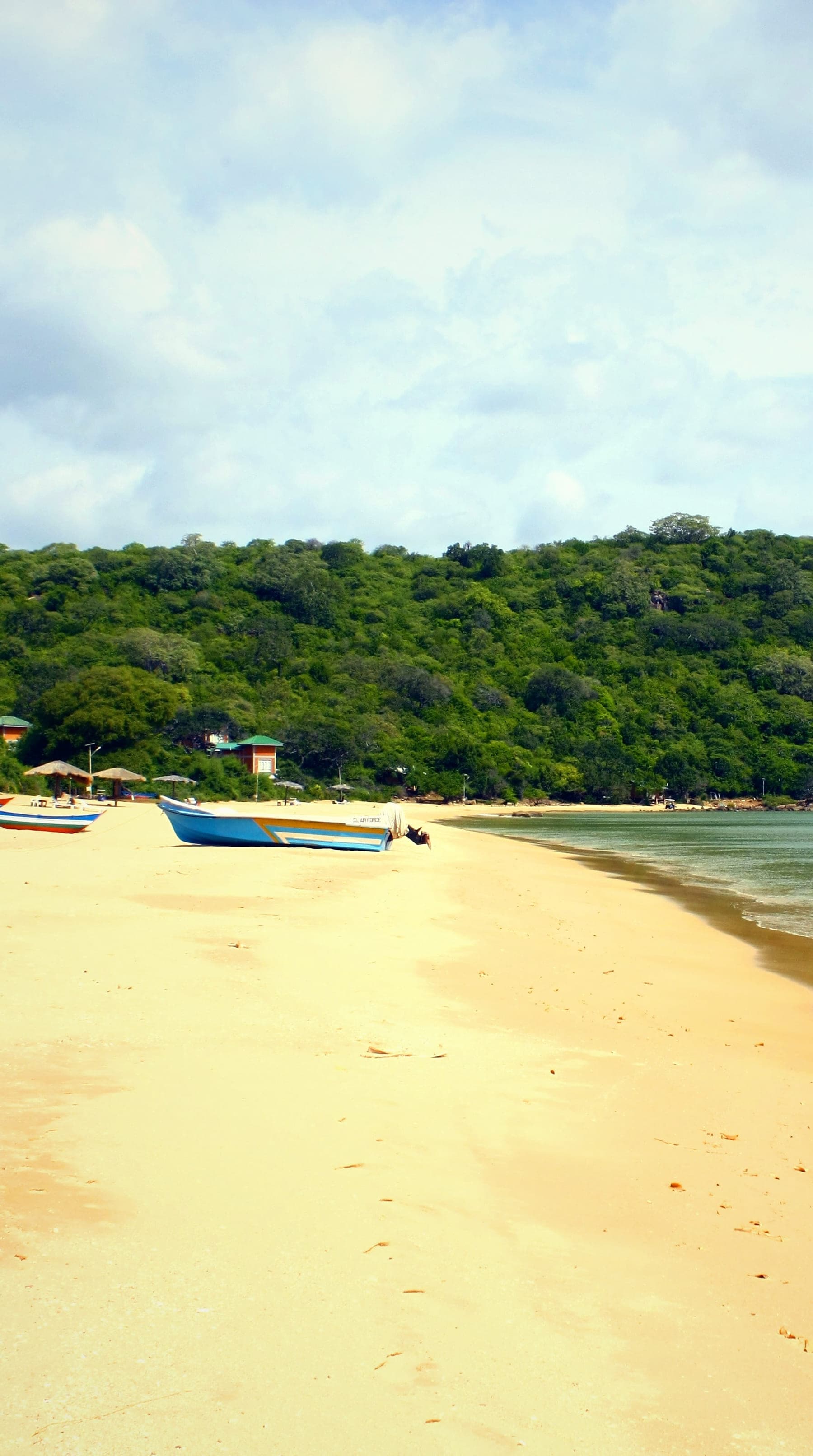
Block 1 is the leopard block, and the busiest. Within the park are the ancient rock monastery of Sithulpawwa and Magul Maha Vihara, built in 87 BC, and the coast comes down to the rocky beach at Patanangala. Kataragama, the pilgrimage town of several faiths, sits at the park's edge, and Kumana National Park adjoins it to the east. The department closes the main blocks for a period when the late-season drought peaks; we check the dates before we book.
When to go
February to July
Yala is in the dry zone, so the north-east monsoon, October to January, is its wet season. February to July is the best window, as the water tables fall and the animals come to what remains.
Getting there
- By road, 4.5 to 5 hours from Bandaranaike International Airport.
- By air, Cinnamon Air flies scheduled seaplanes to Weerawila, near Hambantota, in about 40 minutes, and charters to Tissamaharama lake, 53 km from the park.
Worth seeing
Block 1
The leopard block, with the highest visitor numbers.
Sithulpawwa
An ancient Buddhist rock monastery inside the park.
Magul Maha Vihara
Built in 87 BC.
Patanangala
The rocky beach on the park's coast.
Kataragama
The multi-faith pilgrimage town at the park's edge.
Kumana National Park
Adjoining Yala to the east.
Asked often
- When is the best time to visit Yala?
- February to July. Yala is in the dry zone, so the north-east monsoon, October to January, is its wet season. February to July is the best window, as the water tables fall and the animals come to what remains.
- How do you get to Yala?
- By road, 4.5 to 5 hours from Bandaranaike International Airport. By air, Cinnamon Air flies scheduled seaplanes to Weerawila, near Hambantota, in about 40 minutes, and charters to Tissamaharama lake, 53 km from the park.
In Explore
Open Yala in Explore to choose your stay, your room and your experiences, and add them to your journey.
Where to stay in Yala
 Tented campWild Coast Tented LodgePalatupana, on the beach where the scrub jungle at the edge of Yala National Park meets the Indian Ocean
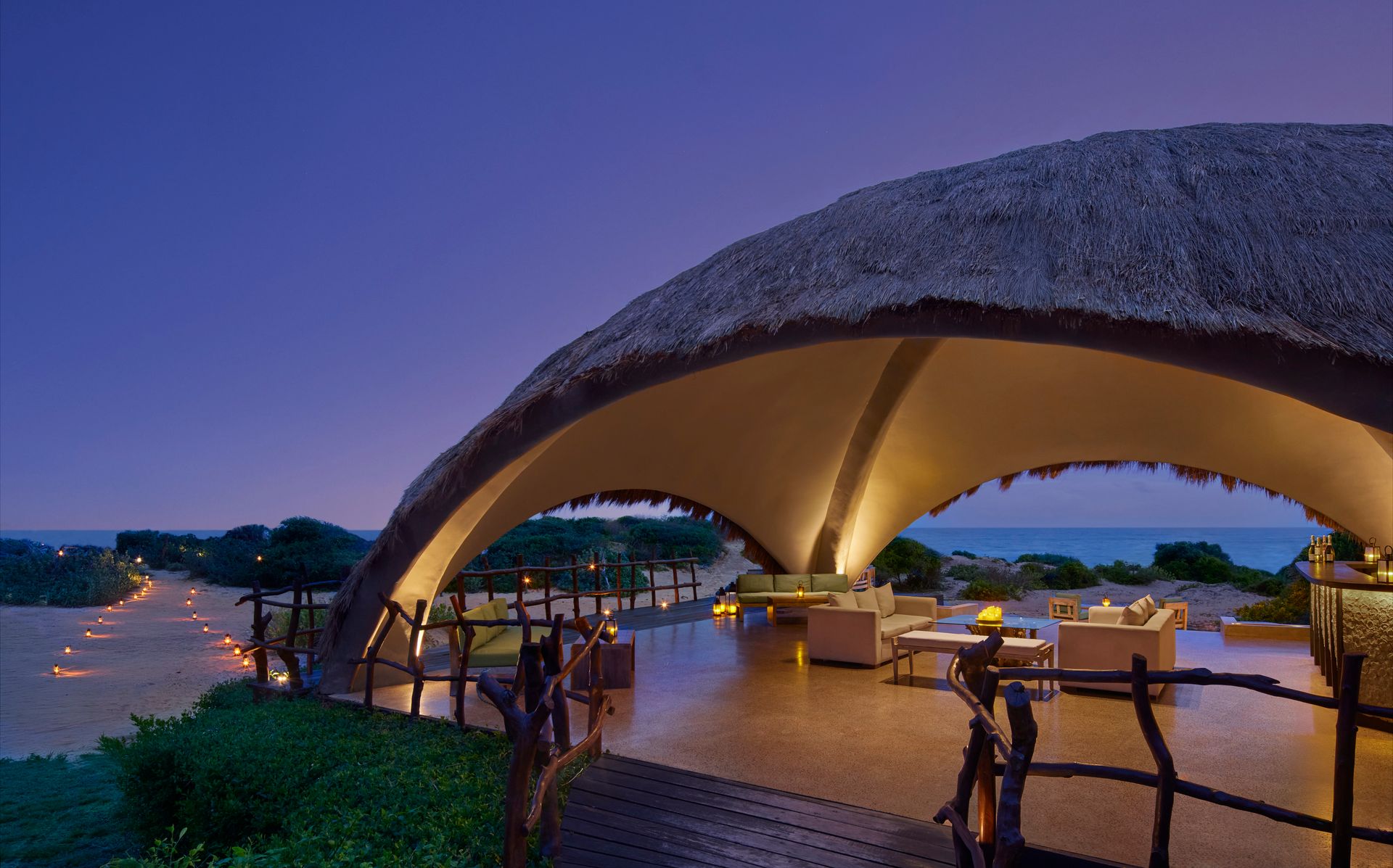 Boutique hotelUga Chena HutsPalatupana, on 9 acres between the ocean and the scrub jungle bordering Yala National Park
 ResortHilton Yala ResortPalatupana village, just outside Yala National Park, above the Indian Ocean
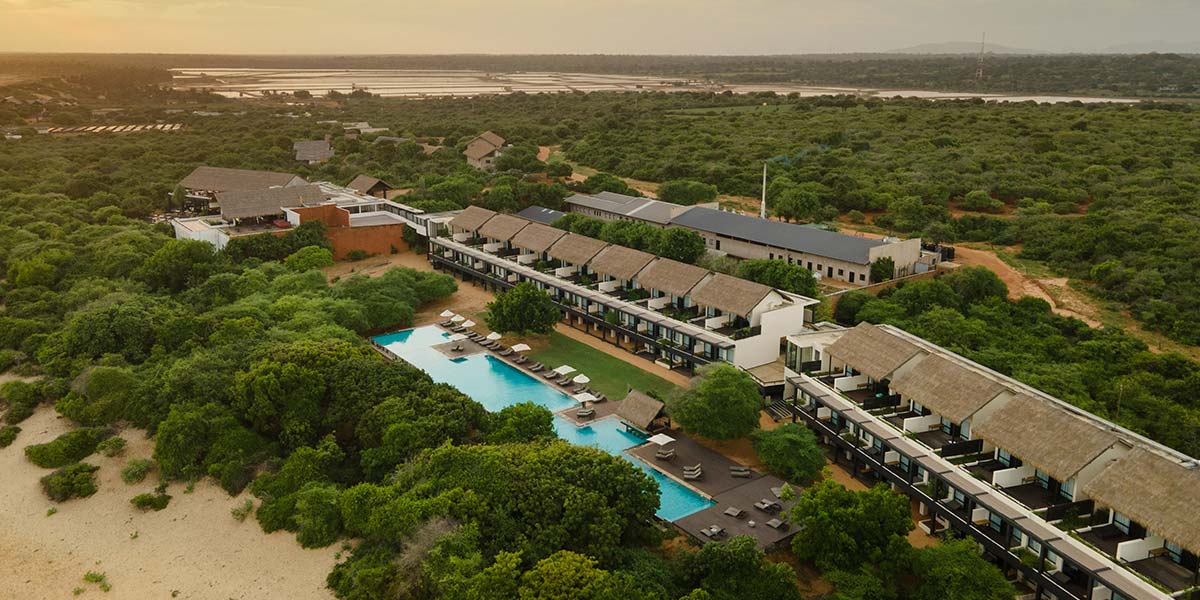 HotelJetwing YalaPalatupana, near Kirinda, on an open beach between the Indian Ocean and the Yala park boundary
 Boutique hotelJetwing Jungle LodgePalatupana, in coastal scrub and grassland beside Yala National Park, with the beach below
 ResortCinnamon Wild YalaPalatupana, near Tissamaharama, between the beach and a lagoon on the edge of Yala National Park
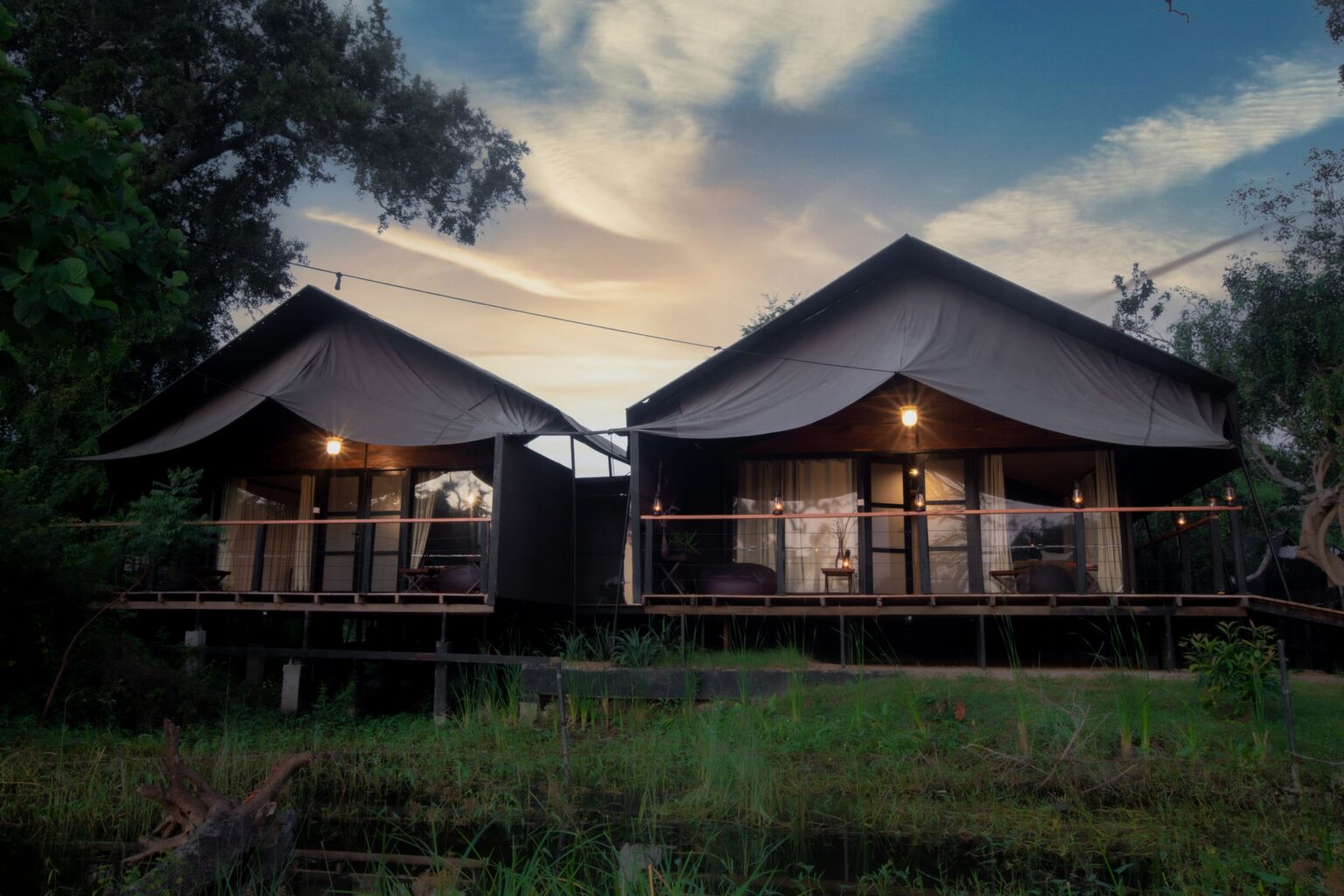 Tented campLeopard Trails YalaA tented camp in the scrub on the Yala National Park boundary, north of Palatupana towards Sithulpawwa
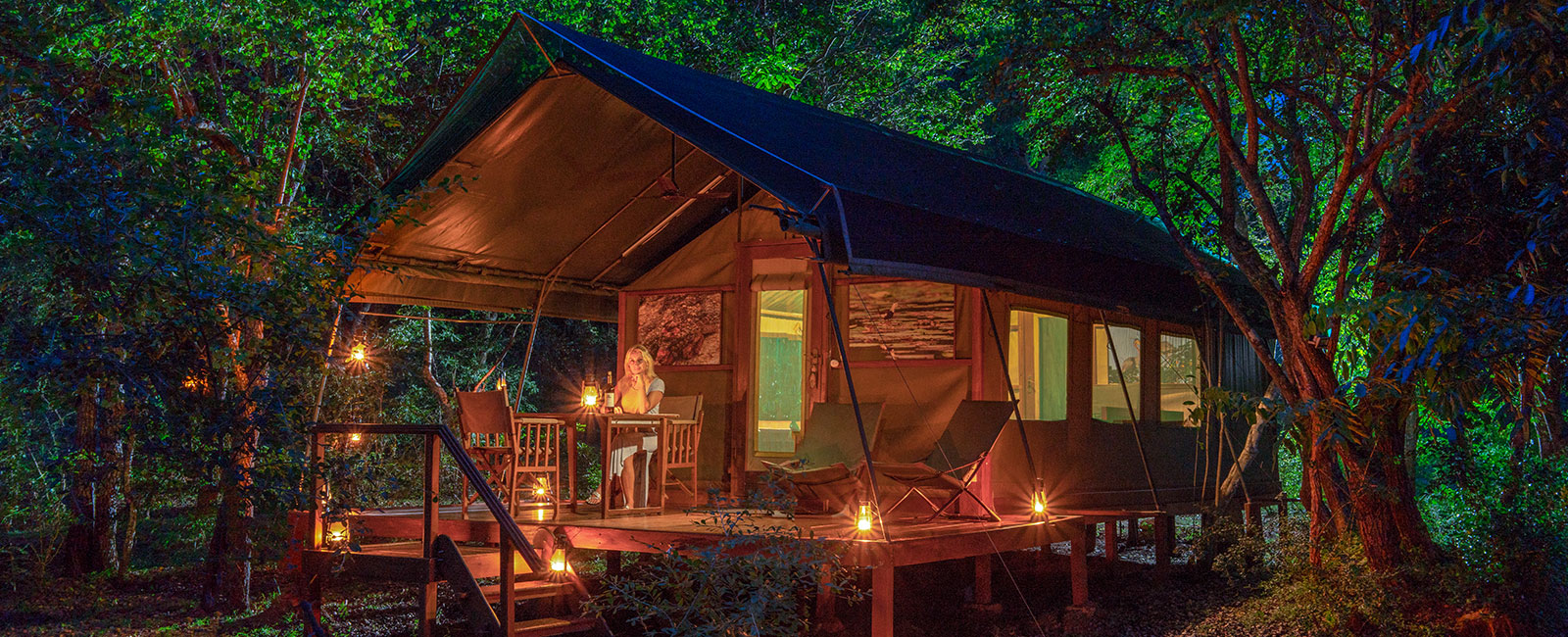 Tented campKulu Safaris Yala CampOn the shore of the Kochchipathana village tank, off the Sithulpawwa to Kataragama road on the Yala boundary
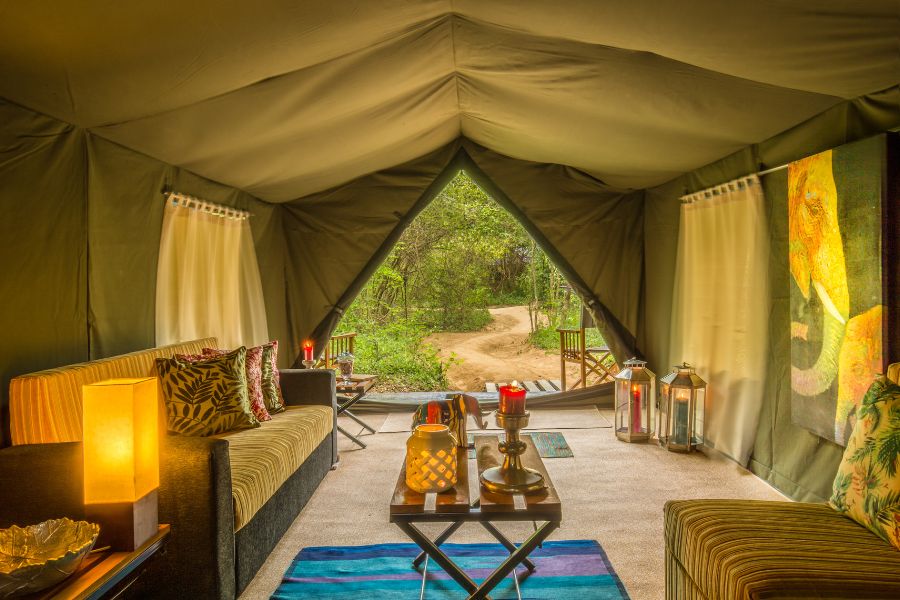 Tented campMahoora Elite Camp Yala10 acres of private dry-zone forest against the Yala elephant fence, about 20 minutes from the park's Katagamuwa gate
Things to do from Yala
- Nature and wildlife · half a day, leaving about 05:00 or 14:30; a full day in the park is possibleA leopard safari in YalaYala covers 979 sq km of scrub, grassland, lagoon and dune on the south-east coast, and it holds one of the highest densities of leopards in the world. The park also shelters elephants, sloth bears, 44 species of mammal and 215 species of bird.
- Culture and heritage · 2 to 3 hours, best from about 06:00 or late in the afternoonSithulpawwa, the rock monastery inside YalaSithulpawwa is a Buddhist monastery founded in the 2nd century BC under King Kavantissa on a rock of about 400 ft inside the Yala park area, its ancient name meaning the hill of the quiet mind. Tradition holds that it sheltered thousands of monks, and more than 160 caves surround it, some with rock inscriptions and paintings.
- Culture and heritage · an evening, for the main puja at 18:30The evening puja at KataragamaKataragama, at the edge of Yala, is a pilgrimage town sacred to Buddhists, Hindus, Muslims and the Vedda people, and its temple complex centres on the shrine of Kataragama deviyo, known to Hindus as Murugan. The shrines are plain stone buildings with no image of the god on view, and the ancient Kiri Vehera stupa stands close by.
- Nature and wildlife · half a day, best from the 06:00 openingBirding the lagoons of BundalaBundala is a national park of shallow brackish lagoons and salt pans west of Yala, the first wetland in Sri Lanka named a Ramsar site (1991) and a UNESCO biosphere reserve since 2005. It records 197 species of bird, about 100 of them water birds and half of those migrants, and greater flamingos arrive in flocks of more than 1,000.
- Dining · an evening, after the afternoon safariDinner in the bush after the evening driveSeveral of the lodges on the edge of Yala set a private table out in the wild after the afternoon drive, in the scrub or beside a lake, lit by candles and torches. The meal comes from the lodge's own kitchen, often Sri Lankan curries and sambols, and is served under the open sky.
- Culture and heritage · a morning or an afternoonThe ancient stupas of TissamaharamaTissamaharama, about 30 minutes from Yala, was the capital of the ancient southern kingdom of Ruhuna from the 3rd century BC. Its great white stupa, 156 ft high, belongs to the Tissamaharama monastery, founded according to the chronicles by King Kavantissa in the 2nd century BC and a centre of Buddhist learning in the south until the 11th century.
- Culture and heritage · a short visitKirinda, the temple on the rock by the seaKirinda Raja Maha Vihara stands on the summit of a great rock on the shore at Kirinda, about 30 minutes from Yala. Tradition holds that this is where Viharamahadevi came ashore, a princess set adrift by her father, the king of Kelaniya, to calm the sea, who married King Kavantissa of Ruhuna and became the mother of King Dutugemunu.
- Nature and wildlife · a walk arranged with your stay, by day or, at some camps, after darkA guided walk in the scrub and dunes outside YalaSeveral of the lodges and camps on the edge of Yala take guests out on foot through the scrub, dunes and beach around their own grounds, arranged with your stay. A naturalist or ranger leads, reading tracks and signs of recent animal activity and pointing out the birds, plants and smaller animals that are easily missed from a jeep.
- Culture and heritage · a morning, arranged with your stayBuffalo curd and a morning with a farming family near YalaThe lodges around Yala arrange mornings with the families who farm on the edge of the park: a jeep ride to a village dairy farmer to see the water buffaloes milked, a lesson in making buffalo curd, or time with a family that still clears and plants its land by chena, the old slash-and-burn cultivation, sharing a meal with them in the bush.
- Dining · a morning, ending with the meal you have cookedA Sri Lankan cooking lesson with your hotel's chefSeveral of the villas and resorts around Weligama and Tangalle, and lodges on the edge of Yala, offer a cooking lesson with their own chefs, arranged with your stay. The chef introduces the island's spices, herbs and coconut, and guests cook at their own stations, from prawn curry and coconut sambol to vegetable curries, and at one safari camp egg hoppers in village-style clay pots.
Yala in your journey? Build it in Explore.