
Nuwara Eliya The highest town, at 1,868 m: Little England, and the heart of tea
The place
Nuwara Eliya is the highest town in Sri Lanka at 1,868 m and the coolest, with a mean temperature of 16 C, and it is the most important tea-growing centre on the island. It is called Little England for its colonial bungalows, its golf course and its racecourse, and it sits under Pidurutalagala, the country's tallest mountain. In April, for the Sinhala and Tamil New Year, it fills for the races and the flower shows.
Lake Gregory is the town's water, for boating and lakeside walks; Victoria Park is known for birds; Hakgala Botanical Garden lies on the Badulla road and the Seetha Amman temple beside it. Horton Plains National Park, with the 1,050 m drop of World's End and Baker's Falls, is the great excursion.
Photograph above: Bergentroll, CC0 via Wikimedia Commons
When to go
January to April
Nuwara Eliya is in the central highlands, which take the south-west monsoon, May to October, and rain from the north-east monsoon too, so there is no pronounced dry season. January to April, ending with the April season, is the most settled window.
Getting there
- By road, 5 to 6 hours from Bandaranaike International Airport.
- Nanu Oya station, on the Main Line, is about 8 km from the town.
- By air, Cinnamon Air lists Lake Gregory for charter.
Worth seeing
Pidurutalagala
The tallest mountain in Sri Lanka, above the town.
Lake Gregory
For boating and lakeside walks.
Horton Plains and World's End
A 1,050 m precipice, with Baker's Falls.
Hakgala Botanical Garden
On the Badulla road.
Victoria Park
Known for birdwatching.
Seetha Amman Temple
The Ramayana shrine.
Asked often
- When is the best time to visit Nuwara Eliya?
- January to April. Nuwara Eliya is in the central highlands, which take the south-west monsoon, May to October, and rain from the north-east monsoon too, so there is no pronounced dry season. January to April, ending with the April season, is the most settled window.
- How do you get to Nuwara Eliya?
- By road, 5 to 6 hours from Bandaranaike International Airport. Nanu Oya station, on the Main Line, is about 8 km from the town. By air, Cinnamon Air lists Lake Gregory for charter.
In Explore
Open Nuwara Eliya in Explore to choose your stay, your room and your experiences, and add them to your journey.
Where to stay in Nuwara Eliya
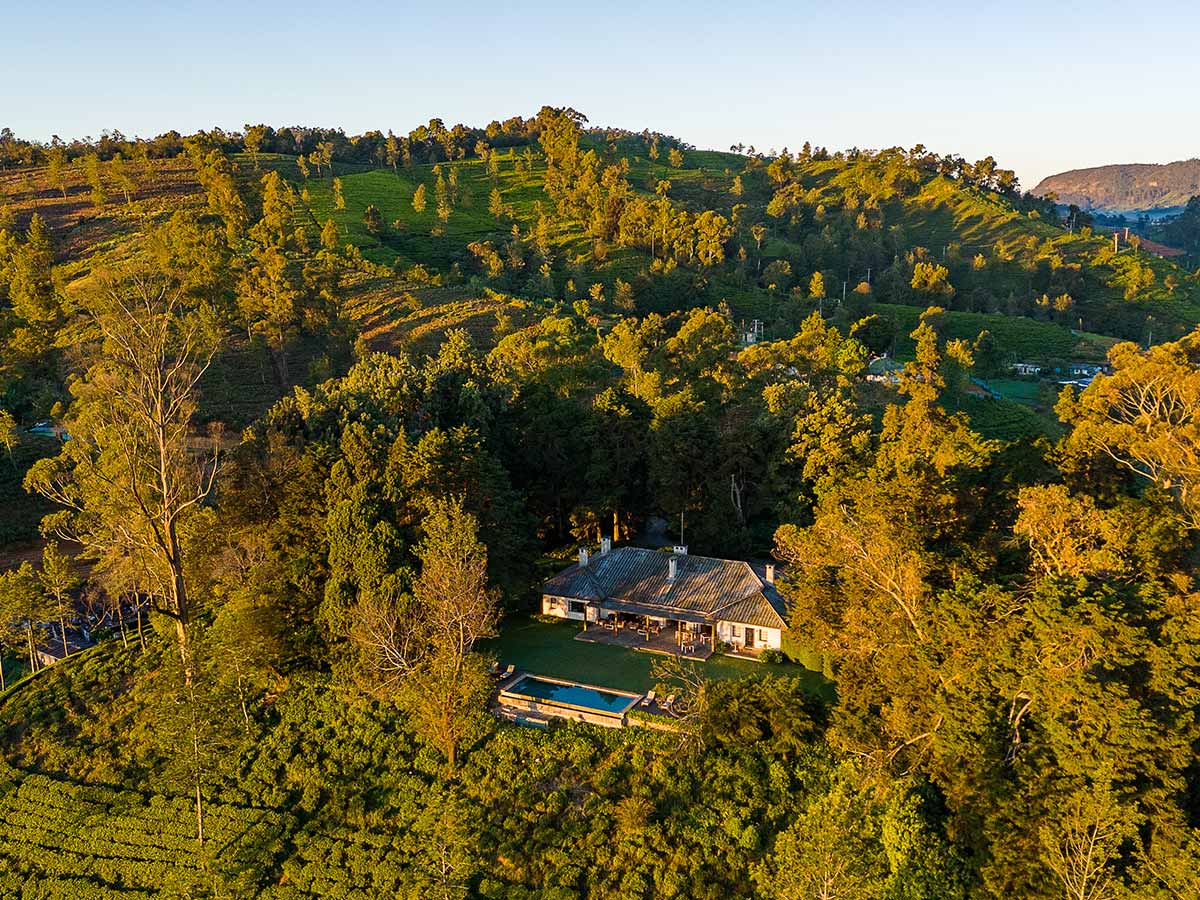 Boutique hotelGoatfellA hill on the working Concordia tea estate at Kandapola, 30 minutes from Nuwara Eliya town
 HotelHeritance Tea FactoryHethersett Estate at Kandapola, above 2,000 m, just under 10 miles from Nuwara Eliya on stage 21 and 22 of the Pekoe Trail
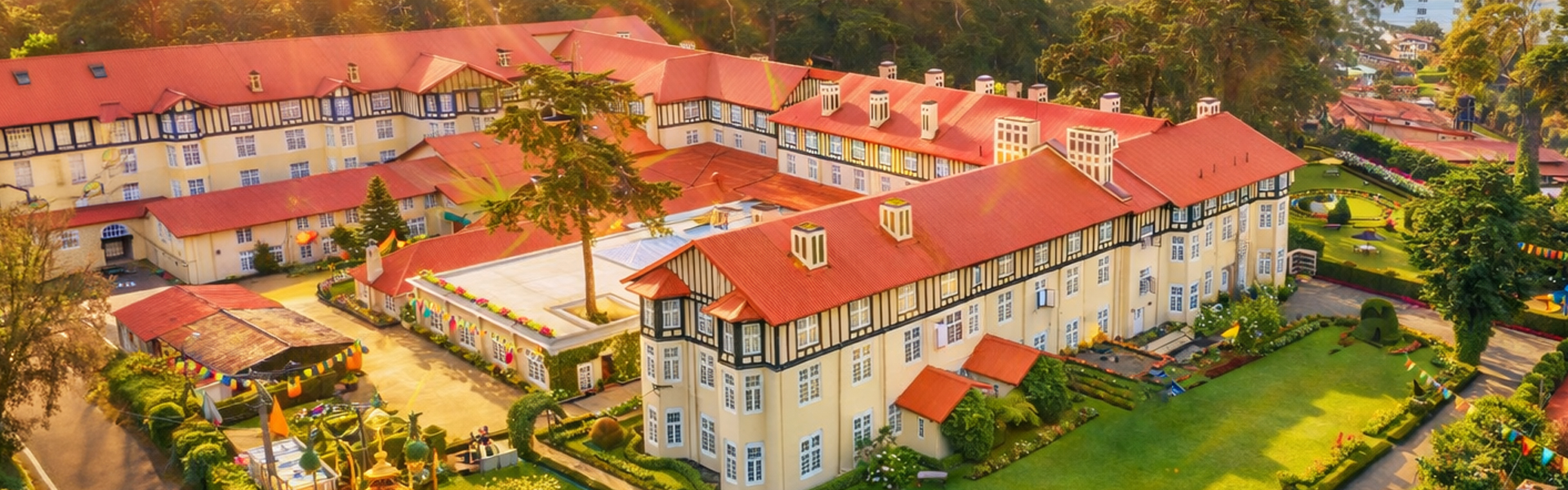 HotelThe Grand HotelGrand Hotel Road in the centre of Nuwara Eliya, in 4 acres of English-style gardens at about 6,200 ft
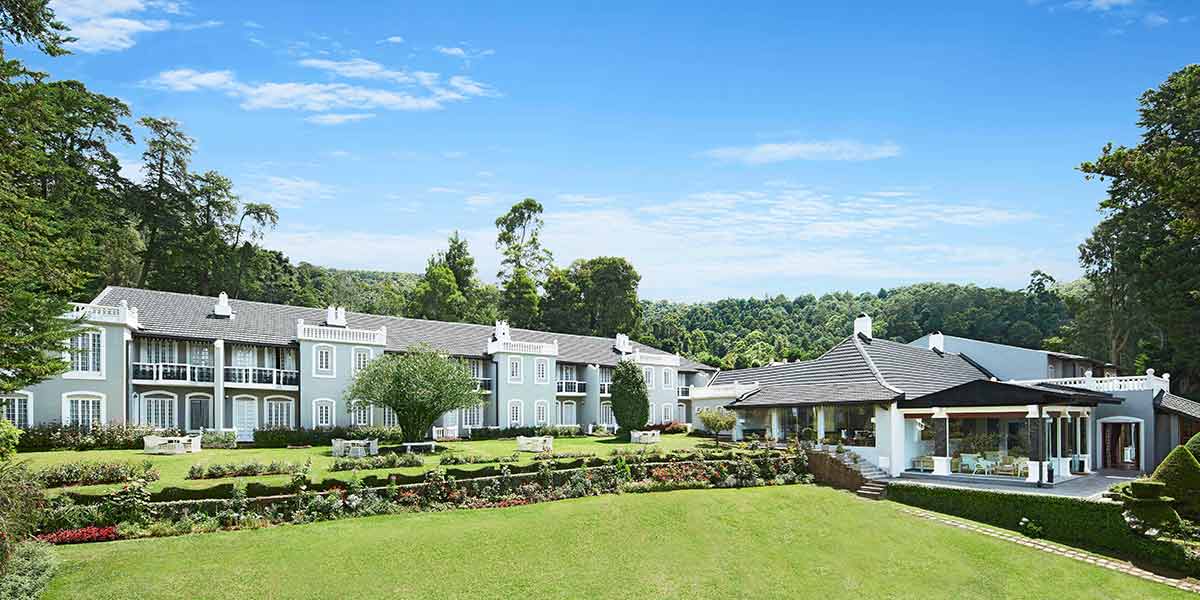 HotelJetwing St. Andrew's10 St. Andrew's Drive, Nuwara Eliya, on 6 acres of gardens near the golf club and racecourse
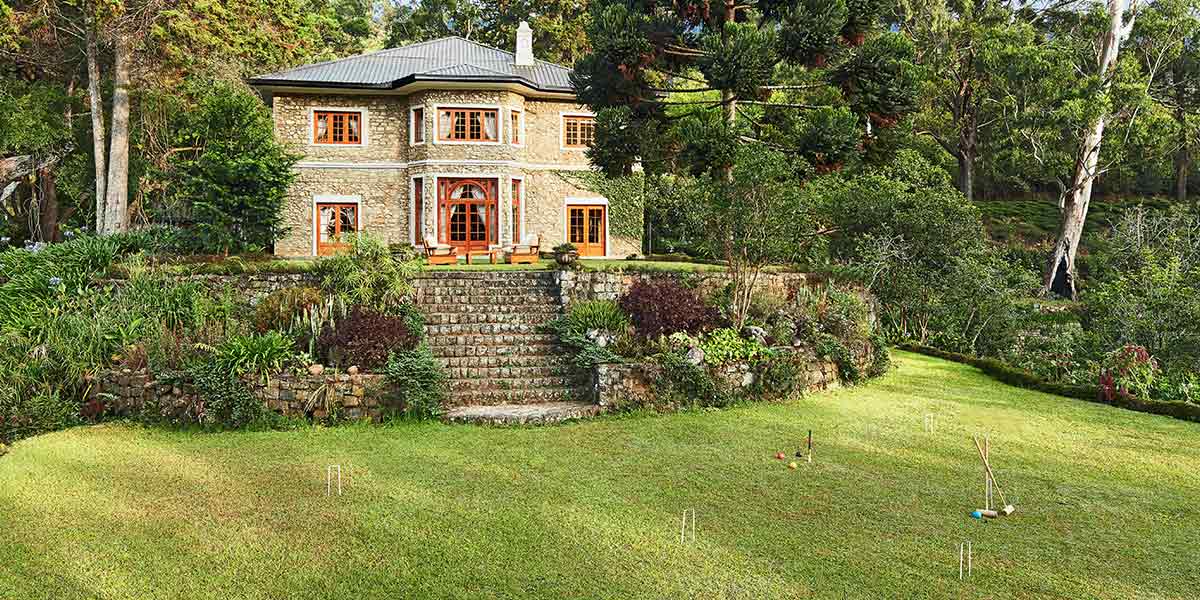 Boutique hotelJetwing Warwick GardensThe 30-acre Warwick tea estate at Ambewela, nearly 6,000 ft up, reached by a narrow estate road through the tea
 HotelAraliya Green City1 Glen Fall Road in the centre of Nuwara Eliya, beside Grand Hotel Road
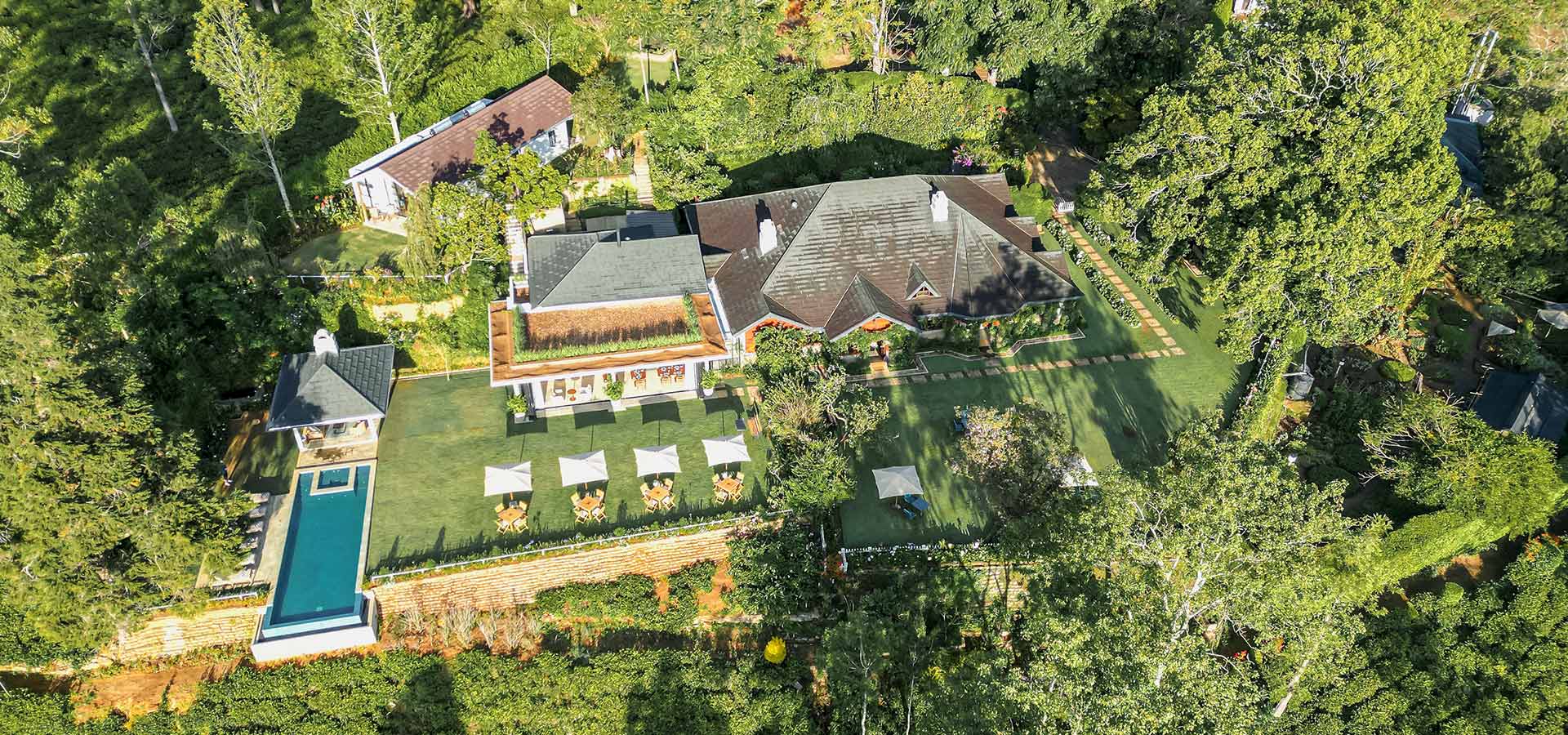 Boutique hotelStafford BungalowA private 50-acre tea estate at Ragala, just over 30 minutes by road from Nuwara Eliya, at over 5,000 ft
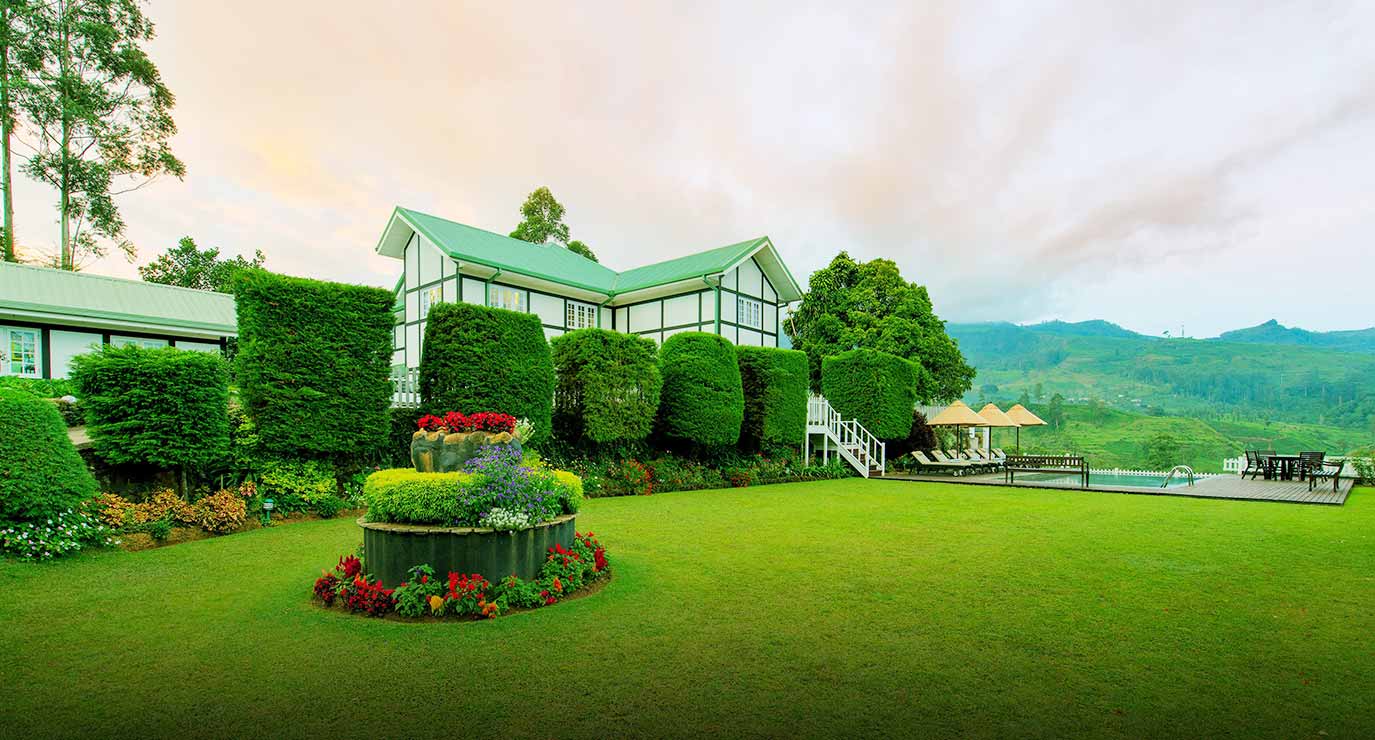 Boutique hotelLangdale Boutique Hotel by AmayaRadella, Nanu Oya, among tea estates below Nuwara Eliya, 9 minutes from Nanu Oya station
Things to do from Nuwara Eliya
- Adventure · a single stage of about 9 to 21 km, 2 and a half to 6 hours on footA day's walk on the Pekoe TrailThe Pekoe Trail is a walking route of about 300 km through the tea country of the central highlands, laid out in 22 stages from Hanthana above Kandy to Pedro near Nuwara Eliya, by way of Hatton, Horton Plains, Haputale and Ella. It follows the old cart roads built in colonial times to carry tea, estate lanes and the footpaths the tea pluckers use.
- Nature and wildlife · a morning: 3 to 5 hours on the 9 km loop, entering at about 06:00; the Pattipola gate is 32 km, 1 to 1 and a half hours, from Nuwara EliyaHorton Plains and World's EndHorton Plains is a plateau of montane grassland and cloud forest at 2,100 to 2,300 m, the source of the Mahaweli, Kelani and Walawe rivers and part of the Central Highlands World Heritage Site. Its 9 km circuit leads to World's End, a sheer escarpment with a drop of about 870 m, and back past the 20 m Baker's Falls.
- Nature and wildlife · a morning or an afternoon; the garden opens from 07:30 to 17:30Hakgala Botanical GardenHakgala, on the Badulla road south-east of Nuwara Eliya at about 1,680 m, began in 1861 as an experimental plantation of cinchona, then tea, and became a garden in 1884. It is the second-largest botanical garden in Sri Lanka, borders the Hakgala Strict Nature Reserve and is known for its roses and orchids.
- Culture and heritage · a round of 18 holesA round of golf in Nuwara EliyaNuwara Eliya's golf course was laid out in 1889 by a Scottish soldier of the Gordon Highlanders for the British servicemen and officials posted to the town; it opened with 9 holes in 1890 and grew to 18 in 1893. It covers about 100 acres at about 1,830 m and was first laid out among tea plantations.
- Nature and wildlife · a morning; Victoria Park is in the town, and Horton Plains 1 to 1 and a half hours awayBirdwatching for the highland endemicsThe high hills around Nuwara Eliya hold birds found nowhere else on earth. All 6 highland endemics live on Horton Plains, among them the dull-blue flycatcher, the Sri Lanka white-eye and the Sri Lanka wood pigeon, and the yellow-eared bulbul is widespread across the hills.
- Culture and heritage · the month of April; the Governor's Cup is run in mid-April, the day after the Sinhala and Tamil New YearThe April season in Nuwara EliyaEach April, around the Sinhala and Tamil New Year, Nuwara Eliya fills with Sri Lankans on holiday for a season of horse racing, motor sport, golf tournaments and parties. It opens on 1 April with a parade of school bands and closes with the flower show at the end of the month.
- Nature and wildlife · about 1 hour, as a stop on the drive between Hatton and Nuwara EliyaSt Clair's and Devon fallsBeside the A7 near Talawakele, between Hatton and Nuwara Eliya, 2 waterfalls drop into the tea valleys. St Clair's is 80 m high and 50 m wide and often called the Little Niagara of Sri Lanka, while Devon Falls, 97 m, is named after an early coffee planter whose estate lay nearby.
- Nature and wildlife · about 1 and a half to 3 hours, depending on the estate and the routeA guided walk on a working tea estate, arranged with your stayMany of the planters' bungalows and hotels in the tea country stand on working estates, and walks on the estate's own trails are among the things they arrange most often. A naturalist or a member of the estate staff leads the way through the tea to viewpoints and grassland above the valleys.
- Culture and heritage · a short visit; the temple is 8 km from Nuwara Eliya on the Badulla roadThe Seetha Amman temple at Sita EliyaThe Seetha Amman temple is a Hindu temple at Sita Eliya, 8 km south-east of Nuwara Eliya on the Badulla road, where, in the Ramayana, King Ravana is said to have held Sita captive. The present temple was built by the Indian Tamil community brought to work on the estates in British times, who still look after it.
- Culture and heritage · a walk around the small town centre, with an hour or so in Victoria ParkA walk through colonial Nuwara EliyaNuwara Eliya was founded in 1846 by the explorer Samuel Baker and grew into the hill retreat of British civil servants and planters, and its centre is small enough to explore on foot. A local guide links the buildings that survive from that time, among them the Grand Hotel, the Hill Club and the post office.
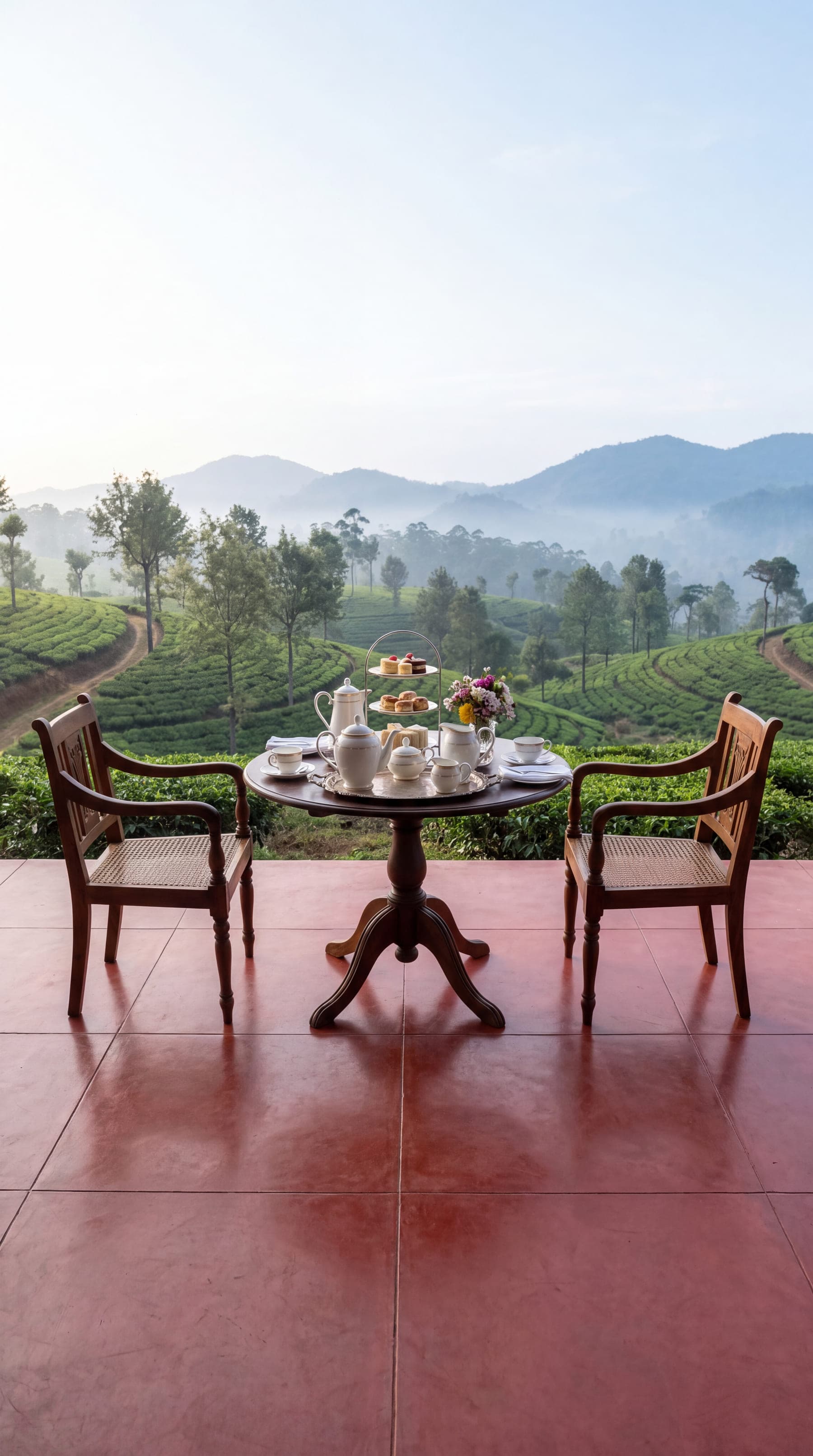
- Dining · an afternoon at your stay, on a lawn, a veranda or in a summerhouseAfternoon tea in the tea country, arranged with your stayAfternoon tea is served at many of the hotels and planters' bungalows around Nuwara Eliya and Hatton, in the English manner. It comes on a tiered stand with scones and tea cakes and pots of tea from the estates around, and at some stays in a Sri Lankan version.
- Culture and heritage · 2 to 3 hours on some estates, arranged with your stayPlucking and tasting tea on an estate near Nuwara EliyaSeveral of the stays around Nuwara Eliya sit on working tea estates and arrange for guests to try plucking the leaf themselves, then follow it into a factory. The district's tea is the palest of all Ceylon teas in the cup, with a golden colour and a delicate fragrance, according to the Sri Lanka Tea Board.
Nuwara Eliya in your journey? Build it in Explore.