Jaffna The Tamil north: a fort, a great kovil, a library rebuilt, palmyra country
The place
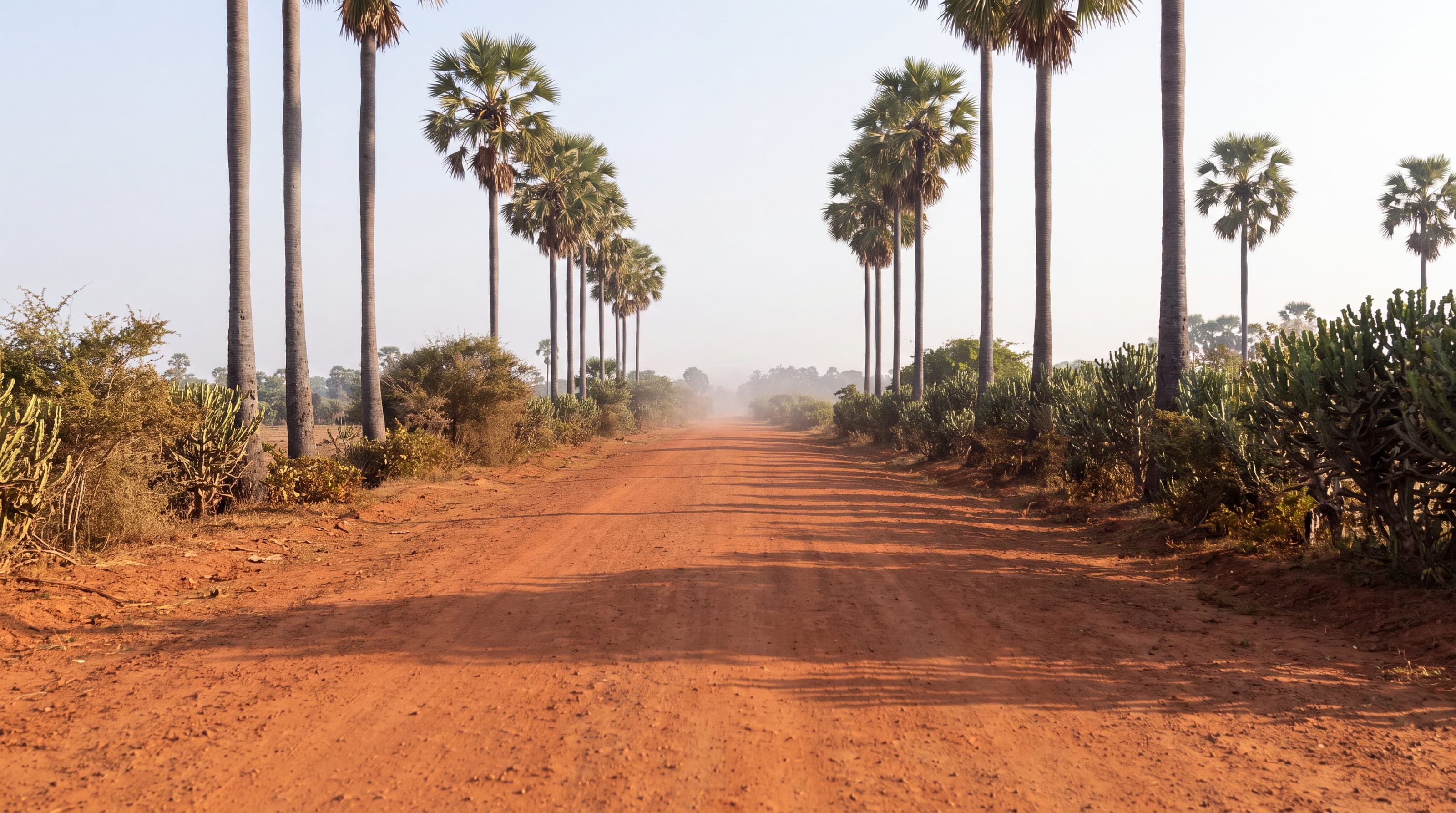
Jaffna is the capital of Northern Province, 396 km from Colombo on the Jaffna peninsula, and the cultural centre of Sri Lankan Tamil life. It is the warmest place in the country, averaging 28 C, and its landscape is flat, dry and lined with palmyra palms. The A9 highway, reopened after the ceasefire of 2002, brought the peninsula back within reach.
The Dutch-era fort, the Nallur Kandaswamy Kovil and the Jaffna Public Library, rebuilt after it was burnt in 1981, are the city's 3 landmarks, with the Archaeological Museum beside them. Jaffna's food is its own: a cuisine apart from the south's, and one reason to come.
When to go
February to September
Jaffna is in the far north, so the north-east monsoon, roughly October to January, is its wet season. December to March is the cooler, more comfortable window within the dry months.
Getting there
- By road, 7 to 8 hours from Bandaranaike International Airport on the A9.
- Jaffna station is on the Northern Line; the intercity trains from Colombo take about 8 hours.
- By air, Cinnamon Air lists Palaly for charter, and Jaffna International Airport has commercial flights to Chennai and Tiruchirappalli.
Worth seeing
Jaffna Fort
The Dutch-era fortification.
Nallur Kandaswamy Kovil
The major Hindu temple of the north.
Jaffna Public Library
Rebuilt after it was burnt in 1981.
Jaffna Archaeological Museum
Beside the library.
Asked often
- When is the best time to visit Jaffna?
- February to September. Jaffna is in the far north, so the north-east monsoon, roughly October to January, is its wet season. December to March is the cooler, more comfortable window within the dry months.
- How do you get to Jaffna?
- By road, 7 to 8 hours from Bandaranaike International Airport on the A9. Jaffna station is on the Northern Line; the intercity trains from Colombo take about 8 hours. By air, Cinnamon Air lists Palaly for charter, and Jaffna International Airport has commercial flights to Chennai and Tiruchirappalli.
In Explore
Open Jaffna in Explore to choose your stay, your room and your experiences, and add them to your journey.
Where to stay in Jaffna


Things to do from Jaffna
- Culture and heritage · about an hour, timed for 1 of the day's pujasA puja at Nallur Kandaswamy KovilNallur Kandaswamy Kovil is the principal Hindu temple of Jaffna, dedicated to Lord Murugan; its foundations go back to 948 CE, it was destroyed by the Portuguese in 1621 and the present temple was rebuilt in 1749 under Dutch rule. It is run by descendants of one of its rebuilders rather than by the state, and holds 6 pujas a day by the Saiva Agama rites.
- Culture and heritage · about half a dayJaffna Fort, the library and the old townJaffna Fort was built by the Portuguese in 1618 and taken by the Dutch in 1658, who expanded it; it was badly damaged during the civil war and is being restored with Dutch funding. Nearby stand the Jaffna Public Library, built in 1933, burnt in 1981 with more than 97,000 books and documents and since restored, and a small archaeological museum.
- Culture and heritage · most of a day, with a ferry of about 30 minutes each way from Kurikadduwan jettyThe island temples of NainativuNainativu is a small island off the Jaffna peninsula, holy to Hindus and Buddhists alike. Nagapooshani Amman Kovil is dedicated to the goddess Meenakshi and holds a stone figure of a 5-headed cobra, and Nagadeepa Vihara, 1 of the 16 holiest Buddhist shrines in Sri Lanka, marks where tradition says the Buddha came after his enlightenment.
- Culture and heritage · a full day, with nearly an hour each way by ferry from Kurikadduwan jettyDelft, the island of wild ponies and coral wallsDelft, or Neduntheevu, lies about 30 km off Jaffna, a flat and remote island of dry plains crossed by walls of coral stone laid without mortar. Around 500 wild ponies roam the plains, descended from horses brought by the Portuguese, and a baobab introduced in colonial times has a hollow trunk broad enough to hold 3 people.
- Dining · a long lunch or dinnerA table of Jaffna food: crab curry and koolJaffna Tamil cooking is a cuisine of its own, shaped by South Indian Tamil cooking, local spices and the sea, and more savoury and robust than the curries of the south. Its best-known dishes are Jaffna crab curry, crab in a dark gravy of roasted spices, coconut milk and tamarind, and kool, a thick seafood broth of crab, prawns, fish and cuttlefish bound with flour from the palmyra palm.
- Culture and heritage · a morning, best from about 07:00 to 09:00Keerimalai springs on the north coastAt Keerimalai, on the northern shore of the peninsula, a freshwater spring rises a few feet from the sea behind an old stone wall and has drawn pilgrims to its healing waters for centuries; the name means mongoose hill, after a sage said to have been cured here. Beside it stands Naguleswaram, 1 of the 5 ancient Ishwarams of Shiva on the island.
- Water and coast · a morning, about 45 minutes' drive from JaffnaA morning at Casuarina BeachCasuarina Beach lies on the north side of Karaitivu island, about 20 km from Jaffna, a wide beach of white sand shaded by the casuarina trees that give it its name. The water stays shallow a long way out, so it is safe for a family to wade and swim.
- Culture and heritage · a morning, with Kantharodai about 20 minutes' drive north of JaffnaThe Buddhist north: Kantharodai's stupas and Jambukola PatunaAt Kantharodai, a village about 20 minutes' drive north of Jaffna, about 20 small stupas of grey coral stone stand close together, the remains of the ancient Kadurugoda monastery and among the few Buddhist sites left on the peninsula. They are unlike stupas elsewhere on the island, their domes pitted with small holes and topped by fixed, umbrella-shaped pinnacles, and a local legend holds that they enshrine the relics of 60 monks. Excavations here have also found coins, parts of Buddha figures and a 10th century pillar inscription, now in the Jaffna Archaeological Museum.
- Culture and heritage · a morning or an afternoon, with about 50 minutes' drive each way from JaffnaPoint Pedro, Vallipuram and the dunes of ManalkaduPoint Pedro, about 50 minutes' drive north-east of Jaffna, is the town at the northernmost point of Sri Lanka. Its name comes from the Portuguese for 'the rocky cape', and its Tamil name, Paruthithurai, means 'cotton harbour', after the cotton shipped from here to south India for centuries. Near the point, a white lighthouse built in 1916 stands 32 m tall beside a far taller navy communications tower, above a rocky shore and a fishing harbour.
- Culture and heritage · from a ride around the neighbourhood to a longer outing, arranged with your stayBy bicycle through Jaffna's lanes and villagesThe Jaffna peninsula is almost entirely flat, and its quiet roads, lined with palmyra palms, run past temples, farms and village markets. A place to stay in Jaffna rents bicycles for exploring its neighbourhood, and another arranges a longer ride through the peninsula, stopping at markets where fresh produce is sold and at temples along the way.
- Nature and wildlife · a morning or an evening, the best times to watchFlamingos and waders on the Jaffna lagoonsThe lagoons, marshes and coastal wetlands of the Jaffna peninsula draw migrant birds from December to March, with waders along the shores and smaller birds in the scrub and grassland behind them. The peninsula is also among the island's strongholds of the greater flamingo: a 5-year count from 2013 to 2018 put its population at about 6,000 birds, present all year and most numerous from June to August.
Jaffna in your journey? Build it in Explore.