Notes fromJaffna.
8 min read
Jaffna · northern Sri Lanka
The Dutch fort, the Nallur Kandaswamy Kovil at festival time, and a crab curry with no equivalent on the south coast, the case for taking the long road north.
Jaffna is worth visiting. It is the largest city in northern Sri Lanka and the cultural capital of the Tamil community on the island, a city with a working lagoon, a Dutch-period fort, the Nallur Kandaswamy Kovil, and a food tradition that has no equivalent on the south coast. Most itineraries built from Colombo do not reach it. The ones that do come back with a different picture of what Sri Lanka is.
Where Jaffna is, and why most itineraries stop short
The Jaffna Peninsula is the northern tip of the island, joined to the rest of Sri Lanka by the narrow neck of land at Elephant Pass and a long day's travel from Colombo however you make it. That distance is most of the explanation. A two-week itinerary built the conventional way runs Colombo, then the cultural triangle, then the hill country, then the south coast, and traces a loop that never has a reason to continue north. Jaffna is not on the way to anything else on that circuit. Going there is a decision rather than a stop.
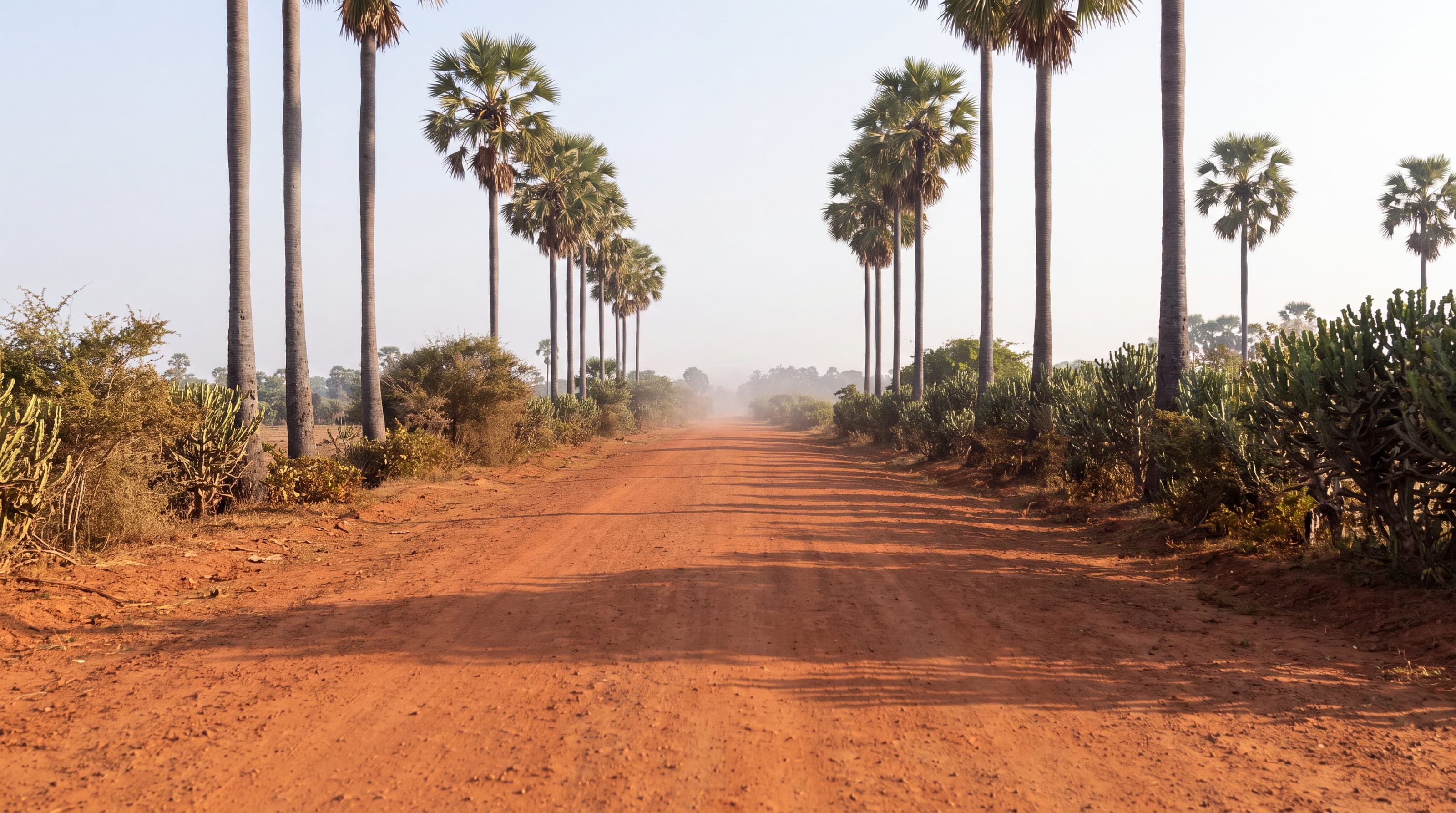
It is also a different climate and a different landscape from the Sri Lanka most visitors picture before they arrive. The peninsula sits in the dry zone: flat, limestone under a thin red soil, planted with palmyra rather than coconut, and watered by the north-east monsoon rather than the south-west one, which is the opposite season to the south coast. Garden plots behind fences, wells with a bucket on a rope, bicycles instead of tuk-tuks on the smaller roads. None of it looks like the country in the tea posters, and that is the point of going.
Jaffna Fort
Jaffna Fort stands at the southern edge of the old town, at the end of a road that passes the public library rebuilt in 2003. The fort was built by the Portuguese in 1618 and taken by the Dutch in 1658; the Dutch engineering, the star plan, the moat, the sea-facing bastions, is what remains legible in the walls. The interior is partly ruins, partly occupied. You walk the accessible section from the landward gate to the sea bastion, and from the top you can see clear across the water on a fine morning. The fort earns its visit not through drama but through the weight of four centuries in one set of walls.
Go early. The walls carry no shade and the light off the coral stone is punishing by ten in the morning. From above, the star plan is the clearest thing about the place. From the ground, the clearest thing is how much is missing: much of the interior was destroyed in the fighting of the late 1980s and 1990s, and what stands has been consolidated rather than rebuilt. The difference is honest and worth understanding while you walk it, and it is not self-explanatory, which is why this is one of the places where an arranged guide changes the visit completely.
The Nallur Kandaswamy Kovil
The Nallur Kandaswamy Kovil sits in the northern quarter of the city, its gopuram rising high above the street, covered in painted stucco figures. It is one of the most important Shaivite pilgrimage sites in Sri Lanka, dedicated to Lord Murugan. In late July and August the kovil hosts the Nallur Festival, weeks of ceremony that culminate in a chariot procession on the final night, drawing pilgrims from across the island and from the Tamil diaspora abroad. The procession moves through residential streets rather than around a lake circuit; it is louder and faster than the Esala Perahera in Kandy, and different in character, a street event absorbed into a working neighbourhood rather than a civic occasion held in a civic space. Both are worth the journey, and they fall close enough in the calendar that a circuit covering both is possible within a single trip.
Two things to settle before you go. Men remove their shirts to enter the inner precinct. This is not a ceremony laid on for visitors and there is no exemption for them; everyone entering does it, and shorts are not acceptable for anyone. Legs should be covered below the knee and footwear comes off at the entrance. Assume photography inside is not welcome unless you are told otherwise. Puja is held through the day, and the later one is the easiest to attend without standing in the worst of the heat. During the festival the schedule expands, the crowd fills the streets outside, and the streets are as much the event as the shrine is.
Eating in Jaffna
Jaffna crab is not the same as crab curry on the south coast. The mud crabs come from the Jaffna Lagoon, the broad brackish body of water that separates the peninsula from the mainland, and are cooked with dried spices and dark roasted coconut particular to the north. The preparation is drier and more intense than the coconut-milk curries of Galle or Mirissa; the crab itself is large and the eating takes time. Lunch at a room in the old town, at the right hour when the crabs are fresh, is the correct setting. Jaffna is also the place for string hoppers with fish curry at breakfast, palmyra jaggery at the market, and mutton preparations that do not exist further south. The food in the north is not a variation on Sri Lankan food. It is its own thing.
Beyond the crab, the dishes that do not travel south are worth ordering by name rather than waiting to be offered.
- Odiyal kool, a thick seafood broth built from whatever the lagoon gave up that morning and thickened with flour milled from palmyra root. Eaten with the fingers, and considerably better than the description makes it sound.
- Pittu with fish curry, steamed cylinders of rice flour and coconut, which is the northern breakfast and travels badly the moment it cools.
- Palmyra jaggery, and the fresh fruit in season. The peninsula runs on the palmyra palm in the way the south runs on the coconut, and almost every sweet thing here begins with it.
- Mutton rolls and short eats from the old-town bakeries, which are an institution in their own right and are best in the hour after they come out.
The islands
West of the city a chain of low islands runs out into the lagoon, joined by causeways as far as Punkudutivu and by boat after that. Nainativu is the closest and the most striking: a small island carrying the Nagapooshani Amman Kovil, a Shaivite temple of genuine importance, and the Nagadeepa Purana Viharaya, one of the sixteen principal Buddhist sites of the island, standing a few hundred metres apart and sharing a jetty. Delft is further out, a boat ride beyond it, and has coral-block field walls, the ruins of a Dutch fort, a baobab that has no business being there, and a population of feral ponies descended from horses left by the Portuguese and the Dutch. Neither island has accommodation worth the name. Both are day trips, and between them they are the reason to give Jaffna a third night.
The city since the war
The city is quieter than its size suggests. The war ended in 2009 and the reconstruction since is still visible in 2026: some streets have the particular blankness of places where buildings used to be, and there are houses with new walls in old foundations. This is part of what Jaffna is. The city gets on with itself, the market runs at the usual hour, the kovil stands, the crab boats come in before dawn, and the library that was burned in 1981 has been rebuilt and is open. A guest who comes to Jaffna with attention to spend rather than a list to complete will find that the north requires a different posture, slower, less structured, than the south.
When to go
The peninsula does not keep the south's calendar. Its rain arrives with the north-east monsoon, which is the inverse of the south-west coast and the reason a northern chapter sits awkwardly in an itinerary planned around Galle. Ask us for the current month rather than working from a table. What holds in every year is the heat: there is little shade on the peninsula and none at all on the fort walls, so the morning and the last two hours of light are when you move. If the Nallur Festival is the reason for the trip, that fixes the dates for you, and the final-night chariot procession is the one to be present for.
Getting there, and how long to stay
The Yal Devi train from Colombo Fort Station and the drive up the A9 both take the better part of a day. A domestic flight removes the road entirely and leaves the day intact, when one is running. We build Jaffna into journeys as a northern chapter, three nights minimum. One night is not enough for the fort, the kovil, the market meal, and the crab. Two nights is sufficient. Three gives you the islands: Nainativu, Delft, the shallow lagoon crossings that have their own unhurried logic.
A word on each. The train is the better of the two land options: the northern line was rebuilt after the war, the run is flat and fast by Sri Lankan standards, and first class is comfortable enough to make the hours pleasant rather than endured. The A9 is a good road now, but it is a long day behind a windscreen through the Vanni, and it earns its place only if you intend to stop, at Elephant Pass, at the memorials along the way, at Anuradhapura as you go or as you return. The flight is the sensible choice when the trip is short, and we will tell you whether one is operating on your dates rather than promise you a schedule. However you arrive, arrive on a day when the market is running and the kovil is open. Jaffna with its shutters down is a quieter city than the one worth coming for.
“The food in the north is not a variation on Sri Lankan food. It is its own thing.”
